



From frost to drought, and even berries ripening through concentration rather than vine activity, Antoine Coutier offers a portrait from Ambonnay of an extreme, early and increasingly low-yielding vintage, where ripeness is advancing faster than the vine itself. With the 2026 harvest, Champagne is dramatically rewriting its calendar. Growers throughout the region are questioning how to interpret a harvest that is struggling to find comparable precedents. What appeared in spring to be a harvest likely to begin between 20 and 24 August has continued to move forward, to the point that the first official harvest dates were ultimately scheduled as early as 10 August. Some areas, such as Montgueux and the Sézannais, could not wait and exceptionally began harvesting the previous week.
Yet this early start tells only part of the story of a 2026 vintage that will be remembered as a year marked by frost, heat and drought, where ripening is progressing under extraordinary conditions and yields continue to decline day by day.
From Ambonnay, Antoine Coutier, young vigneron and owner of R.H. Coutier alongside his mother Natalie, describes a vintage that he compares to 1976 for its dryness, but with even higher temperatures. At the centre of his analysis lies a crucial question for quality: knowing when to stop waiting.
Because in 2026 sugars are increasing rapidly, berries are losing water, and seeking the ripeness of a “normal” vintage may mean sacrificing the freshness and elegance on which great Champagne is built.
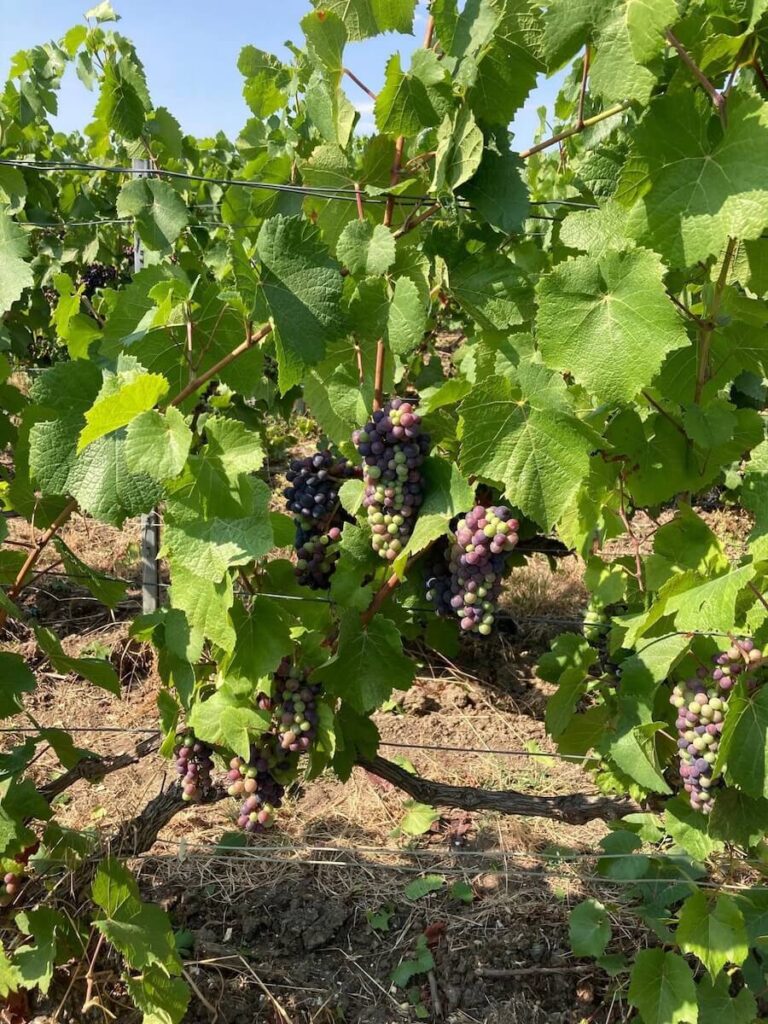

Let’s start from winter: how did 2026 begin in Champagne?
Winter was fairly wet and rainy, then from the beginning of March we suddenly experienced very dry and warm conditions. Vegetation started very quickly, budburst came early and this exposed the vines to frost at the end of March.
The frost was significant. I would say that around one-third of Champagne, perhaps up to 40%, was affected, while in some areas the damage was almost total.
This is the first major reason for the reduction in production potential in this harvest.
After the frost, however, the vines did not slow down. How far ahead was the growing season compared with a normal Champagne vintage?
Very far ahead.
April remained warm and growth continued to accelerate. Normally we would begin the first vineyard treatments around 10 to 15 May; this year we started between 20 and 25 April, when the vines already had four or five leaves.
During the first half of May we then experienced two or three significant rainfall events, each delivering approximately 30 millimetres of rain.
These were crucial because they replenished soils that were already beginning to suffer. With water available again and temperatures remaining high, growth accelerated even further.
Flowering arrived extremely early. Is that where the second major problem of the vintage emerged?
Yes.
Flowering occurred around 20 May, exceptionally early, and at that point it seemed possible that harvest would begin between 20 and 24 August.
Conditions initially appeared favourable because there was sunshine and water available in the soil, but precisely during flowering a first heatwave arrived, with temperatures around 35°C. For flowering, temperatures between 25 and 30°C would have been much better.
This stress caused coulure and millerandage.
Today, within the same cluster, we can find both large berries and much smaller ones that effectively stopped developing following the events of flowering.
This is the second major reason behind the low yields we expect.
Paradoxically, from a sanitary perspective, it seems to have been a relatively easy year…
Yes, because with so little rainfall, downy mildew caused virtually no significant losses.
The situation regarding powdery mildew is also unusual. We continued carrying out preventive treatments, mainly with sulphur, because we feared it might appear, but in the end we barely saw it.
With hindsight, we can say that some of those treatments proved unnecessary.
We completed vineyard treatments as early as 30 June.
From June onwards, heat became the dominant theme of the 2026 harvest. Just how extreme is this vintage?
In June we experienced a strong heatwave lasting around ten days.
July did not necessarily feature a single clearly defined heatwave, but temperatures remained consistently very high.
At the beginning of August we had another three or four days around 35°C, and temperatures of 35-36°C are forecast again between 12 and 14 August.
In some respects, the reference vintage is 1976, the great drought vintage of Champagne.
The dry period in 1976 was probably even longer, but 2026 is significantly hotter.
In 1976 maximum temperatures reached around 32°C. This year we have come close to 40°C in Reuil and the Aube.
And it is precisely the heat that has created what may be the most interesting anomaly of 2026: ripening driven more by concentration than by photosynthesis. What is happening to the berries?
Normally, increases in potential alcohol come mainly from photosynthesis: the vine produces sugars and these are accumulated within the berries.
This year we are observing something different.
With temperatures this high and water availability so limited, berries are losing water and decreasing in weight. As a consequence, the sugars they contain become more concentrated.
We therefore see potential alcohol increasing very rapidly, but this does not necessarily mean that the vine is producing new sugar at the same speed.
Ripening today depends heavily on concentration and not only on photosynthesis.
We are recording increases of 1.5 to 2 potential degrees per week, a speed we would normally associate with a vine in full physiological ripeness and highly efficient photosynthesis.
Instead, this is happening under strong water deficit conditions.
Do berry tastings before harvest also reveal unusual signals?
Yes.
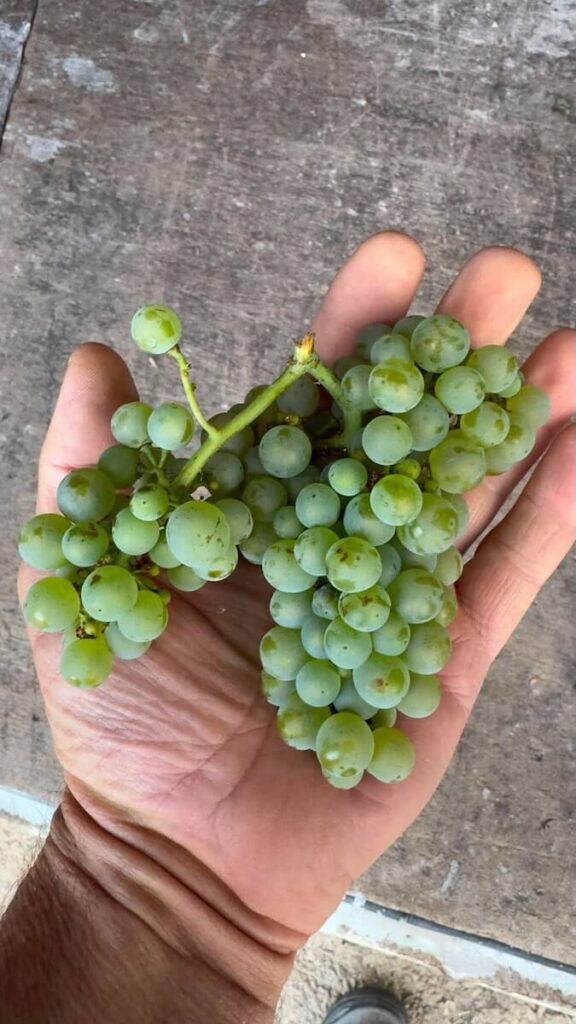
We have tasted berries that are still visually green and, surprisingly, they are already sweet and show fresh-fruit aromas, without the herbaceous character one would normally expect.
Furthermore, such high temperatures can slow or even halt colour development.
We could therefore arrive at harvest with visual ripeness that does not appear perfect, while sugar levels are already very high.
For this reason, I believe it is better to harvest around 11% potential alcohol rather than waiting for 12 or 12.5%.
Continuing to wait would risk further dehydration and concentration, potentially leading to overly ripe, almost jam-like aromas, which are not what we seek in Champagne.
In a vintage like this, we cannot necessarily wait for the same maturity parameters that we would pursue under normal conditions.
How much has this acceleration changed your plans for the 2026 harvest?
Enormously, and it surprised us.
For Ambonnay, we initially expected harvest to begin around 24 August, then we shifted towards 18-20 August, but in the end it was brought forward all the way to 10 August.
Many récoltants and independent growers will begin between 16 and 18 August, while areas such as Montgueux and the Sézannais have already started.
For R.H. Coutier, I personally expected to begin harvesting around 24 August. Instead, we will start on 16 August.
This is an exceptionally early harvest.
Alongside earliness, there is also the major issue of quantity. How small could the 2026 Champagne harvest be?
We have three factors combining together: frost damage, flowering problems and now dehydration, which continues to reduce berry weight day after day.
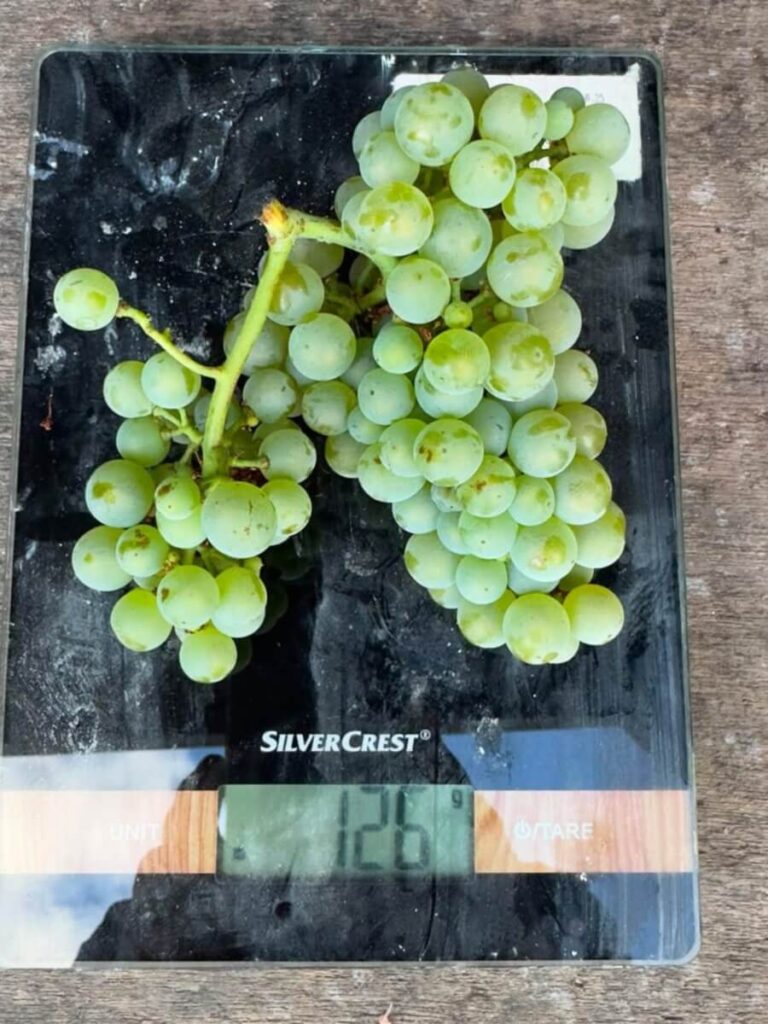
In certain measurements, we have already lost around 10% of average cluster weight.
Weights are clearly below normal.
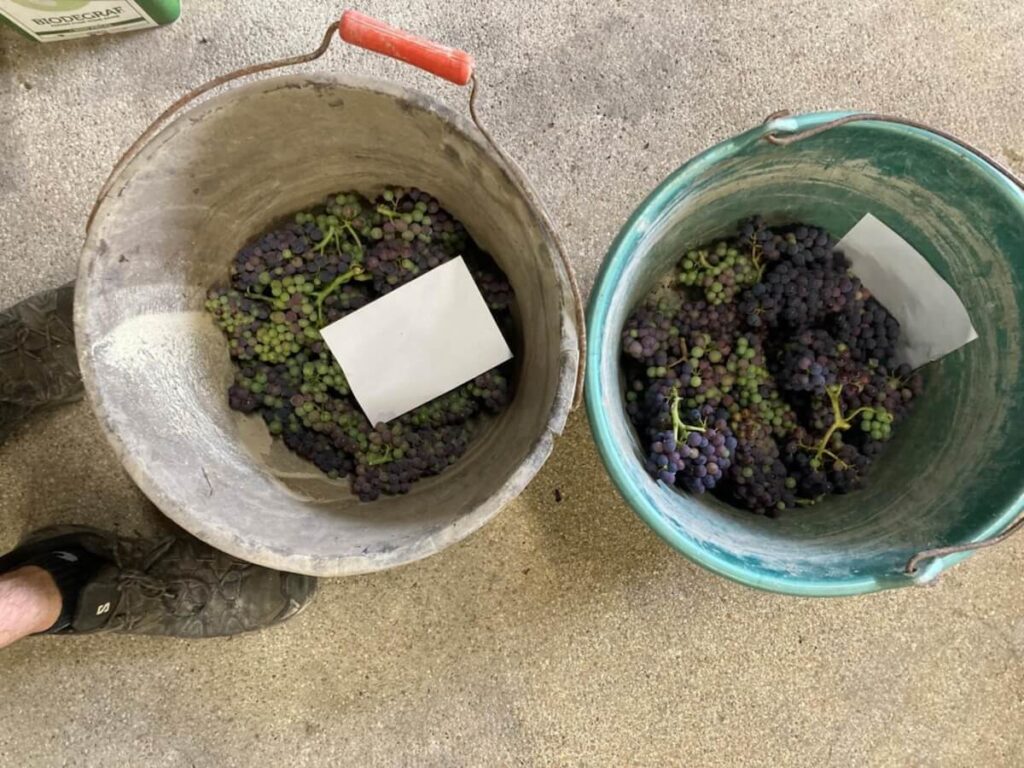
For example, we are seeing Chardonnay in the Côte des Blancs with clusters weighing around 50-80 grams, and Pinot Noir around 120 grams, whereas over the last ten years Pinot Noir averaged closer to 150 grams.
Could Ambonnay and the Montagne de Reims be in a slightly better situation?
Yes, the Montagne de Reims should be relatively advantaged.
On one hand, it was less affected by frost. On the other, we have the benefit of the chalk soils.
In a year like this, we can say that what saves Champagne is the chalk.
Roots are still able to access deep moisture reserves, and the canopy, surprisingly, continues to hold up very well despite the drought.
It is almost as if the vine is partly sacrificing its fruit in order to preserve the leaves: vegetation remains active while the berries lose water and therefore lose weight.
Are yield estimates for the 2026 Champagne harvest therefore continuing to fall?
Yes.
Initially, people were speaking of a harvest in the region of 7,500 to 8,000 kilograms per hectare.
Today, I think reaching 7,000 kg/ha would already be a good result and, looking at current sampling data, I would not be surprised if we ultimately ended up around 6,000 kg/ha.
The issue is that we are not simply talking about a small harvest.
It is a harvest that keeps getting smaller as we wait, because the berries continue losing water.
That is also why nobody wants to delay harvesting for too long.
In a vintage like this, Champagne’s réserve individuelle system will play a particularly important role in helping compensate, at least partially, for the scarcity of production.
If you had to define the 2026 vintage just as harvest is about to begin, what would your overall picture be?
It is an extremely early, hot and dry vintage.
The crop size was first reduced by frost and then by flowering problems, and today it continues to shrink because of berry dehydration.
But the most distinctive aspect is undoubtedly ripening itself.
It is progressing at an astonishing speed and, at this stage, more through concentration than through photosynthesis.
That is what is forcing us to bring harvest forward so dramatically.
The challenge will be harvesting at precisely the right moment, before concentration becomes excessive, in order to preserve freshness, balance and elegance.


