


Five award recipients, a barrel of Amarone and a question that reaches far beyond the world of wine: what does it mean to take responsibility for the future? The Masi Prize celebrated its 45th edition in Valpolicella, bringing together leading figures from science, art, medicine, environmental conservation and journalism under the theme The Courage of Responsibility. On 16 October, following the traditional signing of the historic Amarone barrel in the Masi cellars, the ceremony at Monteleone21 honoured Luigi Carlon, Nello Cristianini, the Venice Gardens Foundation, David Khayat and Reporters Sans Frontières. From the challenge of keeping artificial intelligence under human control to the defence of press freedom and the relationship between wine, health and conviviality, the discussions explored the importance of individual and collective responsibility. Amarone provided the common thread, connecting different experiences through a vision of culture that, for 45 years, has reached well beyond the world of wine.
The Courage of Responsibility: Five Awards at the 2026 Masi Prize
The 45th edition of the Masi Prize centred on a word that is often invoked but considerably harder to put into practice: responsibility.
It is a concept that concerns businesses and institutions, scientific research, the preservation of cultural heritage and the public’s right to independent information.
Isabella Bossi Fedrigotti, President of the Masi Foundation, reflected on the meaning of this year’s theme during the ceremony:
“We know that courage is a noble sentiment. Responsibility is harder to explain: it means feeling part of a network, an accumulation of social capital. Never before, amid the global turmoil surrounding us, have we needed responsibility so urgently, alongside the courage to face reality.”
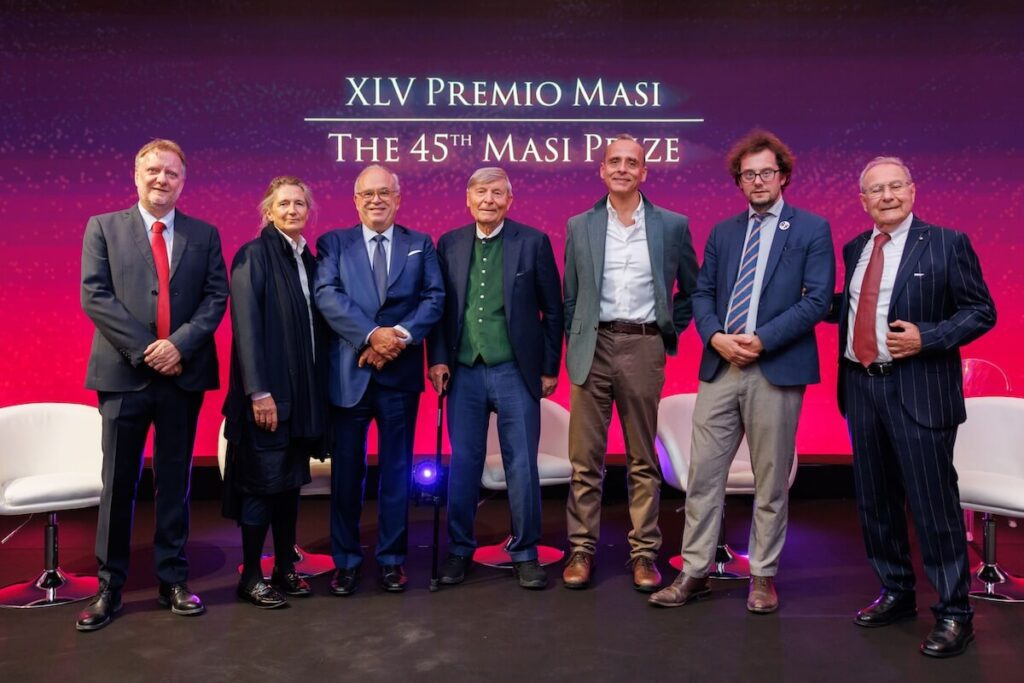
The theme found expression in five very different achievements, united by a commitment to putting knowledge, expertise and personal accomplishment at the service of society.
The Masi Civiltà Veneta Prize was awarded to Luigi Carlon, a Verona-born entrepreneur and art collector who founded the Museo di Palazzo Maffei; Nello Cristianini, a scientist from Gorizia and Professor of Artificial Intelligence at the University of Bath in the United Kingdom; and the Venice Gardens Foundation, represented by its President, Adele Re Rebaudengo, for its work restoring and preserving Venice’s historic gardens.
The Masi International Civiltà del Vino Prize went to French oncologist and medical communicator David Khayat, while the Grosso d’Oro Veneziano recognised Reporters Sans Frontières, represented by its Director General, Thibaut Bruttin, for its commitment to defending press freedom.
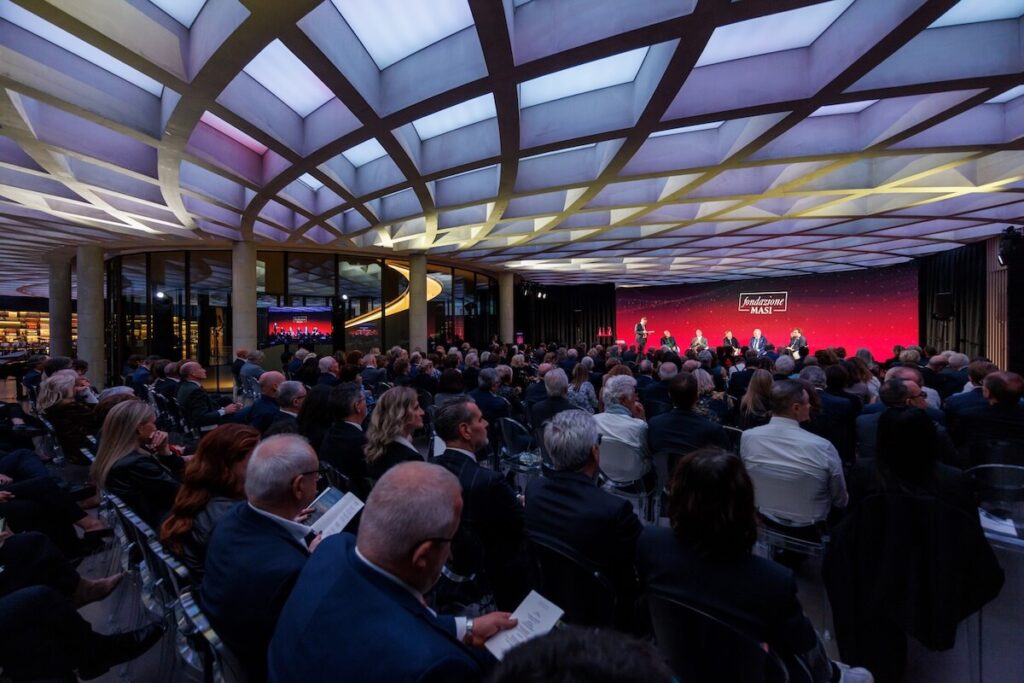
Moderated by journalist Alessandro Milan, the ceremony took place at Monteleone21, Masi’s new multifunctional venue in the heart of Valpolicella.
Signing the Amarone Barrel: Wine as a Symbol of Time and Responsibility
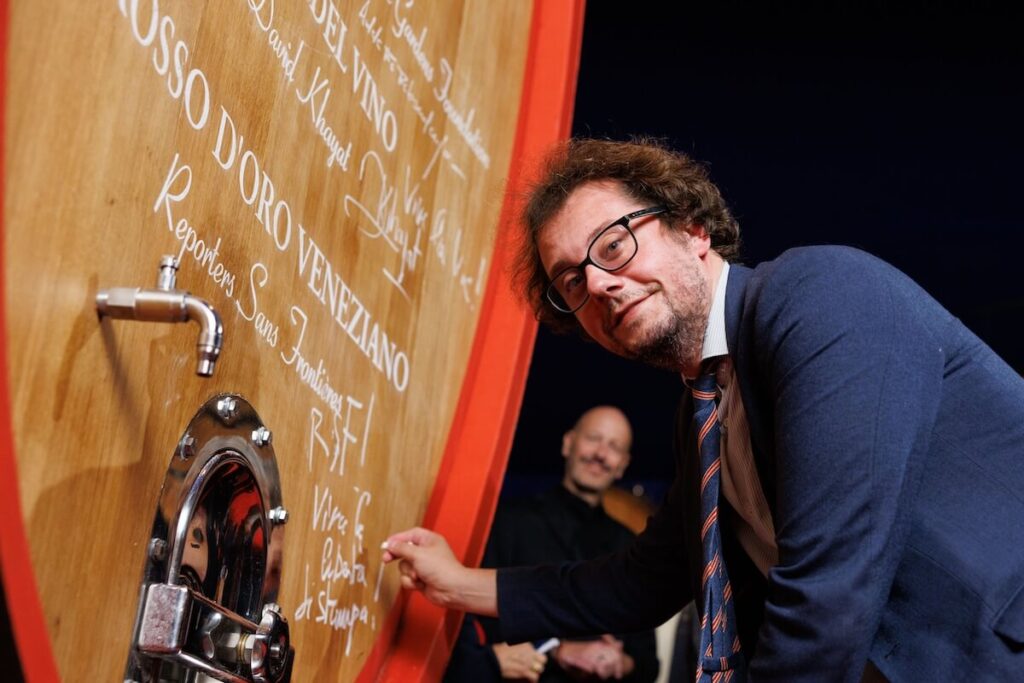
Before the awards ceremony, the five recipients took part in one of the Masi Prize’s most distinctive traditions: signing the historic Amarone barrel kept in the winery’s cellars.
For 45 years, this ritual has made wine a symbol of the encounter between different stories, cultures and perspectives.
For Sandro Boscaini, Vice-President of the Masi Foundation and President of Masi, the tradition also reflects the responsibilities of business and the relationship between the present and future generations.
“For those running a business, responsibility is measured by the ability to look ahead and think about the generations to come, to accept the risks involved in making courageous decisions and to remain true to one’s values, particularly in a rapidly changing world.
“Wine teaches us precisely this: to respect the rhythms of nature, cherish the knowledge passed down to us and, at the same time, know how to evolve.
“The Amarone barrel, the Prize’s golden symbol, bears the signatures of our champions. It becomes a crucible in which different stories, experiences and visions come together, united by the determination to confront the challenges of their time and contribute to the progress of society.”
The choice of Monteleone21 as the venue added another dimension to the relationship between wine and culture that has long defined the initiative.
Welcoming the recipients and guests, Boscaini described the new space as “an evolving project that reflects Masi’s desire to create a place for encounters, conviviality and cultural exchange, while celebrating the local area”.
Nello Cristianini: The Challenge of Artificial Intelligence Without Losing Human Control
Artificial intelligence was among the most topical subjects discussed during the 45th edition, both for its potential applications in research and medicine and for the questions it raises about technological oversight and the role of human beings.
Nello Cristianini, whose research has developed at the intersection of statistics, language, machines and the mind, brought a particularly personal perspective to the debate.
Accepting the Masi Civiltà Veneta Prize, Cristianini reflected on his origins and his lifelong connection with borderlands.
“I was born in Gorizia, where I went to school. I studied physics in Trieste and have had a connection with Grado for decades. These are places shaped by Venetian civilisation and by contact between different cultures.
“I have always believed that the most interesting things happen at the margins, where one territory meets another. In the end, I chose to spend my life studying artificial intelligence, at the boundary between statistics and language, between machine and mind.
“I had to do so far from home, but I never forgot it. Today, thanks to you, I feel a little closer. It has been a long journey, but I receive this award like a wine that has waited patiently for the right moment.”
During the discussion, Cristianini warned of the risks associated with artificial intelligence research that still lacks adequate rules and oversight.
He emphasised the need to invest in scientific literacy and education, enabling society to navigate technological change with greater awareness.
For Cristianini, this transformation also calls for a long-term perspective. His appeal for patience found a fitting parallel in wine: “Good wine takes time.”
The discussion extended to the other recipients.
David Khayat highlighted the potential of artificial intelligence in cancer diagnosis and oncology research, while stressing the importance of “preserving the human dimension of care”.
For Luigi Carlon, technology can open up new possibilities for artistic experimentation and interaction with artworks, “without replacing the central role of human creativity”.
Thibaut Bruttin addressed the implications of artificial intelligence for journalism, recognising its value as a tool to support reporting, “provided it is used responsibly and ethically, without overshadowing the value of journalistic work and its fundamental role in society”.
Adele Re Rebaudengo drew a parallel between artificial and “natural intelligence”, encouraging greater recognition of plants’ sensitivity and a relationship with the natural world that goes beyond its usefulness to human beings.
David Khayat: Wine, Health and the Meaning of Conviviality
One of the ceremony’s most thought-provoking discussions concerned the relationship between wine, health and quality of life, explored by French oncologist David Khayat, recipient of the Masi International Civiltà del Vino Prize.
In his latest book, Arrêtez de vous priver, Khayat also addresses the moderate consumption of food and wine.
Speaking in Valpolicella, he reflected on the responsibility involved in communicating scientific findings, challenged excessive alarmism and emphasised the importance of distinguishing between hazard and risk.
In his view, scientific rigour should coexist with an appreciation of personal wellbeing, happiness and conviviality.
Khayat argued that moderate, informed dietary choices, including those involving wine, have relatively little impact on cancer risk. This is his interpretation and should not be presented as a general conclusion of medical research.
It was through a personal memory, however, that the oncologist conveyed the meaning of the award.
“But in the evening, when I return home, I need beauty, slowness and the earth. And that is how wine entered my life. Not as consumption, but as a breath.
“I remember my first Amarone. I must have been about 28, a young hospital doctor exhausted after an on-call shift. A friend poured me a glass and said, ‘Taste it, and don’t speak for 30 seconds.’
“Thirty seconds. In an oncology ward, 30 seconds of silence is a luxury!
“And in that glass, I understood what patience meant. Three years of ageing, dried grapes, a place, human hands. I realised that time can make something better rather than cause it to deteriorate.”
His recollection connected the experience of medicine with the rhythms of viticulture and the passing down of knowledge.
“Since then, wine has accompanied me. In happy moments, to celebrate a remission. In more difficult times, to remind myself that even the hardest years can sometimes produce great vintages.
“What the Masi Foundation does is defend precisely this: the long view. The work of winegrowers who prune in January without knowing what September will bring. The passing of knowledge from father to son. Respect for a place.
“It is exactly what we try to do in medicine: pass on knowledge, accompany others and respect life.”
The Civiltà del Vino Prize thus recognises a reflection that goes beyond wine as a product, bringing its cultural significance, the work of those who produce it and the role of conviviality in human relationships to the fore.
Art, Historic Gardens and Press Freedom: Culture as a Public Good
The theme of responsibility also emerged in the relationship between private heritage and the public good.
For Luigi Carlon, founder of the Museo di Palazzo Maffei in Verona, opening his collection to the public was a way of returning part of the city’s artistic memory to its community.
The collection was assembled over many years, including through the recovery of works by Veronese painters and sculptors dating from the 14th to the 19th centuries, which had left the region and entered European and American collections.
“Finding these works again and returning them to the context in which they were created represented, for me as a passionate collector, a way of sharing part of the community’s memory and cultural identity.”
Carlon described this commitment as a responsibility to continue preserving and celebrating Verona’s artistic heritage, while acknowledging his own personal connection with the works he has collected.
A similar philosophy underpins the work of the Venice Gardens Foundation, recognised for restoring and reopening the Royal Gardens of Venice and the Garden of the Convent of the Church of the Santissimo Redentore.
Its President, Adele Re Rebaudengo, highlighted the essential contribution of gardeners and collaborators to the daily care of these places and the importance of safeguarding their historical, natural and communal value.
“Our concern is that these places should continue to flourish over time, while also being protected from the passage of time, in the knowledge of the essential role gardens play in society and, even more fundamentally, in community life.
“It is a commitment to restoring the deep connection between human beings and nature, bringing the different parts of that whole back into relationship with one another.”
Turning to civic responsibility, the Grosso d’Oro Veneziano was awarded to Reporters Sans Frontières, the international organisation dedicated to defending independent journalism.
Its Director General, Thibaut Bruttin, reminded the audience that press freedom “is not a privilege of journalists, but a fundamental right of every citizen”.
In his acceptance message, he dedicated the award to those who continue reporting despite the dangers they face.
“At a time when independent journalism faces growing threats, this award reaffirms the importance of defending those who risk their lives to bring the truth to light.
“We dedicate this recognition to all journalists who continue to carry out their work with courage, often at great personal risk, in the service of citizens’ right to information.”
From Valpolicella to Austria: The Giorgio Boscaini Plaque Goes to Morandell International
The ceremony also celebrated the international reach of Veneto’s wine culture with the presentation of the Giorgio Boscaini Plaque to Austrian importer Morandell International.
The award recognises a partnership with Masi spanning several decades, during which the importer has helped promote the brand and the values of Venetian culture in the Austrian market.
The five principal award recipients were also presented with bottles of Amarone decorated with gold screen-printing by Venetian master craftsmen, symbolising the historic barrel at the heart of the Prize.
The 45th edition concluded by reaffirming a connection that has defined the Masi Prize since its inception: the relationship between Valpolicella’s winemaking heritage and the wider worlds of culture, human achievement and civic commitment.
Established in 2001 out of the experience of the Masi Prize, the Masi Foundation continues to develop that mission in Italy and internationally.
Amarone remains at the centre of this vision, not simply as an expression of its place of origin, but as a symbol of knowledge passed between generations and of a responsibility that extends to the future.


