

Italian wine is an excellence in the world that must be supported and promoted in our country too. Fedele Angelillo, CEO of Mack & Schühle Italia, understood this very well when he said that in Italy “we must not only be good at producing wine but also at proposing it, emphasizing it and selling it”. One fact is enough: “In the large markets, including Germany, England and the United States, Italian wine is the best-selling in terms of quantity but we do not pay enough attention to value. Unlike, for example, what French wine producers are capable of doing, who emphasize not only production, but above all the promotion of products with a long-term vision. If we want to start from here, here is a big difference between Italy and France”.
Noting this, Mack & Schühle Italia has, in Angelillo’s words, activated a series of projects aimed at “enhancing the supply chain, the territory and the peculiarities of native vines. With Genevitis we have prepared a platform that aims to restore value to native Italian productions, creating a long-term sustainability model to be transferred in the appropriate ways to the market and to producers”.
Genevitis operates on two fronts: consumers and stakeholders (from channel partners to wineries). The gist of the reasoning is to celebrate the authenticity and uniqueness of Italian wine excellence through a supply chain structured in regional cooperatives to transmit the typical quality of the production territories. The enhancement of local resources puts, according to Mack & Schühle, “the ethics of the people involved first”.
Fedele Angelillo reinforces this idea by arguing that “we need to get away from the concept of commodity and think in terms of label to create a strong, recognizable brand identity aligned with consumer demand. The Genevitis project is based on the typically Italian production versatility to rediscover regional wines by working together with the best cooperatives, so as to propose a portfolio of products that tell the story of Italy at an international level. With a sustainable approach, I mean at an economic level, and with high quality standards in the choice of cooperatives. We propose a co-brand logic to these entities in which all the structures are involved: production, distribution and marketing. By taking care of all these aspects of the product we can propose ourselves to both Italian and international retailers with a Group logic that offers an accurate and differentiating assortment”.

Mack & Schühle Italia: from producer to consumer
The role played by Mack & Schühle starts from a careful analysis of the territory, to identify excellence, and transform these virtuous realities into perfect products to be offered to consumers. This also means supporting the territories, as Fedele Angelillo explains: “We start from the analysis of the markets in which we want to operate and verify the data, to then apply them to our knowledge and experience accumulated in the various countries with the aim of presenting a solid offer to the distribution channels we face. We try to understand and intercept the trends, on the basis of which we determine the positioning and engagement of partners and consumers. I reiterate that every action originates from the desire to best enhance the products we offer, in relation to the market, the offer and the target of consumers. In this way, the producer himself finds himself involved in a value system because having a superior quality corresponds to a different positioning and a more effective proposal. This is why I maintain that the co-brand logic is a winning one: operating in symbiosis with the cooperative, but with the logic of a private company that pursues objectives in a project-based way, allows us to approach retail in a specialized way”.
It is natural to ask which are the most appreciated and most requested wines. The CEO of Mack & Schühle replies: “There is a lot of attention on white wines in general, especially when aromatic but with balanced acidity and low residual sugar. Although reds continue to see growth, as in the case of Primitivo which adapts perfectly to the modern consumer looking for a gentler wine. Another criterion of current demand is the alcohol content: less than 12% Vol”.
Services and no and low alcohol offer: the Grapur novelty
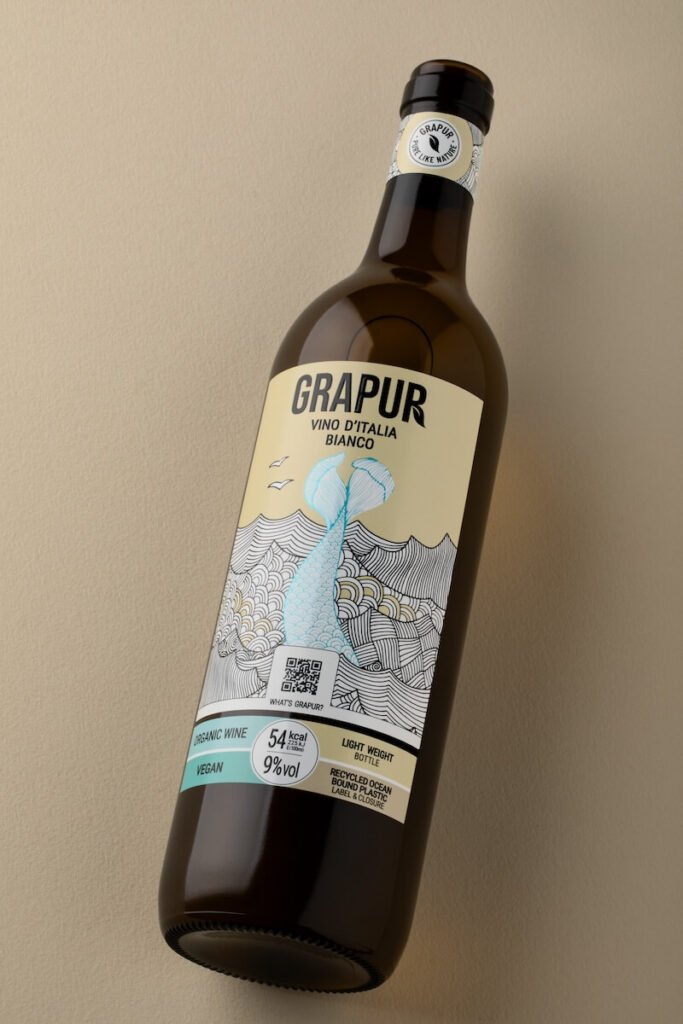
The theme of sustainability is latent in the words of Fedele Angelillo when it is expressed in the theme of respect for everything that surrounds us. Mack & Schühle has begun a virtuous path by using more and more recycled materials and adopting an approach oriented towards circularity. A company figure that, according to the CEO, is “sealed by the numerous certifications for all our factories, including Equalitas, and by the invitation to all our production partners in the supply chain (over twelve directly connected wineries operating on the national territory) to obtain the same certification by 2026. For Mack & Schühle the concept of sustainability is fundamental: we are very attentive to consumption and respect for the environment. From this sensitivity another of our projects was born: Grapur, a range of low-alcohol, non-dealcoholized, organic and vegan wines, to which we apply labels made with plastics at risk of being abandoned in the oceans. Both for Grapur and for other supply chain projects, we adopt sustainable packaging, that is, with corrugated cardboard made of recycled paper and water-based inks”.
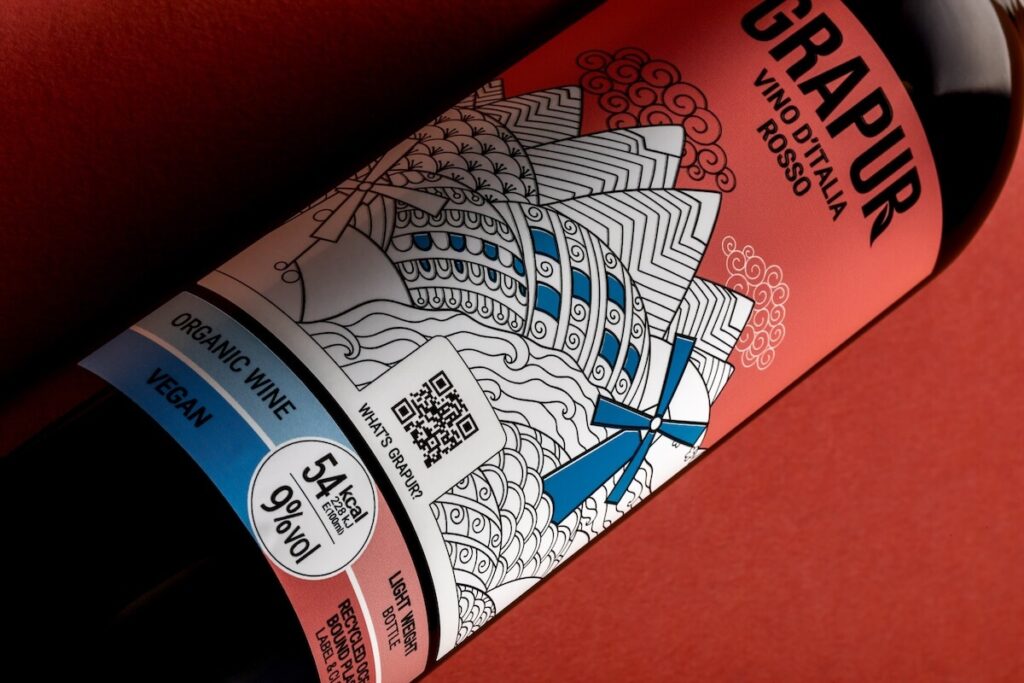
These statements lead us to the panorama of no and low alcohol wines, on which Mack & Schühle has a clear strategy:
“There is a great distinction between the two products and I am convinced that both bring with them great opportunities for expanding the market given by a demand, perhaps still latent, for a general reduction in the alcohol content. A phenomenon that consists of two reasons: one health-related and the other for the incremental duties imposed depending on the alcohol content of the wines. If we add the dynamics linked to restaurants, the multiplier of interest increases. If on low alcohol the development is more immediate for obvious reasons, on no alcohol the interest of the consumer in drinks based on dealcoholized wine must be understood. But on one condition: supporting the demand deriving from these products without in any way losing the historical heritage of the Italian wine identity, because this is the added value of our production and a unique and precious competitive factor for the entire sector”.