


New York is a city that doesn’t leave much time for introductions. You arrive, you meet, you talk business and you move on to the next appointment. At Pier 36, overlooking the East River, the debut of Vinitaly.USA 2026 in the Big Applelargely followed this rhythm: agendas prepared before departure, tastings, meetings with importers and distributors, and talks with the purchasing managers of restaurant groups. And, between one appointment and the next, one question kept coming back in conversation: where can Italian wine still grow in the United States? The first New York edition of the fair, the third overall after the two Chicago editions, closed on 27 October with more than 3,000 trade professionals, up 36% on 2025, 300 exhibitors, 2,500 labels and over 1,690 business meetings. Almost 800 top buyers were selected and invited by Veronafiere and ITA – Italian Trade Agency. These figures explain the organisers’ positive assessment, but on their own they don’t tell the story of what happened between the stands.
To understand that, you need to listen to those who came to New York with their own bottles, those who distribute those bottles, and those who represent entire denominations. Their accounts describe a market that is anything but static: certainly difficult, and shaken by uncertainty over tariffs, but still willing to meet new producers, explore lesser-known territories and rethink drinking occasions.
Riccardo Pasqua, Matteo Lunelli, Massimo Tuzzi and Marilisa Allegrini: four perspectives on the debut of Vinitaly.USA in New York
For Riccardo Pasqua, CEO of Pasqua Vigneti e Cantine, choosing New York brings an immediate advantage: it brings companies closer to the places where many of the most important business decisions are made.
“New York is definitely a more central location and easier to reach, and many decision makers who are important for our business in the United States are based here. The fair brought us some good contacts, especially in the restaurant sector. We met a couple of large American groups with several venues spread across different states.”
A particularly significant opportunity for a company in an expansion phase. “For a company of our size, and in the growth phase we are going through, this is certainly an important opportunity and these are very interesting contacts.”
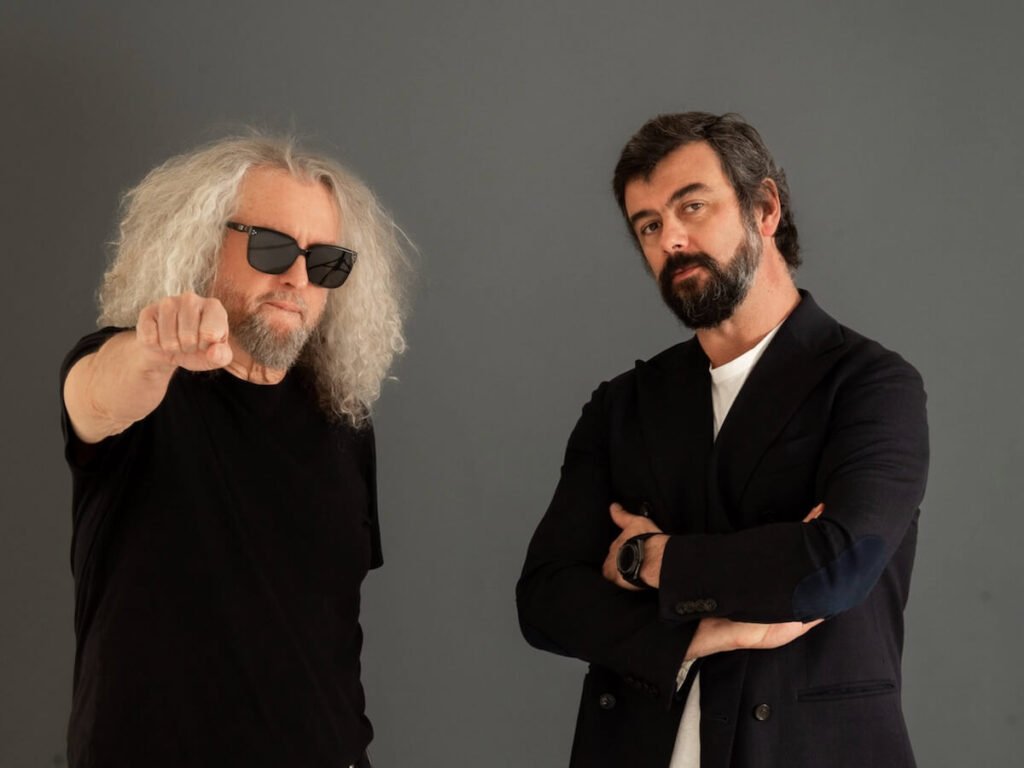
Matteo Lunelli, Chairman and CEO of Ferrari Trento, instead shifts the focus to how Italian wine is communicated and to the debate held during wine2wine.
“Vinitaly.USA went very well, and so did wine2wine, where the discussion was particularly interesting. We tackled the topic of the relationship between wine and health, which I believe is fundamental, and on which wine must also be able to tell its own story, especially regarding its role within the Mediterranean diet.”
In New York, a tasting led by Jeff Porter also put the spotlight on the diversity of Italian sparkling wines.
“As Ferrari Trento Doc and Bisol 1542, this is a message we keep carrying forward. Here in the United States, we need to make people understand more and more the variety and richness of the Italian sparkling wine landscape. I think it’s very positive that Italian wine has its own moment to be showcased and told in New York, in the world’s most important wine import market.”

If Pasqua is looking at large restaurant groups and Lunelli at the ability to communicate the diversity of the product, Massimo Tuzzi, CEO of Holding Terra Moretti, brings a geographical question into the conversation.
“We worked hard in the run-up to the fair to identify and schedule appointments, also in collaboration with our distributors. The meetings happened, and we have a good agenda for today too. Several ideas are also emerging on how to develop the initiative further next year.”
His view of the move from Chicago to New York is positive, but Tuzzi encourages a broader outlook.
“I believe it represents an important step, also compared with the initiatives held in Chicago in previous years, and it allows us to look ahead with optimism and a strong desire to get things done. At the same time, talking with several colleagues yesterday, there was also a wish to explore situations and markets different from the usual ones.”
This leads to one of the most interesting observations gathered during the fair: “When we come to the United States, we should also focus on secondary cities: America isn’t just New York, Miami or Los Angeles. There are many other cities, less frequented by those working in the market, where I believe there could be interesting opportunities and room to work effectively.”

Completing the picture is Marilisa Allegrini, founder of the Marilisa Allegrini Group, who describes an edition that was “almost beyond expectations”.
“We met many interesting people and a qualified audience, including several Masters of Wine and numerous industry professionals. These meetings left us with very positive feelings. The outcome of this New York debut is definitely positive.”

Italian wineries in New York: there’s room for lesser-known territories too
The American market’s curiosity doesn’t stop at the most established denominations. This is one of the themes that emerges most consistently from the wineries present at Vinitaly.USA.
Roberta Bricolo of Azienda Agricola Gorgo already knows the fair well, having also taken part in the two previous Chicago editions.
“I believe that, in a market as complex yet extremely dynamic as the American one, Veronafiere and ITA – Italian Trade Agency have once again proved to be almost indispensable allies for companies looking to support and develop Italian wine exports.”
New York, she says, confirmed its ability to attract trade professionals from different American states. But the most interesting signal concerns the type of wines that attract attention.
“American buyers aren’t only looking for the best-known Italian denominations. There is still strong curiosity, passion and interest in more territorial denominations and in wines that express a precise identity, including organic ones like ours. And it’s precisely in this niche that I believe there are still important opportunities to seize.”
It’s a feeling shared by Sara Costantini of Cantina Villa Simone, at her first Vinitaly.USA.
“We found a lot of curiosity among the American public and a great desire to discover the wines of Lazio and, in particular, the Castelli Romani area, where our winery is located. It’s a wine region we had the opportunity to present through our wines, and it sparked interest precisely because, for many of the buyers and visitors we met, it was something new to discover and explore.”
She adds: “We poured a great many tastings and received very positive feedback. It was interesting to see not only appreciation for the wines, but also curiosity about the territory they come from and a desire to better understand its characteristics and identity.”
A different experience is that of Lorenzo De Conti of Cantina Rossignoli Rinaldi, a young winery from the hills south of Lake Garda that has already been present in New York for about a year.
“Precisely because we are a young company, we decided to look with interest at foreign markets and explore new growth opportunities. We’ve already been in New York for about a year, and this market has given us our first rewards.”
De Conti particularly highlights the usefulness of the app and the meeting booking system: “The appointments we had were truly targeted, and they are giving us the chance to meet industry professionals who are interested in our wines, very open to discussion and genuinely keen to get to know new producers.”
The journey of Cesare Materossi of Azienda Agricola Monte Cicogna, who attended with his Consortium to approach the US market for the first time, is at an even earlier stage.
“We found a well-structured and well-organised fair, although, since this was our first experience, we identified a few aspects that could be further improved in the future. The most important thing, however, is that we found a real presence of trade professionals.”
For Materossi, the main goal is to start building relationships: “Vinitaly.USA allowed us to take a first step towards this market, starting to create relationships and to better understand the opportunities the United States can offer our products. For us, it’s above all a chance to make ourselves known and to tell the story of Lugana and our territory.”
From Ruchè to Timorasso: the alternative Piedmont that intrigues Americans
Among the most interesting accounts of changing demand is that of Svetlana Melnichenko of Cantina Montalbera.
“What we perceived in the United States is above all great curiosity and a strong passion for an alternative Piedmont, which actually already exists and has its own history and winemaking heritage.”
Alongside Barolo, Barbaresco and Barbera, Montalbera drew attention to lesser-known native grape varieties.
“Let’s start with Ruchè, a rare and historic grape, semi-aromatic, fresh and elegant, with great drinkability and appeal. It was precisely on Ruchè that we saw a particularly strong response from the American market. We have also recovered and championed another historic grape from our area, Grignolino, and both Grignolino and Timorasso attracted great interest from the American public.”
The interest, Melnichenko explains, comes mainly from restaurants looking for wines that can pair with different cuisines.
“I believe that today there is growing curiosity about native wines capable of telling the story of a different Piedmont: very food-friendly, versatile and contemporary wines, with a strong fruity character, which can also be enjoyed served slightly cooler.”
It’s a trend the winery can tap into without changing its identity.
“We don’t need to create wines specifically to capture this trend today: these are wines that have always been part of our history and that we have been making for three generations.”
Over to the American distributors: the quality of buyers matters more than the numbers
Offering the distribution perspective is Giulio Trevisiol, Senior Trade Marketing Manager at Frederick Wildman, an importer operating nationwide in the United States.
“The outcome of this edition of Vinitaly.USA is definitely very positive. There was a great vibe right from the start, lots of energy and, above all, we saw a strong presence of buyers and trade professionals.”
For Frederick Wildman, the decisive factor was the chance to meet professionals not only from New York but from many other parts of the country.
“For us this is particularly important because, as Frederick Wildman, an importer with a national presence, we really needed to meet clients and buyers from different markets and areas of the country.”
Trevisiol describes an intense fair, where business took up both days entirely.
“It was a very dynamic edition that kept us busy and really made us roll up our sleeves and work. But that’s exactly what we look for in an event like this: concrete opportunities to meet, exchange ideas and build relationships with the market.”
The Consortia speak: Prosecco, Pinot Grigio and Brunello look beyond New York
The positive assessment of the Big Apple debut also comes from the Consortia attending the fair.
Luca Giavi, Director of the Consorzio di Tutela del Prosecco Doc, highlights the satisfaction expressed by the companies in the production system.
“Positive feedback that we also gathered from our production system and which we share, as the Consorzio di Tutela del Prosecco Doc, after having had the opportunity to meet some of the leading communication professionals in the United States.”
For Giavi, New York showed the potential of an event capable of reaching key players for telling the Prosecco story.
“We saw an edition that proved to be sparkling, just like our Prosecco, and that demonstrated the full potential of an initiative held in New York, a city able to convey the energy and dynamism of an America that looks ahead.”
Luca Rigotti, for the Consorzio Doc delle Venezie, speaks instead of a leap in quality compared with previous editions.
“Vinitaly.USA, in its first New York experience, has in my view made a big leap in quality. New York welcomed us in a truly positive way, and I think this could be the start of something important for the sector.”
Rigotti stresses the collaboration between institutions and producers, but also the need to accompany wine promotion with a cultural message.
“I believe this collaboration between Vinitaly, the institutions, the Ministry, ICE – Italian Trade Agency and us producers is the right path to establish Italian wine more and more firmly around the world. A product that must become increasingly recognisable and synonymous with quality, tradition and sustainability.”
He adds: “We must learn to appreciate wine for what it is: a drink deeply linked to our culture, to conviviality and to food, but also to special moments of sharing. Wine is part of our history and our tradition and, precisely for this reason, its consumption must go hand in hand with awareness and culture.”
On the great Italian reds front, Giacomo Bartolommei, President of the Consorzio del Vino Brunello di Montalcino, describes an equally positive experience.
“The Consorzio del Vino Brunello di Montalcino answered the call at this edition of Vinitaly.USA in New York, taking part with its own collective stand. The outcome of these two days is definitely very positive.”
Here too, the main value was the dialogue with people from different markets.
“We met many buyers and trade professionals from not only New York, but from various parts of the United States. This is particularly important for us, because it allowed us to engage with professionals working in different markets and to present Brunello di Montalcino and the wineries in our collective stand to them.”
The American market is changing: new generations and drinking occasions
The accounts gathered at Vinitaly.USA take on an even clearer meaning when read alongside data on American consumer habits.
The Wine Market Council survey, cited by the Uiv-Vinitaly Observatory, shows that wine is still mostly drunk on its own, in 67% of cases, or with meals, in 63%. But less traditional ways of drinking it are spreading: 34% of consumers say they also drink it in cocktails and 30% with ice.
Overall, 75% of regular consumers say they also drink wine in ways other than the conventional ones.

This change doesn’t necessarily mean abandoning great wines or more established food occasions. Rather, it points to a multiplication of the contexts in which wine can find its place.
In this scenario, some of the observations made at the stands become easier to understand: the search for food-friendly, versatile wines described by Montalbera, the interest in Italian sparkling wines highlighted by Lunelli, and the weight of restaurant groups pointed out by Pasqua.
The greater curiosity about lesser-known territories, noted by Gorgo and Villa Simone, also suggests that American demand isn’t necessarily focused only on the most famous labels.
These are signals gathered during a single fair and, on their own, they aren’t enough to define a general market trend. But they point to possible directions producers can work on.
After Vinitaly.USA, the challenge is turning contacts into market
The New York debut closes with a broadly positive verdict from wineries, distributors and Consortia. The quality of the people met, the presence of buyers from different states and the interest in lesser-known wines and territories are the elements that recur most often in their accounts.
The backdrop remains a complex market, shaken by uncertainty over tariffs and by changing consumption patterns. The United States, however, is still the leading export market for Italian wine, with €1.76 billion in exports in 2025.
New York offered a platform for meetings and new relationships. Now the result will be measured by the ability to turn those contacts into concrete business opportunities, even beyond the best-known American markets.


