


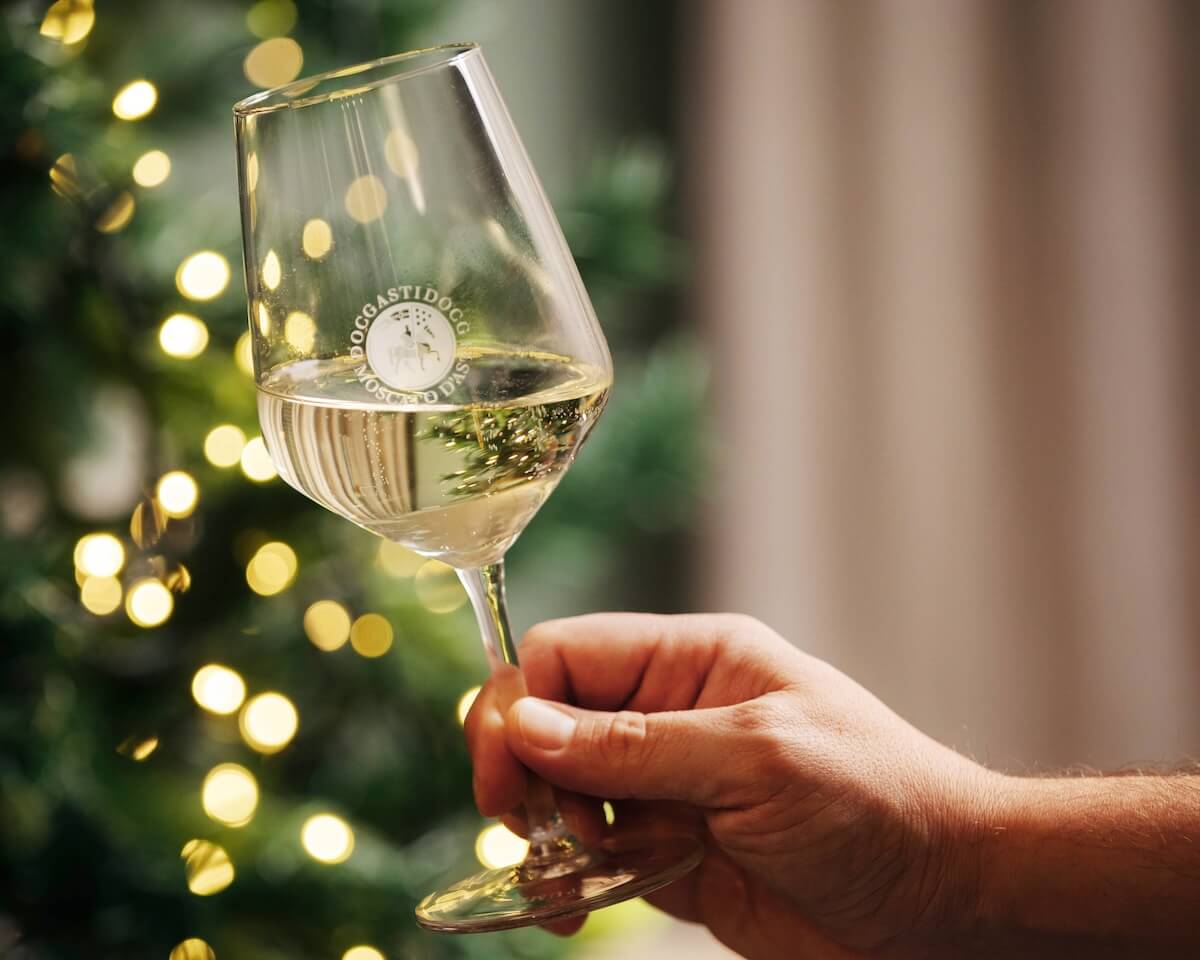
There are wines that smell of tradition and others that tell the story of a land; Asti DOCG manages to do both, speaking of its territory even before being poured into the glass. It is born from hills seemingly designed to embrace the vine—those of Langhe, Roero, and Monferrato: a mosaic of slopes sculpted by human labor, recognized by UNESCO in 2014 as Italy’s first wine-growing landscape to become a World Heritage Site. Here, across 51 municipalities in the provinces of Asti, Alessandria, and Cuneo, Moscato Bianco finds its ideal cradle: 10,000 hectares of vineyards, some so steep—the famous sorì—that they still require exclusively manual work. From this grape, the finest among the Muscats, comes the dual soul of Asti DOCG: Asti Spumante and Moscato d’Asti.
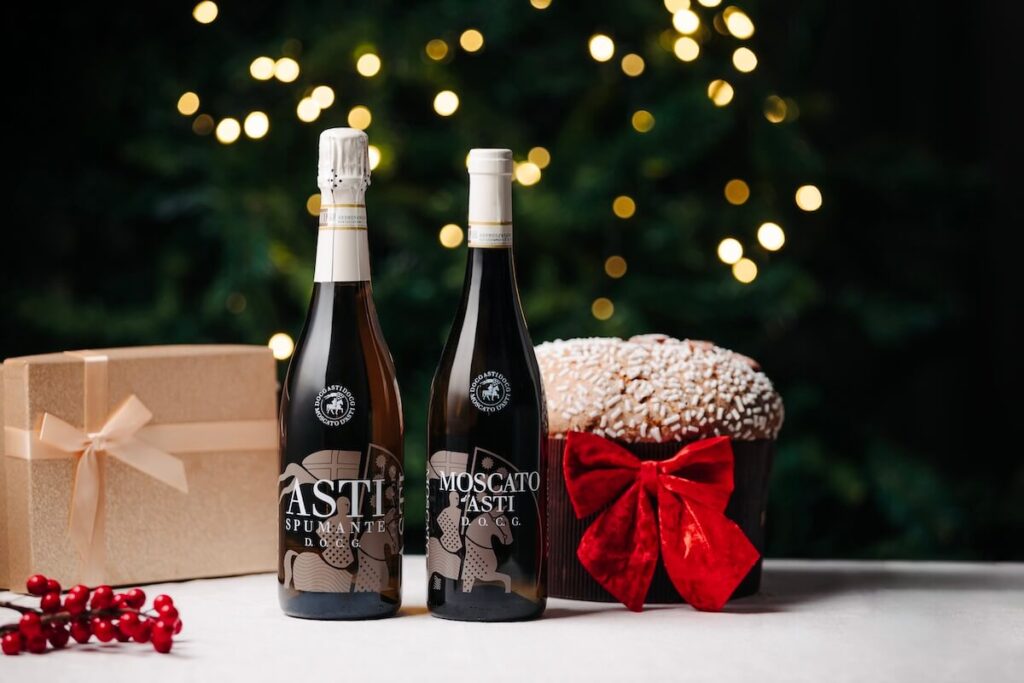
The Aromatic Promise of Moscato Bianco
Moscato Bianco is an aromatic promise—the very voice of the land. It evokes wisteria and linden blossoms on the nose, ripe peaches and apricots that sweeten the palate, a breath of orange, honey, and aromatic herbs that lingers in memory and makes it unmistakable. It is the grape that, more than any other, knows how to transform the light of the hills into a liquid story. Its natural freshness is the thread that unites two different yet complementary interpretations.
Moscato d’Asti, celebrated for its low alcohol content and gentle sweetness, is a lightly sparkling wine with restrained pressure, offering notes of acacia, honey, and sage that envelop the palate. Light, delicate: it is the wine of immediate pleasure.
Asti Spumante, on the other hand, is the symbol of Piedmont worldwide and Italy’s quintessential aromatic sparkling wine: an explosion of fine bubbles, intense aromas of flowers and citrus, a balance marked by freshness and natural sweetness for a toast that speaks of celebration yet suits everyday elegance.

Asti DOCG: Not Just the Wine for Holiday Desserts
For many Italians, Asti DOCG has always been the glass for holiday desserts. And it’s true: no wine pairs better with panettone, pandoro, nougat, and dry pastries. But its potential goes far beyond. Its versatility can surprise even the most discerning palates.
In Piedmontese tradition, it stars in the merenda sinoira, alongside cheeses, cured meats, vegetable pies, and anchovies in green sauce. Today, it increasingly finds harmony with Asian cuisine—spicy and sweet-and-sour—with oysters or crispy fried foods.
It also shines at aperitivo: with salmon crostini, anchovies with butter and bread, prosciutto crudo, even savory panettone. It’s a sparkling wine that fears no pairing—indeed, it invites them.
It’s a wine that doesn’t divide, but unites: marrying sweet while seducing savory.
Asti DOCG as a Signature Cocktail Ingredient
Its versatility also thrives in cocktails. Contemporary mixology has rediscovered it as a signature ingredient: low in alcohol, naturally aromatic, able to add personality without overpowering.
The Asti Signature combines basil, pink grapefruit, and Sichuan pepper in a fresh, aromatic drink; Asti Gold plays with white Vermouth, white Bitter, and an orange slice for an essential, sparkling toast; Moscato Zen invites calm with elderflower, lime, and ginger; Moschjto Mint & Lime lights up the golden hour with mint and rum; and Autumn blends apple-cinnamon tea with the fruity notes of Asti Spumante Dolce.
All recipes that prove how this denomination reinvents itself without betraying its identity.
Asti DOCG: The Toast of Sports
And then there’s its bond with sports—a success story. Asti DOCG is the Official Sparkling Wine of the ATP Tour and the Nitto ATP Finals in Turin, where it toasted in 2025 to the second consecutive victory of Italy’s number-one tennis player, Jannik Sinner. It also shines at the Internazionali BNL d’Italia and accompanies iconic events like the historic Milan–Sanremo Cup car race reenactment.
Asti DOCG is this: a sparkling wine that celebrates milestones, telling Italy’s story worldwide with the elegance of its hillside fruit and an aromatic character that knows no borders.


