


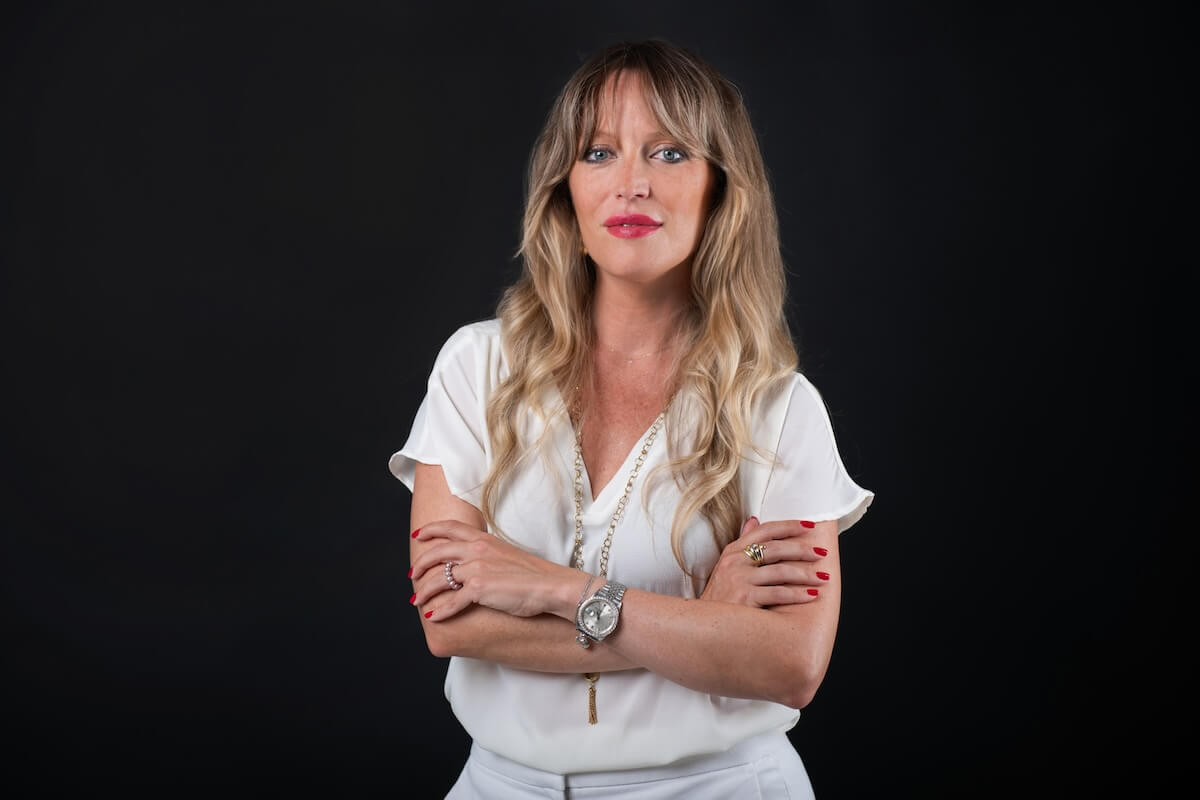
The Institute of Masters of Wine has announced four new Masters of Wine: Karen Hong Liu MW (Hong Kong), Cristina Mercuri MW (Italy), Kim Oshiro MW (US), and Bryce Wiatrak MW (US). Mercuri’s admission is historic for Italy, as she is the first woman based in Italy to obtain the Master of Wine title. With her, Italy now counts four MWs, joining Gabriele Gorelli, Andrea Lonardi and Pietro Russo, further strengthening the Italian presence within the global MW community, which today consists of 422 active members in 30 countries.
“It was an extremely tough journey, built on daily study and without shortcuts,” said Cristina Mercuri MW in her first statement. “It taught me method, humility, and total dedication to work.”
IMW chair, Roderick Smith MW, emphasized the impact of the new “vintage” of professionals:
“Every new Master of Wine brings fresh perspectives and energy to our community. I congratulate this year’s cohort on their remarkable achievement and look forward to the contributions they will make, not just to our membership, but to the advancement of the wine world”.
Executive Director Sarah Harrison added:
“We are delighted to welcome four Masters of Wine—Cristina, Karen, Kim and Bryce—into the membership of the Institute of Masters of Wine. For each of them, being awarded the MW title represents many years of dedication, learning and commitment. We are all incredibly proud of what they have achieved”.
Who Is Cristina Mercuri MW
The IMW defines her as “the first woman based in Italy to become a Master of Wine.” After beginning her career as a lawyer in international law firms, she entered the wine world in 2015 and earned the WSET Diploma in 2018. She is a Sherry Educator, Cava Educator, Port Educator and Italian VDP Ambassador.
As Founder & CEO of Mercuri Wine Club, she combines consulting and training for Italian and international producers, working on education, brand development and market strategies. She is Wine Editor for Forbes Italia, an international judge for Decanter and Brand Ambassador for Mack & Schühle Italia; she teaches up to the WSET Diploma level and designs corporate training programs. Her Research Paper is titled “Wine, Women and Fascism: A Visual Analysis of the Representation of Women in Propaganda in Enotria (1922–1942)”, reflecting a research approach that intertwines history, imagery and wine culture.
The research applies visual semiotics to the analysis of the illustrated covers of Enotria, the first Italian magazine specialized in wine. The study shows how female representation was used as propaganda and today offers a relevant reflection on wine communication, which is called to move beyond the product and explore languages, stereotypes, and cultural models, with particular attention to the role of women in the sector.
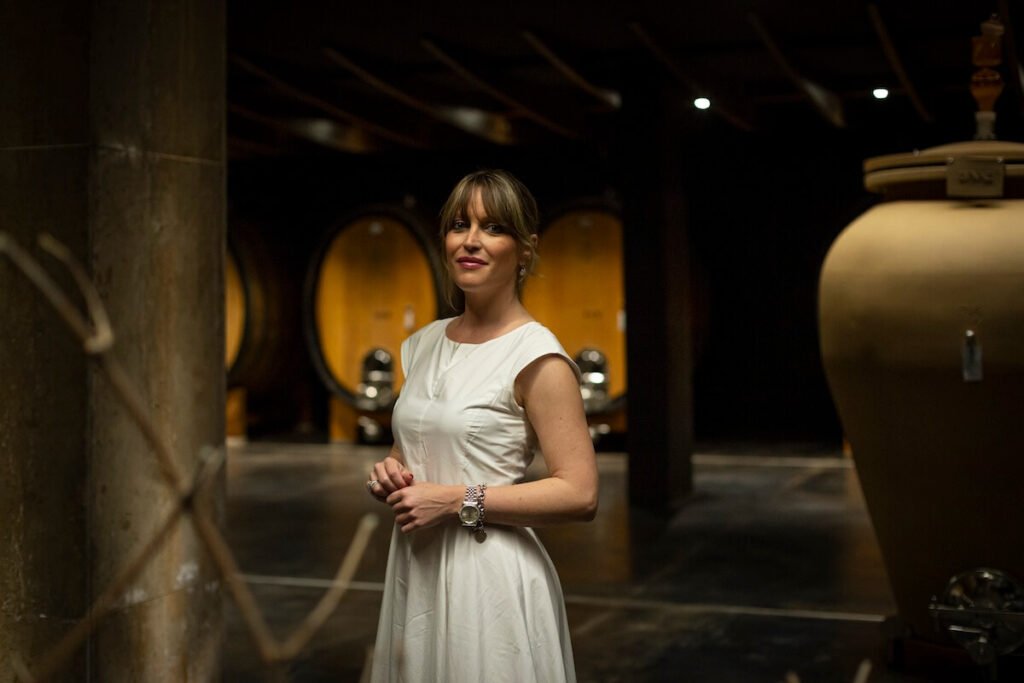
Why the Master of Wine Title Matters (and What It Requires)
The Master of Wine is considered the most rigorous credential in the sector. The examination process includes a practical component with three blind‑tasting papers of twelve wines each and a theoretical component with five essays covering the entire supply chain: viticulture, winemaking, wine handling and movement, business, and contemporary issues.
These sections are followed by the Research Paper, an original and in‑depth study on a wine‑related topic that may draw from the sciences, social sciences and humanities, or the arts.
Only after passing all modules and signing the IMW Code of Conduct may candidates use the title Master of Wine and the initials MW, committing to act with honesty and integrity in line with the Institute’s mission.
Cristina Mercuri MW: “A seven‑year challenge that made me question myself many times”
Cristina Mercuri MW’s journey—the first woman in Italy to obtain the Master of Wine title—is a story of determination and a professional identity built against the current. “The first thing I did? I called my mother and said: Mom, it’s over!” she recounts in her first interview as an MW with Alessandra Dal Monte for Cook, Corriere della Sera, reflecting on years spent between exams, books, revisions of her thesis, and a wait of more than 18 months before receiving final approval for her Research Paper.
“A seven‑year challenge that made me question myself many times,” she says, happy to enter that Olympus which, in Italy, until now counted only three names, all male—Gabriele Gorelli, Andrea Lonardi and Pietro Russo—and about 500 professionals worldwide. “I am very proud, and after this journey I feel like saying to my colleagues, to the women working in wine, that there is no limit to what they can and want to achieve in this sector. We have always been told, they have always told us, to stay in our place: well, no. I say we can shout louder.”
Pride, however, coexists with personal awareness: “I want to be clear about one thing: this journey was so difficult that it made me understand something fundamental. The Master of Wine is an important title that I am proud of, but I am not that title. I am and remain Cristina Mercuri: I learned this the hard way, I risked losing myself.”
In the interview with Alessandra Dal Monte, the full complexity of the MW path emerges: Stage 1 with blind tasting and three technical essays; Stage 2, four days of demanding exams on wines from around the world, which Mercuri passed on the second attempt; and especially Stage 3, the thesis, “the most difficult part,” because it requires “innovative depth” and “a critical approach” capable of reaching a result and then “challenging it, seeing it from other perspectives, questioning it.”
Her thesis, dedicated to the representation of women in the illustrations of Enotria magazine during the Fascist era, shows how women were portrayed in propagandistic terms, “true breeders,” even within a magazine that was not fascist but cultural. This leads to a connection with the present day: the current wine crisis is “multifactorial,” but it is also affected by the lack of strategic communication capable of enhancing authenticity, imagery and language, because “everything is content,” from lighting to the angle of a photo. For this reason, Mercuri rejects labels such as “female wine” or “male wine,” which exclude more than they describe: “Gender does not determine which wine a person likes.” On the production front, she calls for greater openness—including toward new categories such as dealcoholized wines—and for attention to high‑quality entry‑level wines: “If young people don’t drink wine, it’s also because they have had unhappy experiences.”
Italy Reaches Four Masters of Wine with Cristina Mercuri MW: A Value That Benefits Italian Wine Worldwide
The arrival of Cristina Mercuri MW expands and enriches the Italian “team”—with Gabriele Gorelli, Andrea Lonardi and Pietro Russo—and brings concrete benefits.
On the export front, having a recognized voice in international educational, academic and media contexts enhances Italy’s ability to engage with high‑potential markets using language and metrics aligned with global standards. In training, the MW methodology helps raise the level of competencies expected from the trade and from professionals in the supply chain.
On a cultural level, the achievement of the first Italian woman Master of Wine sends a strong message of inclusion and authority, where technique, research and communication converge in a profile capable of shaping the global narrative of Italian wine.


