


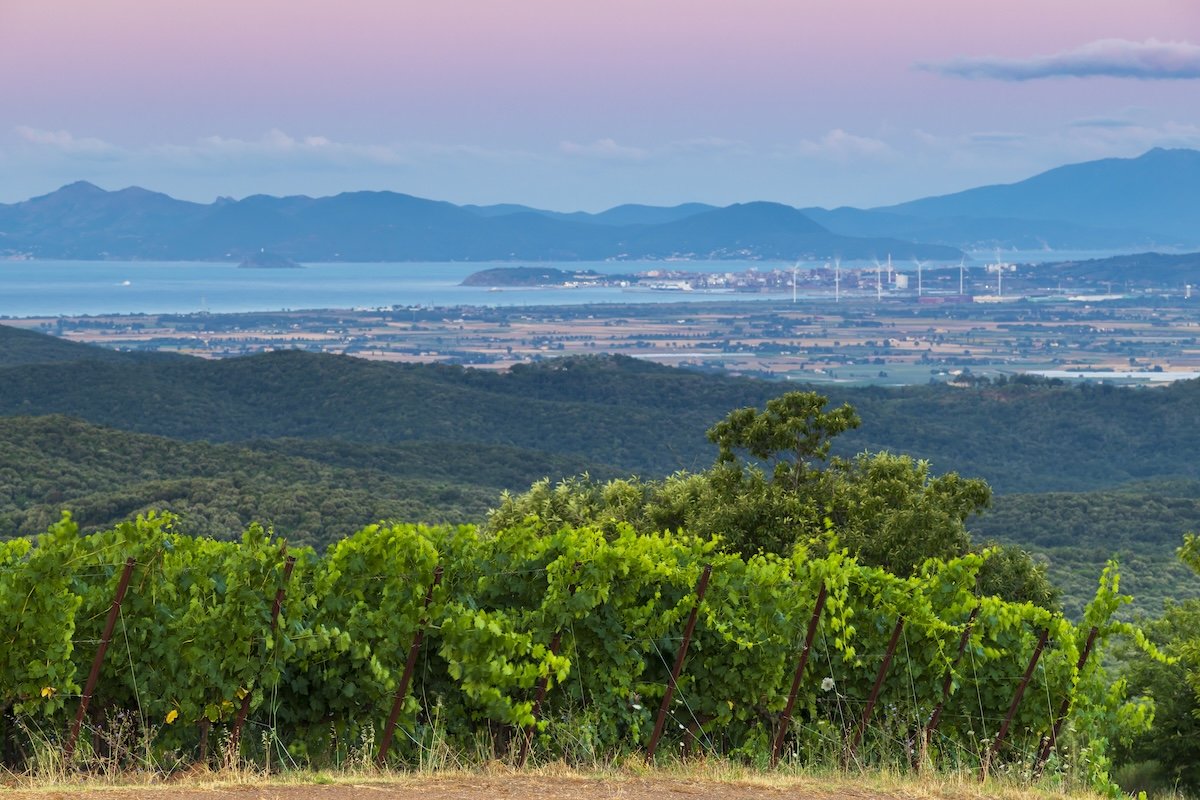
Montebamboli was born from a long, far‑reaching vision — the kind that sees what does not yet exist. More than 25 years ago, Vittorio Moretti stopped before a hillside immersed in the Montioni Natural Park, on the Tuscan Coast, and recognized a potential that few would have been able to read. It wasn’t a sudden spark, but a revelation that matured over time: the vineyards were purchased and planted starting in 2005, while the project grew through patient observation of soil, wind, light and altitude. A deep, attentive listening to the land.
It was Andrea Lonardi MW, working closely with the Moretti family, who saw in Montebamboli a new possibility: not an extension of Petra, not a model to replicate, but a different way of interpreting the Tuscan Coast. A free interpretation, unbound by predefined schemes, capable of enhancing the unique conditions of high‑altitude vineyards. This is how a strongly desired project took shape — one that today finds a courageous, contemporary and coherent expression. Montebamboli is not just a place: it is a vision finally taking form.
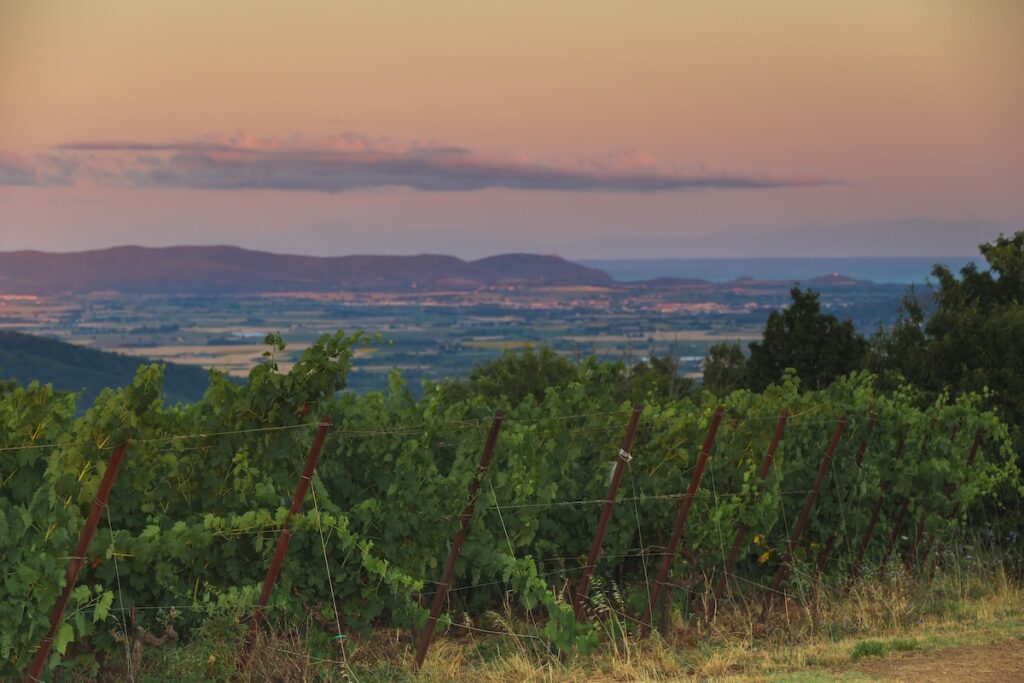
Petra: a vision coming into sharper focus
This same vision has guided Petra over the past five years, a period marked by clear qualitative improvement and solid economic growth, supported by a more defined portfolio for horeca and export, and by a managerial structure that has never betrayed its family roots.
The new course began almost by chance, in a kitchen during a dinner among friends: between risotto and braised shanks, the idea of a project began to take shape. Then came January 2024: another dinner, a more concrete discussion, and the decision to sit down and truly design Petra’s future. Not an industrial project in the strict sense, but a path made of targeted choices and precise interventions that require vision. And vision, in the Moretti household, has never been lacking: Vittorio Moretti’s eyes — Lonardi recalls — “see far ahead.” Serious projects require time. And Massimo Tuzzi reaffirmed this when he called Lonardi to work on a long‑term perspective.
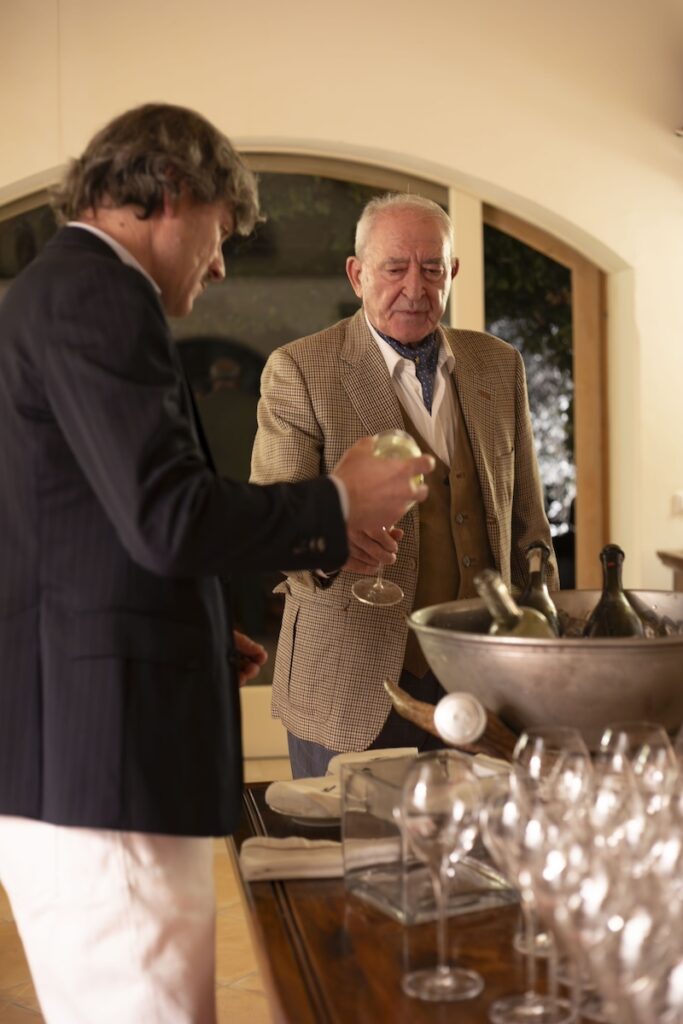
The Tuscan Coast between myth and Mediterranean identity
Lonardi recounts rediscovering the pleasure of learning precisely on the Tuscan Coast, one of the least studied yet most promising areas. Twenty‑five years ago, during VinoVip Cortina, investors were encouraged to look to the coast, riding the wave of the Sassicaia myth. It was the era when the Supertuscan imagination was taking shape.
Today, the Tuscan Coast shows two souls. One modern, tied to Bordeaux‑style blends. The other ancestral, Mediterranean, belonging to the great arc stretching from Barcelona to Capalbio, where grape varieties change names but express the same cultural matrix.
It was here that Moretti identified a natural terrace at 400 meters above sea level, overlooking the Mediterranean, where varieties such as Grenache and Vermentino were found in the vineyards. From that intuition came a different project, rooted in a more ancient and Mediterranean identity — a project now unfolding at Montebamboli and destined to include an important hospitality development.
Montebamboli: the Tuscan Coast at altitude
Montebamboli is a hillside facing the sea. Windy, rainier than Petra, capable of producing wines with unexpected lightness and immediate drinkability. Between 2022 and 2024, rainfall here was 50% higher than in Petra — a factor that radically changes vegetative dynamics and stylistic profile.
It is a “vineyard in the woods,” surrounded by 7,000 hectares of Mediterranean scrub, where biodiversity, constant ventilation and acidic, stony soils create a distinct identity. The grapes are vinified at Petra, but the soul remains in altitude. If Petra is a vertical and hierarchical project, Montebamboli unfolds horizontally, following the geography of its parcels.
Together with Massimo Tuzzi, the business plan was rewritten in three phases: study, rationalization and application. In 2024, a new group plan was defined, and in 2025 Petra moved from eight wines to three. The result is significant: the same turnover as the previous year, with five fewer wines. A consolidation that strengthens identity.
Montebamboli: three wines, one Mediterranean identity
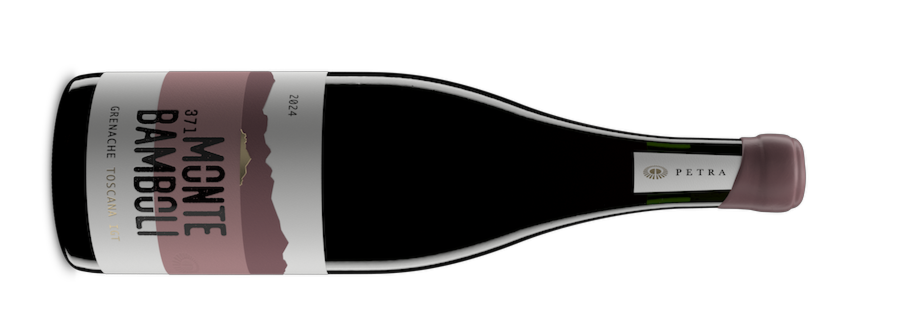
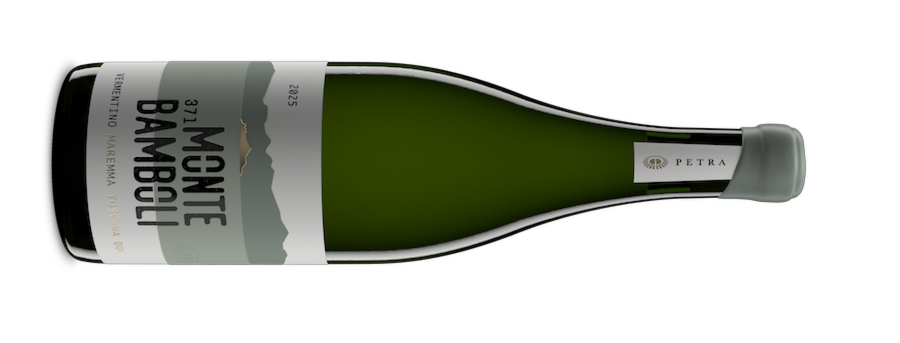
The Montebamboli wines — Cabernet Franc, Grenache and Vermentino — express a bright Mediterranean character, with alcohol levels around 13.5% Vol.
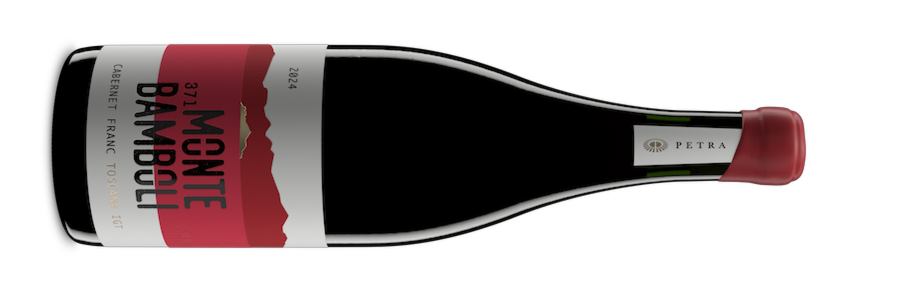
The Cabernet Franc offers a coastal, delicate interpretation of the variety. The Grenache is the surprise of the Tuscan Coast, fermented in steel and aged in concrete. The Vermentino, often described in Tuscany as “sun‑kissed,” comes from a selection of green grapes pressed after a night at low temperature, fermented in new wood, with marine hints of oyster shell and olive oil on the nose.
“I personally experienced the birth of Petra: it was the subject of my thesis with Professor Attilio Scienza, with whom we developed the zoning project,” says Francesca Moretti, vice president of the Terra Moretti holding and winemaker at Bellavista. “Over the years, I have always looked at Montebamboli with attention, because I sensed its potential. My father and I are very happy that today Andrea Lonardi MW has taken up this legacy and made it contemporary, giving shape to a courageous project that has always had a natural vocation in that territory.”
Petra and Montebamboli now represent two expressions of the same vision: one rooted in the tradition of Bordeaux‑style blends, the other projected toward a Mediterranean future — lighter, more identity‑driven and contemporary. Not just wines, but the conscious construction of a new narrative for the Tuscan Coast.


