



Riedel celebrates the first 270 years of its history by returning to where it all began: the wine glass. With the launch of Manufaktur Vitis, the historic Austrian maison reaffirms its vision, once again transforming the glass from a simple container into a tool capable of redefining the wine‑tasting experience. A new interpretation expressed through a collection of handmade stemware that translates the savoir‑faire of 11 generations into a contemporary key.
270 years of innovation: Riedel’s vision between tradition and the future
Founded in 1756, Riedel built its identity around a principle destined to change the way wine is tasted forever: the shape of the glass directly influences aromatic and gustatory perception. Beginning in the 1950s with Claus J. Riedel, this intuition redefined glass design, transforming it from a mere vessel into a technical tasting instrument.
Today, under the guidance of Maximilian J. Riedel, the family’s 11th generation, this approach continues to evolve while maintaining a strong link between innovation and tradition.
“Riedel’s 270th anniversary is a celebration of family, craftsmanship and vision,” says Maximilian J. Riedel. “Our story is built on the dedication of 11 generations who have transformed and elevated glassmaking from a craft into a true art form.”

Riedel Manufaktur Vitis: the new frontier of handmade stemware
Created to mark this important milestone, Riedel Manufaktur Vitis is the first fully handmade varietal collection since the iconic Sommeliers series. More than a celebratory project, it represents a new synthesis of aesthetics and performance.
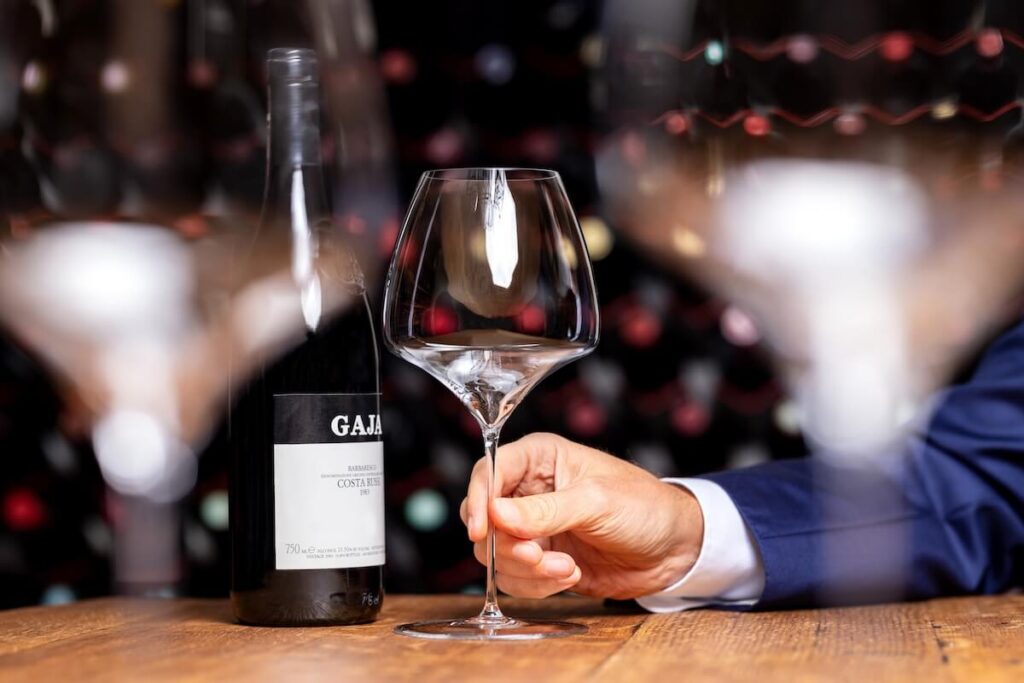
Designed by Maximilian J. Riedel, the line stands out for its V‑shaped, diamond‑like silhouette, conceived to combine visual elegance with technical precision. Each glass is crafted to enhance specific grape varieties, with meticulous attention to the rim, which becomes the central element of the sensory experience.
A distinctive detail is the engraving at the base of each glass, indicating the recommended variety — a discreet yet meaningful choice that encapsulates Riedel’s philosophy of merging functionality and design.
Craftsmanship as value: each glass is a unique piece
Handmade production gives every glass in the collection its own identity. Small variations — far from being imperfections — become the signature of the master glassblower, turning each piece into something alive, authentic and unique.
This is where the deeper meaning of the project emerges: not only formal innovation, but a tribute to glassmaking culture and to a knowledge that has crossed centuries.


The Manufaktur project and its dialogue with contemporary design
Manufaktur Vitis is part of the broader Riedel Manufaktur project, an initiative that pays homage to European glassmaking and to the dialogue between tradition and contemporary design. Alongside the new line, the Manufaktur Bellorotondo collection and a new decanter also take center stage, all expressions of the same vision.
The official presentation took place during Milan Design Week 2026, inside the Shake Design booth at the Salone Internazionale del Mobile — a context that highlights the brand’s positioning not only in the world of wine, but also in contemporary design and living.
Riedel, 270 years later: the glass as an experience
With more than two and a half centuries of history, Riedel continues to redefine its role while preserving the guiding principles behind its success: form follows function, innovation grows from tradition, and experience is the true destination.
The launch of Manufaktur Vitis clearly reflects this direction: the glass is no longer just a technical tool, but a cultural, aesthetic and narrative object capable of shaping the way wine is perceived, interpreted and lived.


