


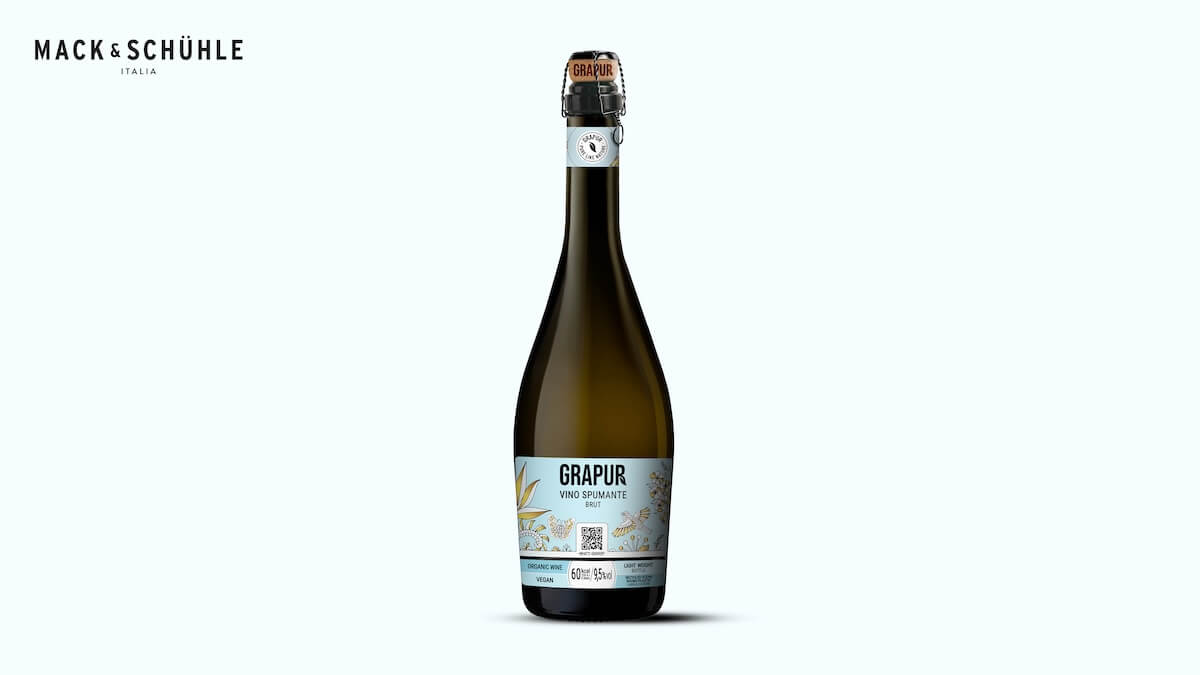
With the launch of Grapur Vino Spumante Brut, Mack & Schühle Italia opens a new chapter in the Grapur project, introducing the first sparkling wine of the line and strengthening its positioning in the low‑alcohol and low‑carb segment. The new product represents a key step in the Group’s No‑Lo strategy, extending the concept of conscious consumption to the world of sparkling wines. Grapur was created as a non‑dealcoholized oenological project, designed to offer wines with low alcohol content, reduced caloric intake, and certified organic and vegan production, while maintaining sensory centrality, aesthetics, and environmental responsibility.
The first Grapur sparkling wine and the new language of light wine
Grapur Vino Spumante Brut is the first sparkling expression of the project and joins the still white and red versions, completing the range. Made from a blend of white‑grape varieties, it stands out for its alcohol content of 9.5% vol and a caloric value of about 60 Kcal per 100 ml, characteristics that place it at the center of the new frontier of low‑alcohol and low‑carb wine.
In the glass it shows a straw‑yellow color and a delicate, persistent perlage. The aromatic profile is built on fresh notes of citrus peel and white flowers, accompanied by hints of green apple and pear, with a slight mineral nuance. On the palate it is described as light and dynamic, supported by lively acidity that enhances drinkability and makes it suitable for fresh and contemporary pairings.
The No‑Lo vision of Mack & Schühle Italia between circularity, conscious consumption, and quality
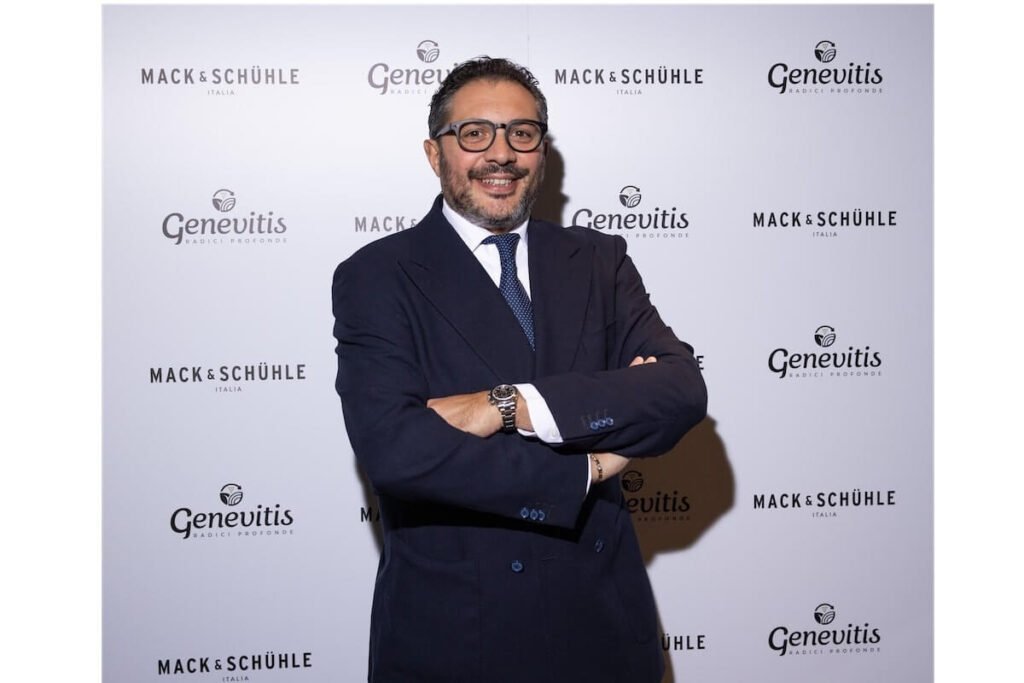
The Grapur project was created to respond to new consumption habits, without resorting to dealcoholization, but working on production and stylistic choices oriented toward lightness and responsibility. As Fedele Angelillo, sole director of Mack & Schühle Italia, emphasizes:
“With Grapur we wanted to rethink wine in a contemporary way, starting from the real needs of consumers and placing circularity, lightness, and quality at the center.”
The introduction of the first sparkling wine marks a key moment in this journey. Angelillo adds:
“The launch of our first low‑alcohol Spumante Brut represents an important step in this path: a proposal that expands the range and strengthens our vision of a more accessible, transparent, and responsible wine, without compromises on the sensory level. We will continue to invest in innovation and research to actively contribute to the evolution of the No‑Lo wine sector.”
Grapur is also Sparkling: low alcohol, low carb, and sustainable design
Grapur’s distinctive value also lies in its packaging, conceived as an integral part of its sustainability philosophy. The 550‑gram sparkling bottle, produced by Verallia, reduces environmental impact compared to traditional bottles. Nomacorc Ocean closures by Vinventions and Ocean Action labels by UPM Raflatac use recycled plastic recovered from coastal areas, while the finishes by Luxoro and the recycled cardboard packaging by Ondulkart complete a system designed to combine aesthetics and circularity.
In 2025 the Grapur project received major international awards, including the Red Dot “Best of the Best” in the Sustainable Design – Packaging category, the Red Dot “Product Design” in the Packaging – Beverage section, and the bronze at the Pentawards in the Sustainable Design category.
Grapur as the avant‑garde of Italian No‑Lo wine
With the launch of the first sparkling wine, Grapur positions itself as one of the most structured projects on the Italian low‑alcohol and low‑carb wine scene, demonstrating that even sparkling wines can interpret a contemporary, premium, and responsible language.
The journey of Mack & Schühle Italia continues in parallel with research and experimentation on dealcoholized and partially dealcoholized wines, developed with the support of Omnia Technologies, with the aim of contributing to the qualitative and cultural development of the No‑Lo world “made in Italy.”
With Grapur Sparkling, the revolution of light wine officially enters the world of sparkling wines, marking an evolution that places conscious consumption, reduced caloric impact, and sensory quality at the center.


