


“But why did you do it?” CEO Alberto Lusini smiles when the question lands on the table. Because yes, choosing Montefalco and Sagrantino at a time when the market seems focused mainly on sparkling wines, whites and low‑alcohol styles may look like a counter‑trend move. And yet, this is precisely where one of the most significant operations built by Angelini Wines & Estates in recent years begins: the entry of Arnaldo Caprai into the group’s portfolio. An acquisition which, as Lusini tells WineCouture, does not stem from a simple territorial logic, but from the search for brands with identity, international recognition and premium positioning. A strategy that now intertwines with the relaunch of Val di Suga in Montalcino, the new direction of Fazi Battaglia and Cantina Puiatti on the white‑wine front, and the evolution of Bertani.
Alberto Lusini: “Arnaldo Caprai is a unique brand in the Italian landscape”
“When you do M&A, you need to understand whether you want to choose a region or a brand,” explains Alberto Lusini. “I’ve always said that if there is a brand off the beaten path but capable of building real brand equity, then it can be very interesting.”
The Arnaldo Caprai opportunity emerged at a particularly delicate moment. “It was a very specific historical phase: an investment fund had entered, and then unfortunately Arnaldo passed away in early January. It was a lightning‑fast operation: four months of very intense work.”
According to Lusini, the value of the Umbrian winery goes far beyond Sagrantino. “Arnaldo Caprai has a positioning, an average price point and a way of working that very few wineries in Italy can match.”
What struck Angelini Wines & Estates most was the level built around the brand. “They’ve done an incredible job with hospitality: 18,000 visitors a year in a territory outside the most travelled routes. It has become a destination. You go to Umbria, and you have to go to Caprai.”
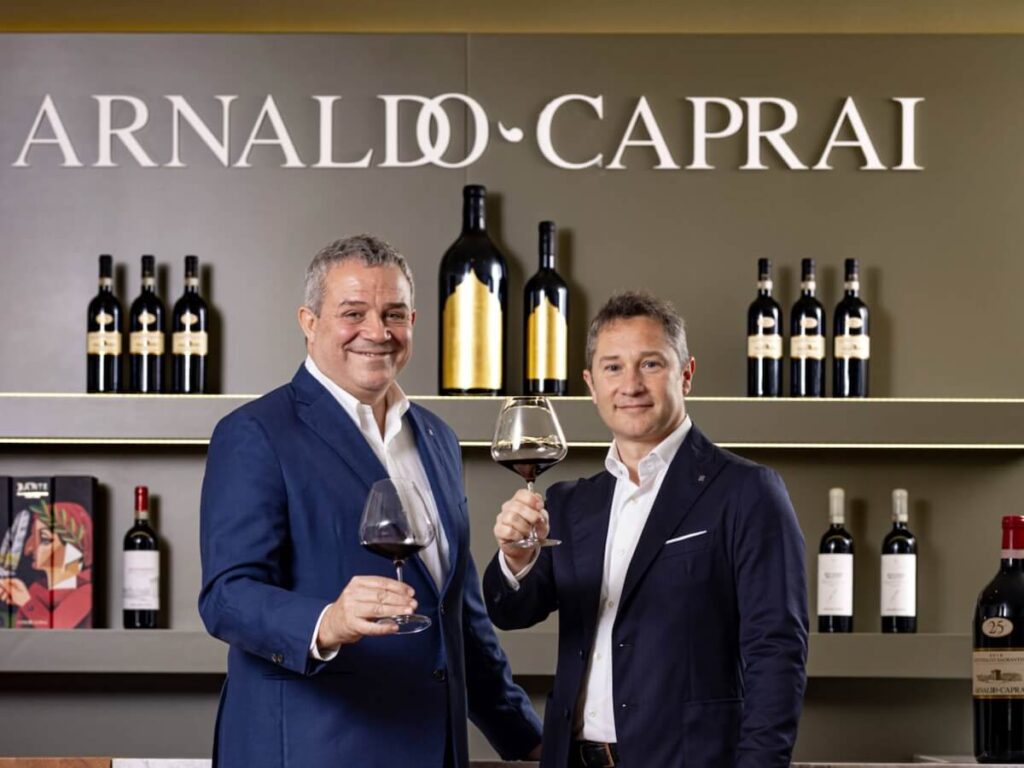
Montefalco, hospitality and CSR: why Angelini Wines & Estates chose Arnaldo Caprai
Lusini also insists on another key aspect: Arnaldo Caprai’s ability to build a contemporary model — not only viticultural, but also cultural and social.
“They have an admirable focus on CSR. They’ve done excellent work with Caritas projects, in raising the level of university graduates in agriculture, and in bringing technology into the sector. There was a lot to learn.”
The acquisition also carries strong commercial logic. “We have a very widespread sales force, so there are important synergies. It would probably have been easier to explain the purchase of a sparkling wine producer or a Barolo estate, but if you look at all the strategic elements, in our view Arnaldo Caprai fits perfectly.”
And when it comes to international recognition, the CEO is clear: “In our portfolio, from Bertani to Arnaldo Caprai, we have names that are recognized abroad. They have real brand positioning.”
“The trends say whites and low‑alcohol? We choose Arnaldo Caprai”
The CEO of Angelini Wines & Estates also addresses, with a touch of irony, the topic of current wine trends.
“The other day I joked: we read the trends, and they say sparkling wines are booming, whites are booming, low‑alcohol wines are booming… so we’re taking Arnaldo Caprai,” he says with a smile.
But behind the joke lies a clear conviction: “You have to look deeper. Arnaldo Caprai is not just Sagrantino.”
Lusini immediately mentions the Umbrian winery’s whites: “Cuvée Secrète is wonderful.” And he highlights the value of the wines created with Michel Rolland. “We had practically closed the deal when the news of Michel Rolland’s passing arrived. There was even greater attention on the wines he crafted with Marco Caprai, because those labels remain spectacular products.”
Val di Suga: the relaunch driven by storytelling and hospitality
Among the projects in which Angelini Wines & Estates is currently investing most heavily is Val di Suga.
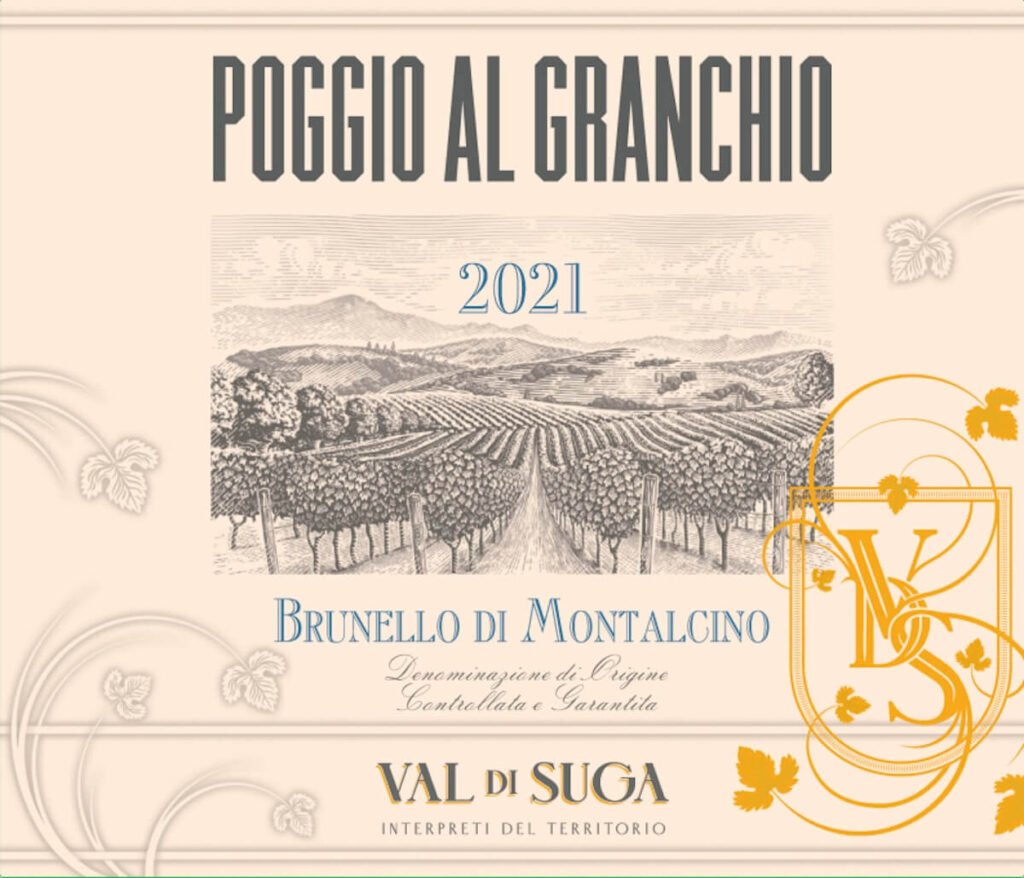
“We’re doing very well in terms of quality. We’ve received some of the highest scores in the major magazines, especially with Poggio al Granchio,” Lusini explains.
But the work goes far beyond the wine itself. “We’ve opened the entire hospitality side and we’re investing heavily in it, because Val di Suga has an enormous history that, focused as we were on Bertani, we had perhaps set aside a little.”
Today, the focus is above all on recovering the brand’s identity. “We’re taking back all the historical materials, the archive, everything needed to explain Val di Suga again for what it truly is.”
Also because, Lusini stresses, the estate’s heritage is immense: “It’s one of the most important wineries in the region, and we have vineyards in extraordinary locations that are just waiting to be fully valued.”
Fazi Battaglia, Verdicchio and the new direction of Angelini Wines & Estates’ white wines
On the white‑wine front, Angelini Wines & Estates is working simultaneously on Fazi Battaglia, Cantina Puiatti and Bertani.
For Fazi Battaglia, the turning point begins with packaging. “We moved away from the amphora‑shaped bottle because today there are so many amphorae on the shelves that it had become difficult to maintain recognizability and positioning.”
The strategy is clear: relaunch the brand above all internationally. “In recent years, international distribution had been partly lost. Now we’re putting all the pieces back in place.”
And Lusini doesn’t hide a certain frustration about Verdicchio. “It’s a wonderful wine, and I still don’t understand why it doesn’t have the reputation it deserves. To me, it should be the most important white of the Adriatic.”
According to the CEO, the Marche region could benefit from stronger territorial cohesion. “Arnaldo Caprai has the Umbria district. Fazi Battaglia alone struggles more to create that dynamic.”
Yet the potential is there: “The Marche have everything, starting with the sea. I don’t understand why the Adriatic coast doesn’t start investing structurally to make Verdicchio a truly sought‑after wine.”
Investments in Cantina Puiatti and Bertani
Cantina Puiatti is also undergoing a major evolution. “After the rebranding two years ago, we’re now investing in equipment and the winery to build a stylistic evolution of the wines for the future.”
At the same time, Angelini Wines & Estates is also working on the white‑wine side of Bertani.
“Many forget that we are among the historic producers of Soave,” Lusini notes. “We’re working on an important evolution in this area — and we’ll soon have the chance to talk about it in more detail.”
A clear signal of how the group is progressively broadening its vision, seeking to build a balance between iconic red wines, hospitality, territorial storytelling and the new languages of contemporary wine.


