


2026 marks a key turning point for Bosca: the Canelli‑based company adds new elements to the repositioning strategy launched for its 190th anniversary. On one side, the Riserva del Nonno returns with a restyling that enhances its iconic role in the world of Italian sparkling wine. On the other, the Bosca 1831 line expands with seven still wines designed for large‑scale retail, strengthening the brand’s presence on supermarket shelves. Completing the picture, the brand’s international energy is expressed through It’s FAB, the high‑alcohol sparkling range signed by Verdi, and through a series of tastings dedicated to the winery’s most representative labels. A mosaic that tells a story of tradition, innovation and an identity that continues to evolve.
Riserva del Nonno: where time becomes wine
Riserva del Nonno is the symbol of Bosca’s history. A Metodo Classico aged for over ten years on the lees in the Underground Cathedrals of Canelli, a UNESCO World Heritage site, where each bottle rests in a silence that preserves both technique and memory. Production follows the original recipe: manual remuage performed by the cellar master, labels applied to the bottom of each bottle with production dates, and a limited release of around 400 cases per year, destined for the most prestigious HoReCa settings.
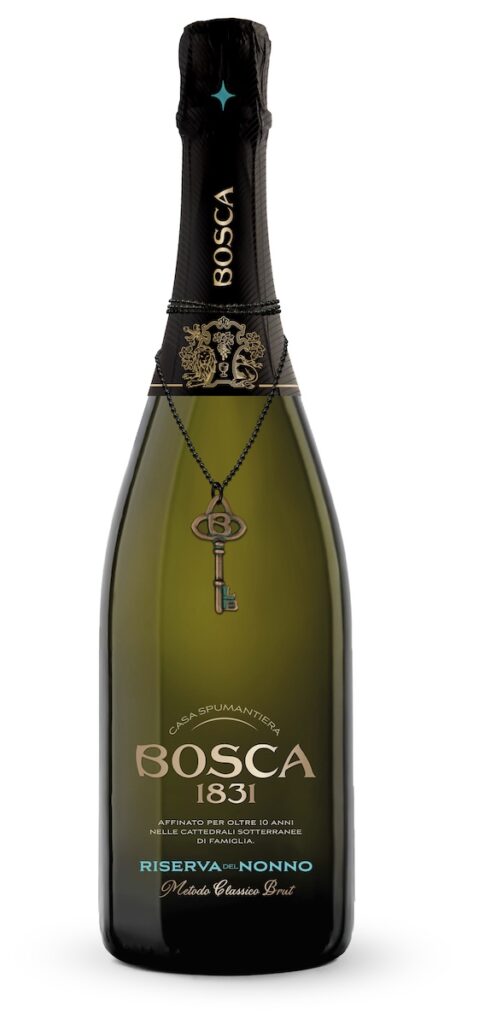
The restyling is built around the concept “Guardians of Time.” Here, time does not pass — it is protected. For two centuries, Bosca has safeguarded this invisible heritage, transforming it into a Metodo Classico that is not just sparkling wine, but an experience. Polina Bosca, CMO, describes it with a powerful image: opening a bottle of Riserva del Nonno is like symbolically opening the door to the Underground Cathedrals. This is why every bottle carries a key, a sign of what the company has protected for generations.
Bosca 1831: seven new wines for large‑scale retail
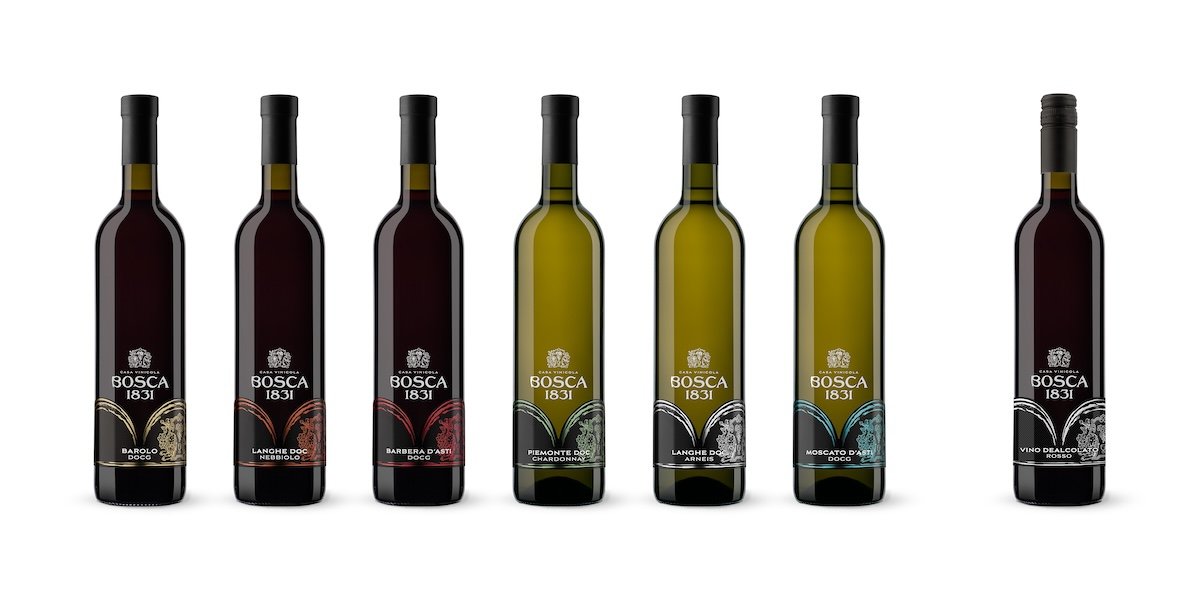
The Bosca 1831 line, launched in 2025 with sparkling wines, now expands with seven still wines that bring the authenticity of Piedmontese varieties to the mass‑market channel. Four reds: Barolo DOCG, Barbera d’Asti DOCG, Langhe DOC Nebbiolo and a dealcoholized red wine. Three whites: Piemonte DOC Chardonnay, Langhe DOC Arneis and Moscato d’Asti DOCG.
For Pia Bosca, CEO, the arrival of these wines is not just a commercial expansion but a cultural gesture: bringing to supermarket shelves wines that tell the story of their hills of origin, with high quality and accessibility. The packaging reprises the graphic gesture of the sparkling wines in the same line, creating visual continuity while clearly distinguishing the two souls of the range.
It’s FAB: the international push of Verdi sparkling wines
Bosca’s outlook continues to reach beyond borders. This is how It’s FAB was born, the new proposal under the Verdi brand, a historic label beloved in the United States. These are high‑alcohol sparkling wines (15%), designed for a market seeking intense flavors and bolder profiles. The three expressions — Black Raspberry, Pink Cranberry and White Peach — are made with natural aromas and stand out for their full, sweet and enveloping taste. It’s FAB is yet another confirmation of Bosca’s ability to anticipate trends, supported by more than thirty years of experience in innovative, unconventional products.
Bosca: sparkling wine with a rebellious spirit since 1831
Founded by Pietro Bosca, the winery is now in its sixth generation with Pia, Gigi and Polina Bosca. Present in over 40 countries, the company continues to innovate by pairing traditional products with no‑alcohol and low‑alcohol offerings. The Underground Cathedrals of Canelli, part of the UNESCO site “The Vineyard Landscapes of Piedmont: Langhe, Roero and Monferrato,” represent the symbolic heart of this story. Production, divided between the facilities in Costigliole d’Asti and Kaunas in Lithuania, reaches tens of millions of bottles, while maintaining an identity deeply rooted in its territory.


