


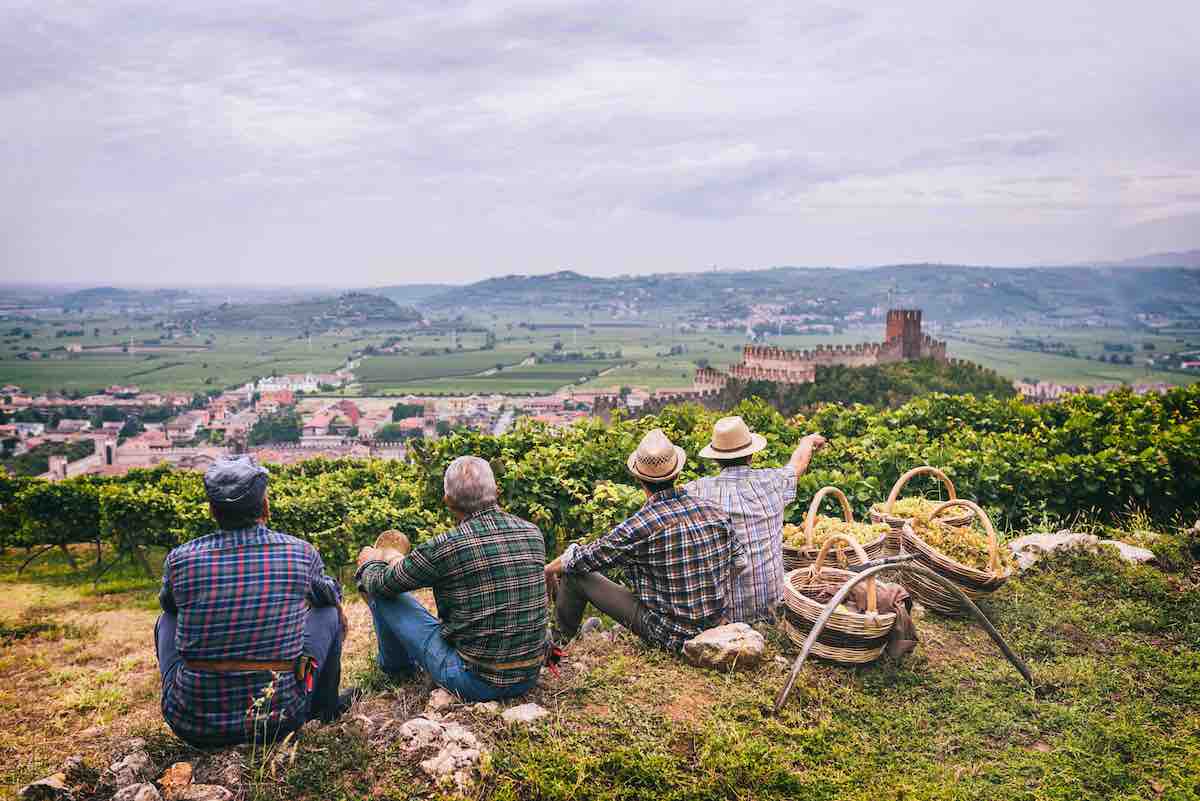
Soave enters a new strategic phase with the launch of the second stage of the “Soave Identity Project”, the initiative started two years ago to make the denomination more competitive and more responsive to the dynamics of the contemporary market. Approved by the Assembly of the Protection Consortium, the new package of measures marks an operational shift that will directly affect production management and the very structure of the DOC.
Growth and continuity: +3% bottled Soave DOC
The starting point is a concrete result: in the first months of 2026, Soave recorded a +3% increase in bottled wine compared to the same period the previous year — a figure that confirms the effectiveness of the strategies adopted over the past 24 months.
This positive trend now leads to a consolidation phase, with the introduction of new measures designed to further strengthen the denomination’s position on the markets.
The second phase of the Soave Identity Project
The project now enters a new operational dimension, with actions aimed at making the DOC “more dynamic and competitive” and capable of responding to current consumption trends.
At the heart of the strategy is a balance between product valorization and economic sustainability, with particular attention to vineyard profitability and responsible production management.
The goal is to build a more reactive system, able to adapt to fluctuations in demand without compromising the wine’s identity.
The role of the grower: from management to strategy
One of the most significant elements of this new phase concerns the role of the grower, who is now called to become a direct protagonist in production decisions.
Each estate must carry out a preliminary selection of parcels, deciding from the outset which vineyards to allocate to Soave DOC production and which to direct toward other categories.
This step introduces a logic of specialization that transforms vineyard management into a strategic choice, with a direct impact on the final quality of the wine.
Reduction of vineyard area and yields: the key measures
The core of the new package concerns quantitative production management.
The approved measures require each producer to reduce by 50% the vineyard area potentially claimable as DOC, accompanied by a decrease in production yields.
This is a significant intervention, designed to act directly on the relationship between supply and demand, ensuring greater balance and market stability.
The choice reflects a shared vision within the denomination and represents one of the most decisive steps of the project.
Soave DOC: market balance and long‑term vision
The introduction of these new measures responds to the need to align production with the market’s real absorption capacity.
The stated goal is to avoid imbalances that could affect product valorization, maintaining a sustainable relationship between quantity and quality.
In this sense, DOC management becomes an active governance tool capable of guiding the denomination in the medium‑long term.
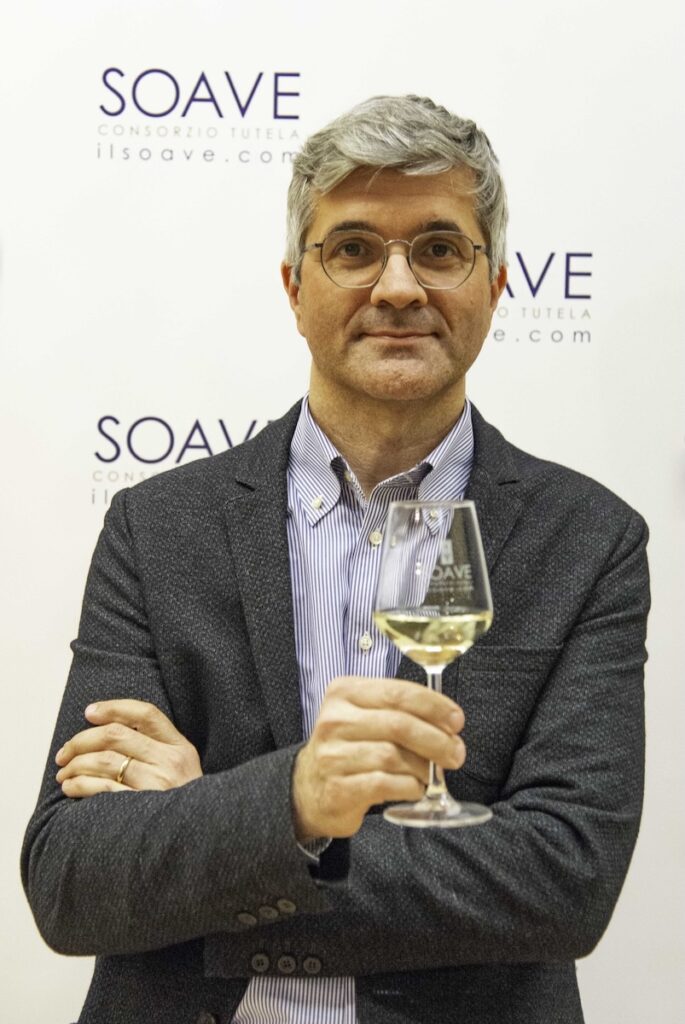
To clarify the meaning of the project, Cristian Ridolfi, president of the Protection Consortium, explains:
“It is essential to govern the denomination carefully because it is a symbol of guarantee and quality. The new management measures approved during the latest assembly are the natural evolution of a path aimed at making our denomination more dynamic and virtuous in relation to the golden rule of supply and demand. In the medium‑long term, both producers — whose work will be rewarded — and consumers — who will find a strongly identity‑driven Soave in their glasses — will benefit. We are also aware that today’s market trends increasingly reward fresh white wines with moderate alcohol content, and for this reason Soave has important cards to play right now.”
Soave DOC between identity and the contemporary market
The second phase of the Soave Identity Project marks an evolution in the management of the denomination, where quality and quantity are no longer separate elements but parts of a single system.
In a context where markets reward fresh, balanced and recognizable wines, Soave positions itself with characteristics aligned with current demand, strengthening its identity through structural choices.
The project therefore does not simply regulate production — it lays the foundations for a new phase of development in which the denomination aims to consolidate its role within the landscape of Italian white wine.


