


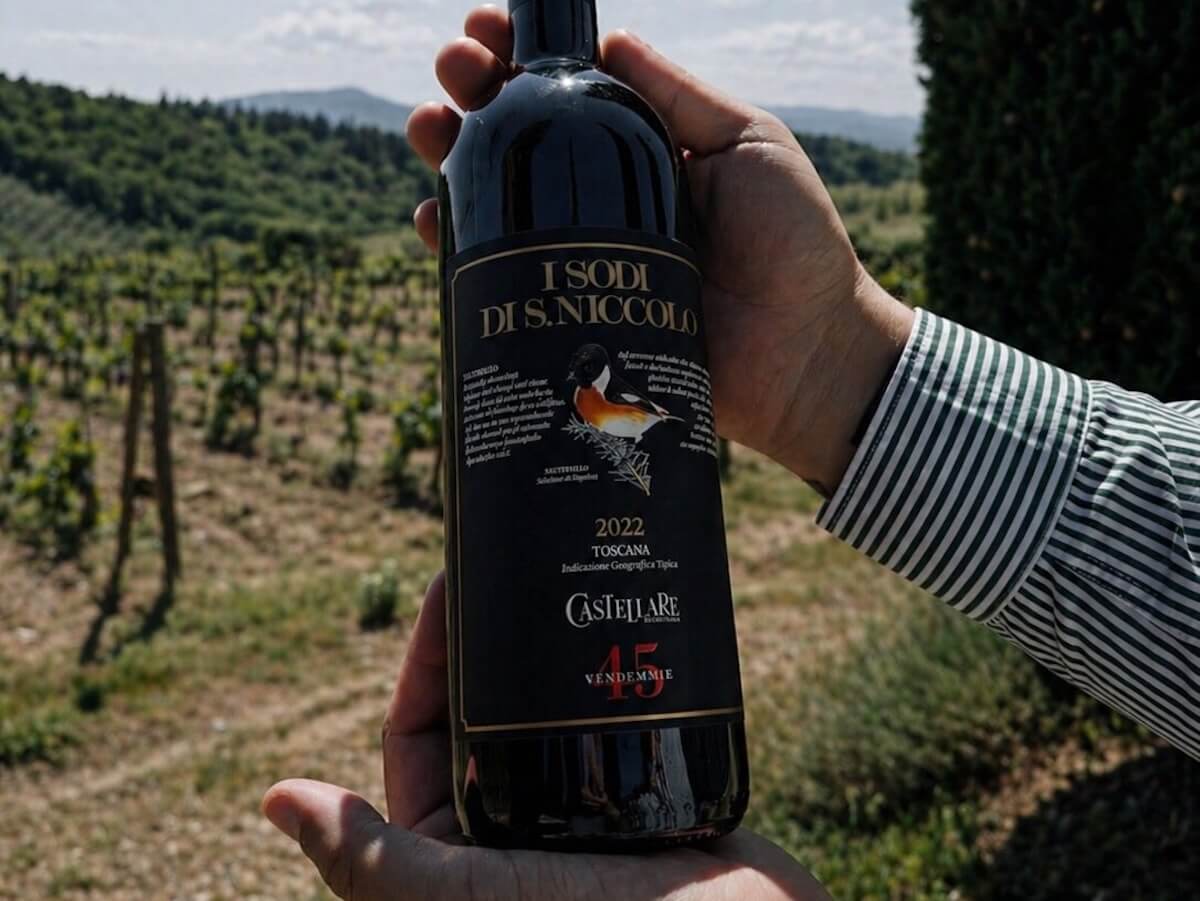
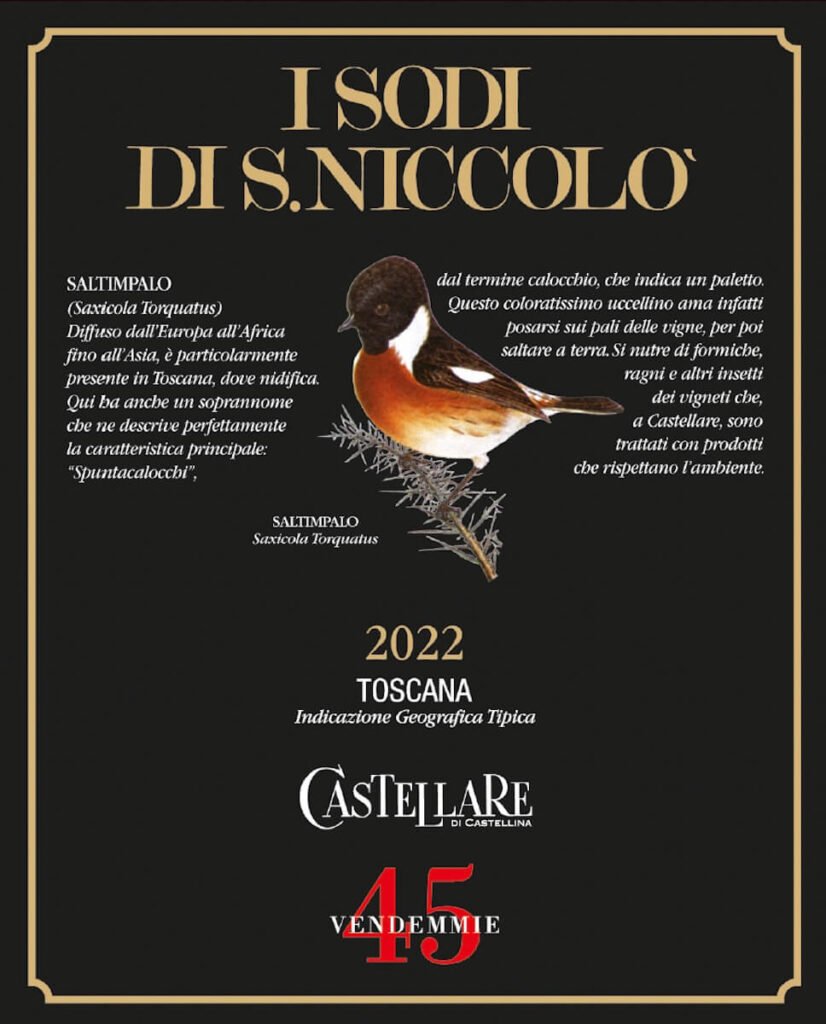
A renewed, total‑black look to celebrate the first 45 vintages: with the release of the 2022 vintage, I Sodi di S. Niccolò — the Super Tuscan from Castellare di Castellina — marks an important milestone with a new black label, a symbol of a journey that unites tradition, research, and identity.
A new black label as a symbolic narrative
The new graphic design introduces a distinctive element: the iconic little bird, a hallmark of the winery’s communication, which changes every year to pay tribute to endangered species.
For the 2022 vintage, the featured bird is the European Stonechat (Saxicola torquatus), a frequent presence in Castellare’s vineyards and a symbol of the deep bond between wine and biodiversity.
I Sodi di S. Niccolò 2022: balance between structure and freshness
The new vintage presents a well‑defined profile, already acknowledged by critics with 96/100 from Decanter and 95/100 from James Suckling.
Winemaker Alessandro Cellai outlines its character:
“I Sodi di S. Niccolò 2022 stands out for its great aromatic intensity and a dense yet elegant structure, with soft, silky tannins. The acidity of Sangioveto gives the wine remarkable freshness. It is ready to drink now and, at the same time, suitable for long ageing.”
A wine that combines immediacy with long‑term evolution, maintaining a stylistic coherence built over time.
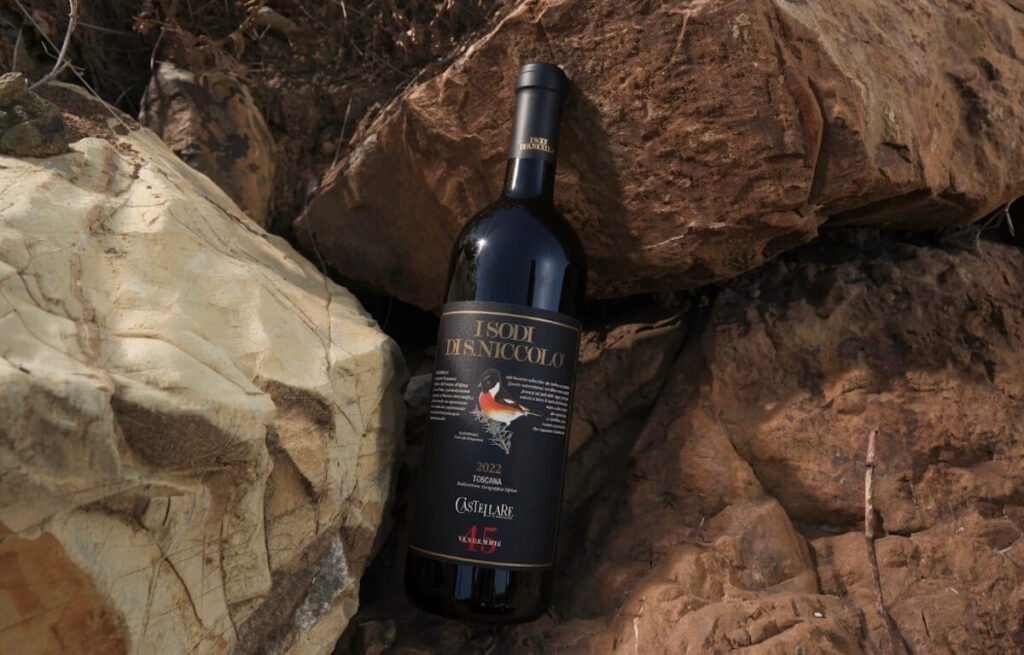
I Sodi di S. Niccolò: a story that spans Italy’s wine Renaissance
Created in 1977 as the fourth Super Tuscan in Italian history, I Sodi di S. Niccolò is one of the most authoritative expressions of this movement.
Made from Sangioveto (85%) and Malvasia Nera (15%), the wine has built an international reputation, appearing three times in Wine Spectator’s Top 100 and entering Vinous’s Top 100 with the 2020 vintage.
A journey that reflects the vision and expertise of Alessandro Cellai, heir to the tradition initiated by Giacomo Tachis.
The 2022 harvest: between extreme climate and precision winemaking
The 2022 vintage was marked by challenging weather conditions, with intense heat and summer drought.
Late‑August rains helped rebalance the vegetative cycle, allowing for regular ripening and an early harvest with healthy, concentrated grapes.
The result is wines with deep colour, refined and mature aromatic profiles, and a structure supported by freshness and balance.


