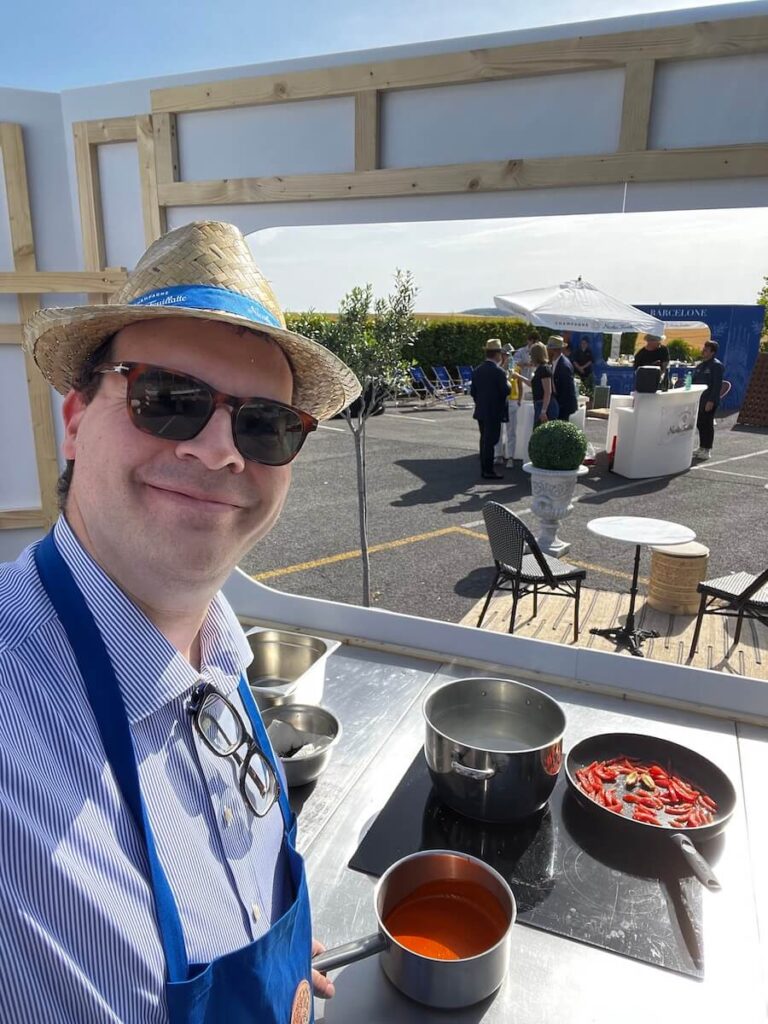
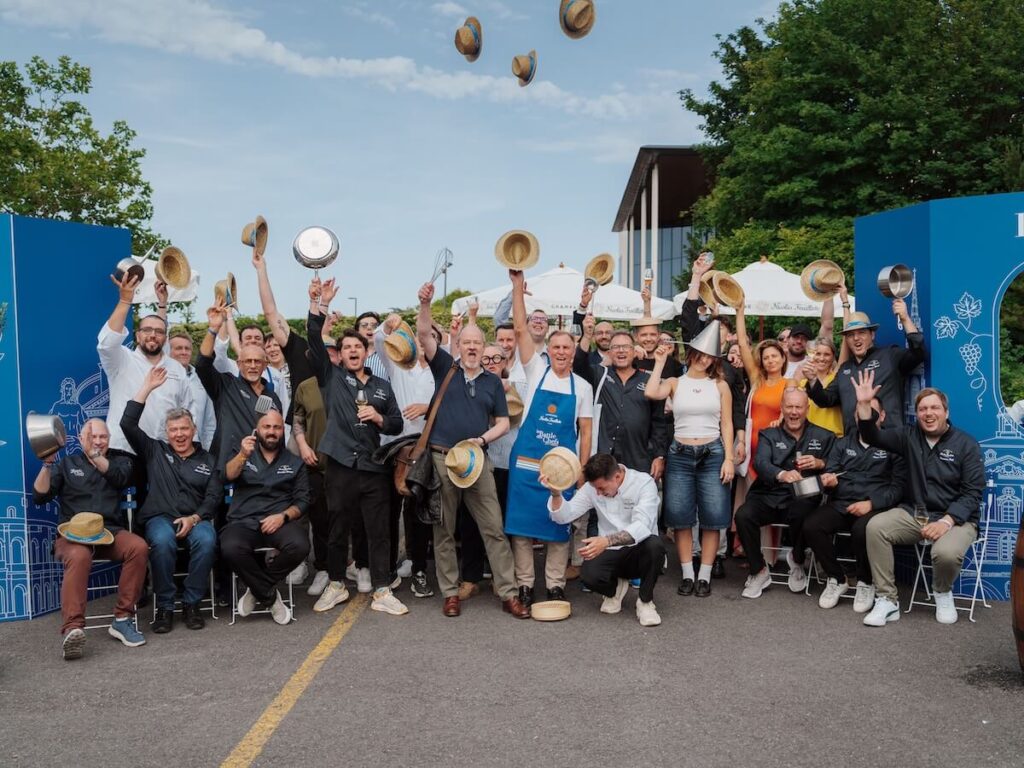
Fifty years of history deserve a celebration worthy of the occasion. Nicolas Feuillatte chose to celebrate them in the place where everything begins, among the vineyards of Champagne, bringing the Battle des Chefs back to life. In the heart of the Côte des Blancs, among the vineyards that surround Chouilly and the Maison’s headquarters, some of the best chefs from France, Italy, Germany, Austria and Malta gathered, on June 15th, for a gastronomic challenge that had the flavor of competition, but also that of sharing and friendship. A day where technique, creativity and team spirit were measured through a single common thread: a shared passion for Champagne. An even more significant event, as it is part of the celebrations in this 2026 marking the 50th anniversary of the founding of the Nicolas Feuillatte brand, the Maison that today occupies the first place in France and third worldwide in the Champagne market. WineCouture was the only Italian media outlet invited to participate in the event. Not as a simple observer. But as an active member of one of the competing teams. A truly unique opportunity for us to experience the challenge from the inside, becoming part of the brigade of the Blue Team. And so the author found himself living the Battle des Chefs, wearing an apron and working alongside two of the greatest chefs from Milan and Paris: Claudio Sadler and François Gagnaire.
Among Vineyards, Champagne and Haute Cuisine: the Battle des Chefs and the Day When No One Wanted to Finish Second
After the success of the first edition, Nicolas Feuillatte brought back, after two years, a format that blends competition, creativity and gastronomic culture.
Representing Italy were two leading ambassadors: Claudio Sadler, Michelin‑starred chef of Ristorante Sadler in Milan, and Andrea Impero of the restaurant Elementi di Borgobrufa in Umbria. Alongside them, a selection of chefs from some of the most interesting European restaurants: François Gagnaire from Paris, Thomas Morel from Bordeaux, Laurent Rigal from Lyon, Daniel Desavie from Valbonne, Jonathan Brincat from Malta, Jean‑Luc Petermann from Germany, Alexander Struth and Hermann Poll from Austria.
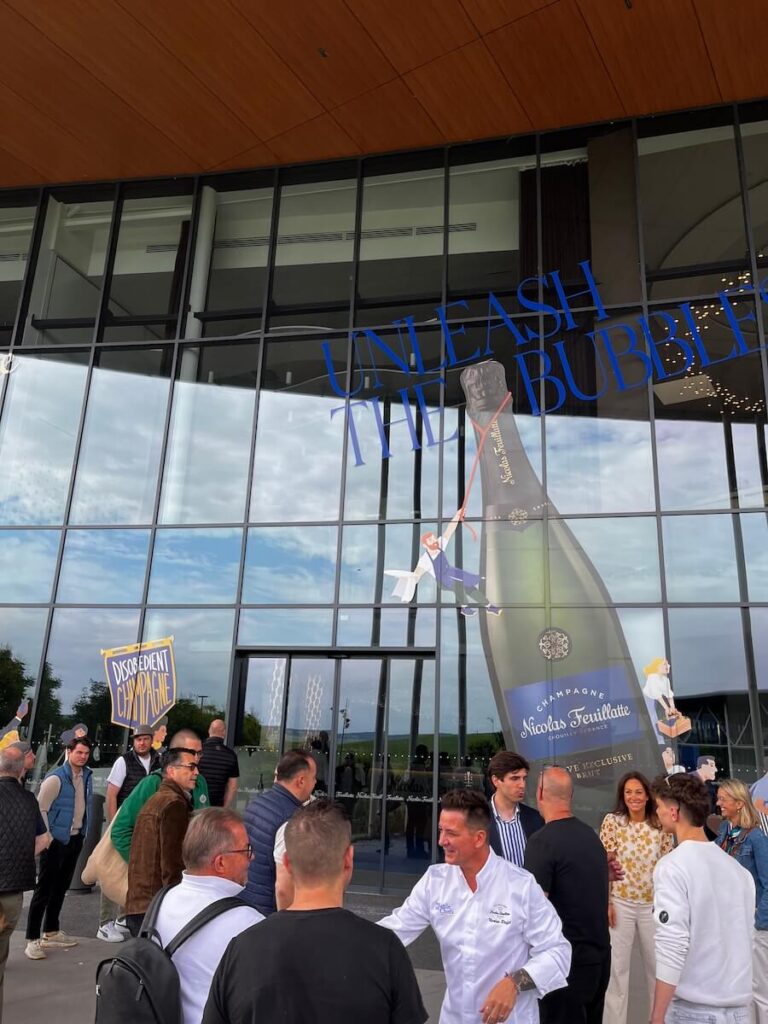
The day began with a series of activities dedicated to discovering the Nicolas Feuillatte universe. Visits to production facilities, sensory challenges, tastings and team games marked the morning before the most anticipated moment: the assignment of brigades and gastronomic themes by the master of ceremonies Nicolas Rieffel, an Alsatian chef who was a protagonist of the first French edition of Masterchef and a television personality in France.
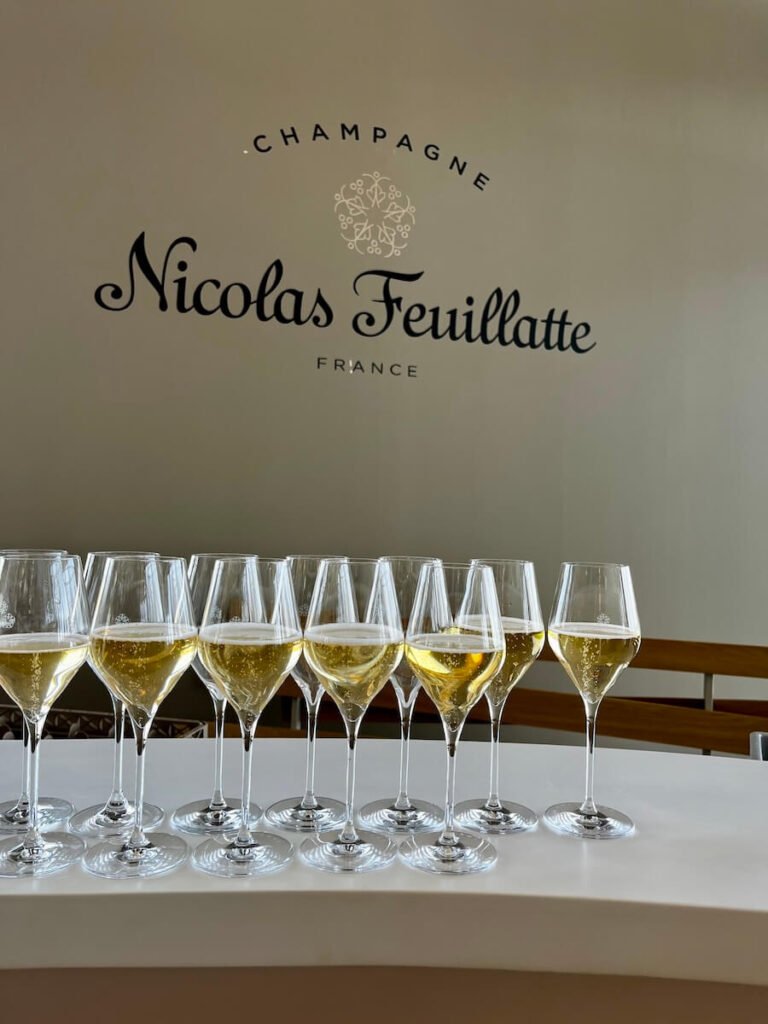
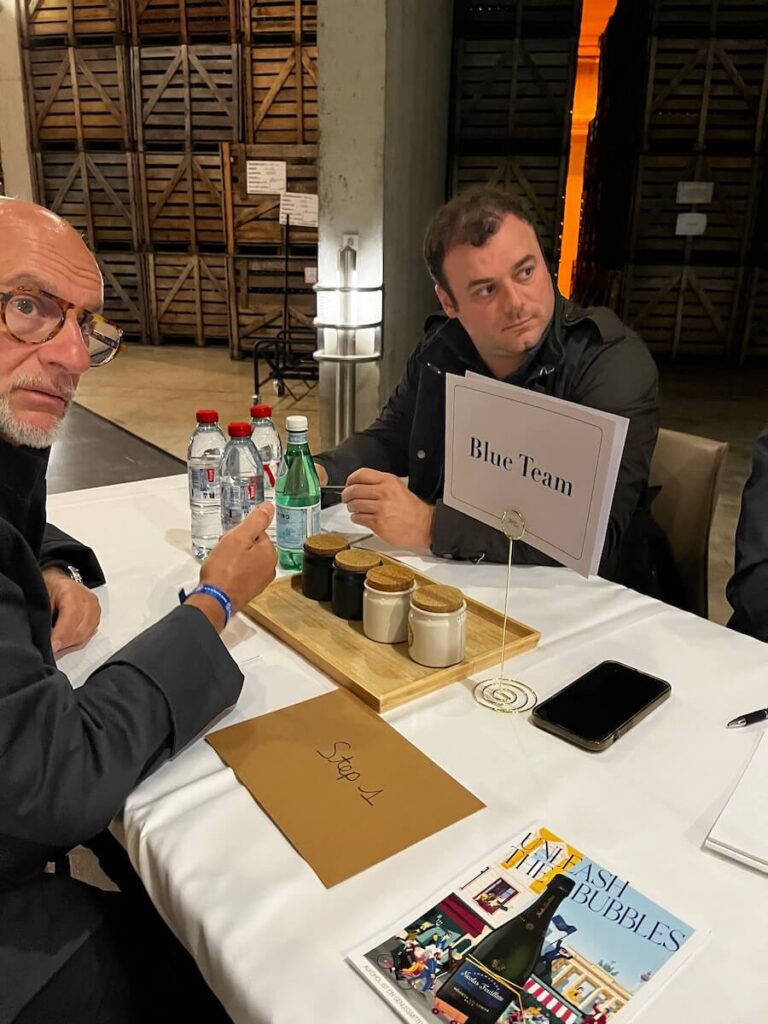
The Blue Team: Claudio Sadler, François Gagnaire and a Challenge That Took Us from Rome to Seoul
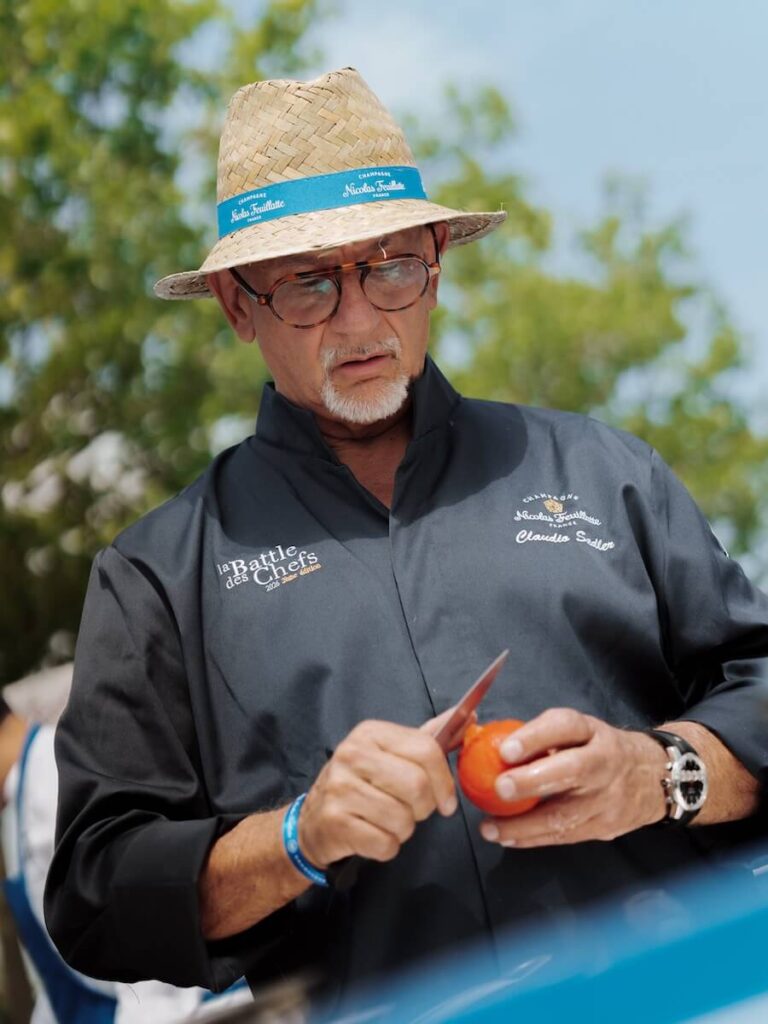
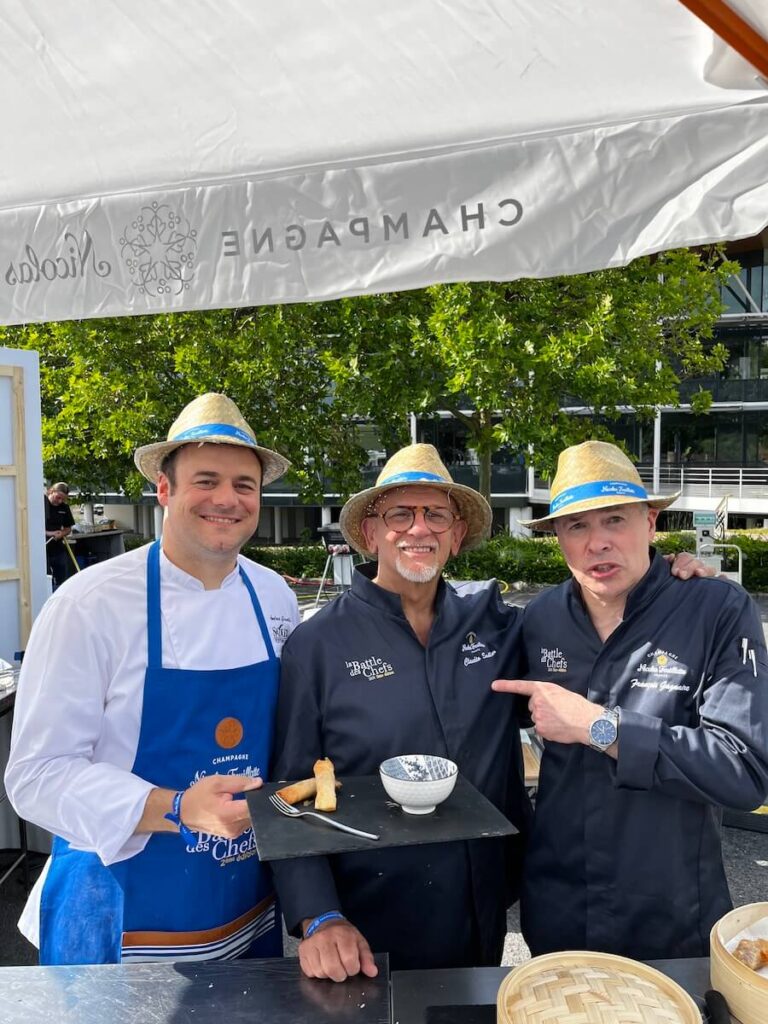
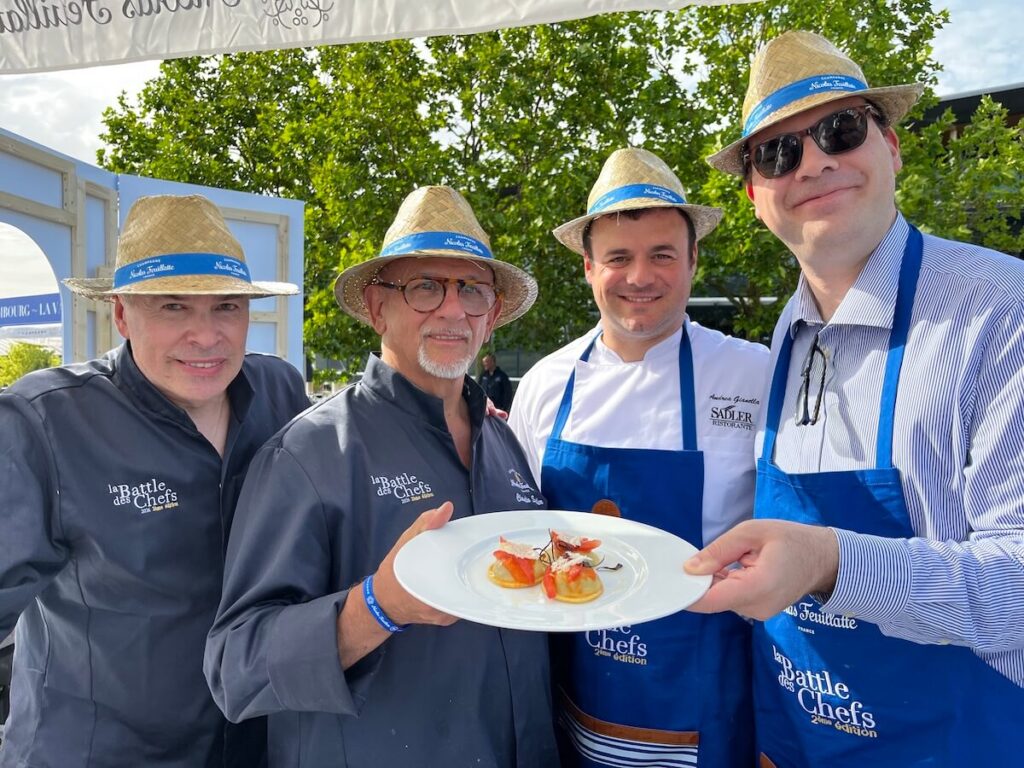
The Blue Team arrived at the starting line of the challenge more determined than ever. A team composed of true top players led by Michelin‑starred Chef Claudio Sadler of Ristorante Sadler in Milan, alongside Chef François Gagnaire of Anicia, Table Nature in Paris. Supporting them were Andrea Gianella, a highly skilled commis of Ristorante Sadler and the chef’s right‑hand man, and the undersigned for WineCouture, committed not to fall short and to absorb the guidance of these giants of cuisine. And not figuratively.
Claudio Sadler is one of the most authoritative figures in contemporary Italian dining. After opening his first restaurant in 1982, he built a career that led him to earn two Michelin stars and become a reference point for Italian haute cuisine. Founder of Ristorante Sadler in Milan, now located inside Casa Baglioni Milan, he has combined his culinary work with training projects, catering and international hospitality, bringing Italian cuisine to Tokyo, Beijing and Shanghai. In 2018 he received the Ambrogino d’Oro from the Municipality of Milan for his contribution to the city. His cuisine combines technical rigor, creativity and deep respect for Italian tradition, reinterpreted with contemporary sensitivity.
François Gagnaire, on the other hand, is one of the leading interpreters of contemporary French cuisine. Trained alongside great masters such as Alain Chapel, Pierre Gagnaire, Guy Lassausaie and Philippe Chavent, he earned a Michelin star in 2006 with his gastronomic restaurant in Le Puy‑en‑Velay. After 14 years of success in Auvergne, he moved to Paris, where in 2015 he opened Anicia, a place that celebrates the authentic flavors of his region of origin through refined, generous cuisine deeply connected to the product. Today he is considered one of the main ambassadors of Haute‑Loire gastronomy.
Among the vineyards of Champagne, the team chose to develop what was probably one of the most fascinating themes of the entire competition: Seoul + Rome. The objective was to build a gastronomic bridge between two seemingly very distant cultures, inspired by street food, fermentation and the meeting between kimchi and tomato sauce.
A theme that would have challenged anyone. Not chefs Claudio Sadler and François Gagnaire.
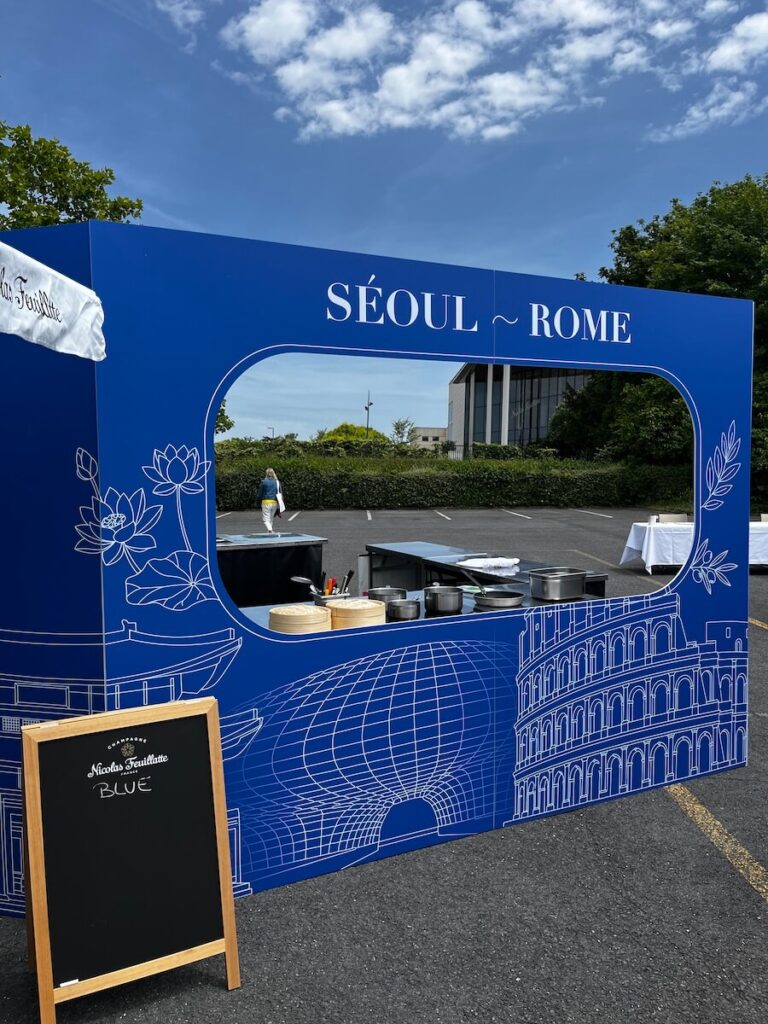
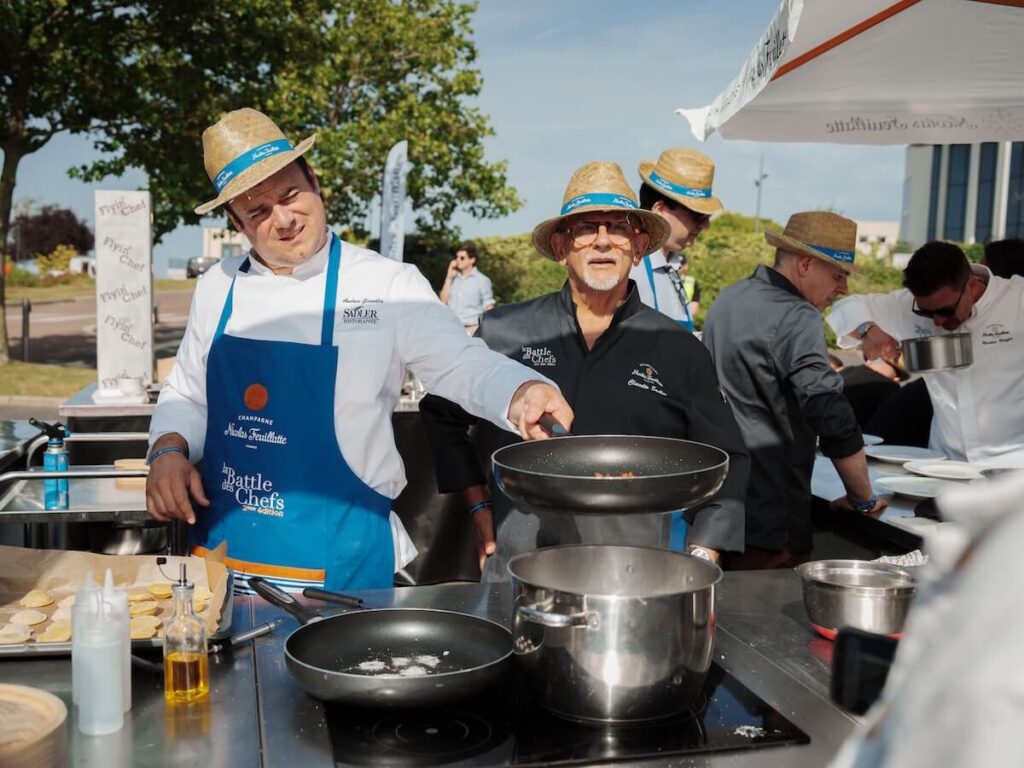
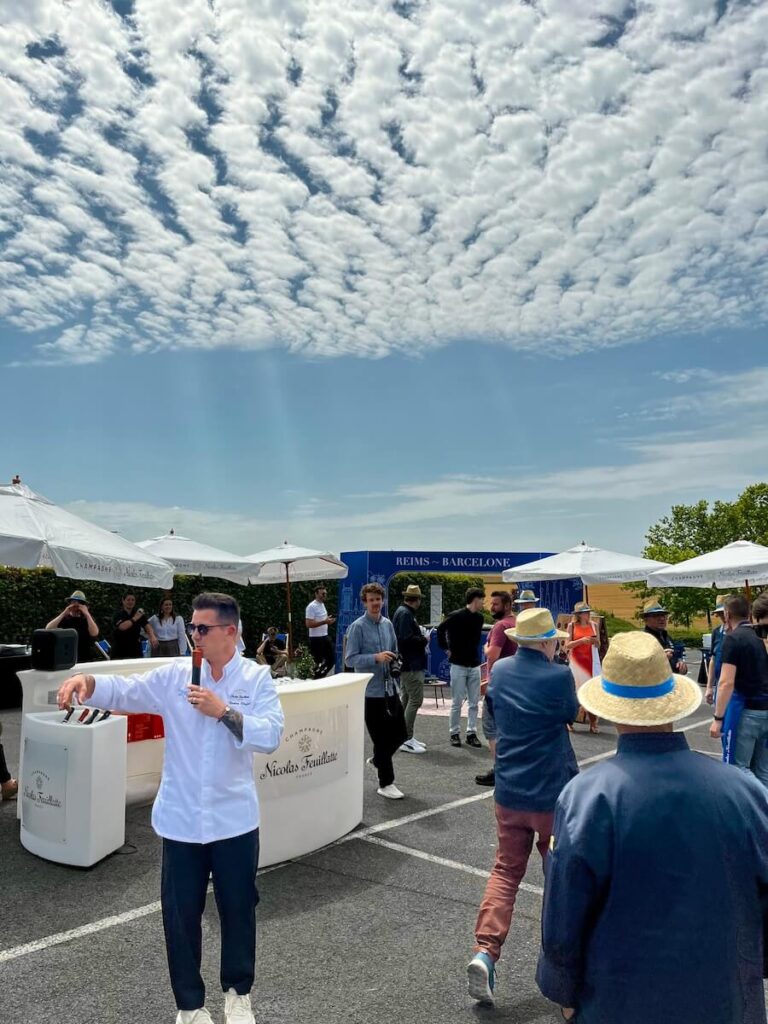
An Open‑Air International Market at Nicolas Feuillatte
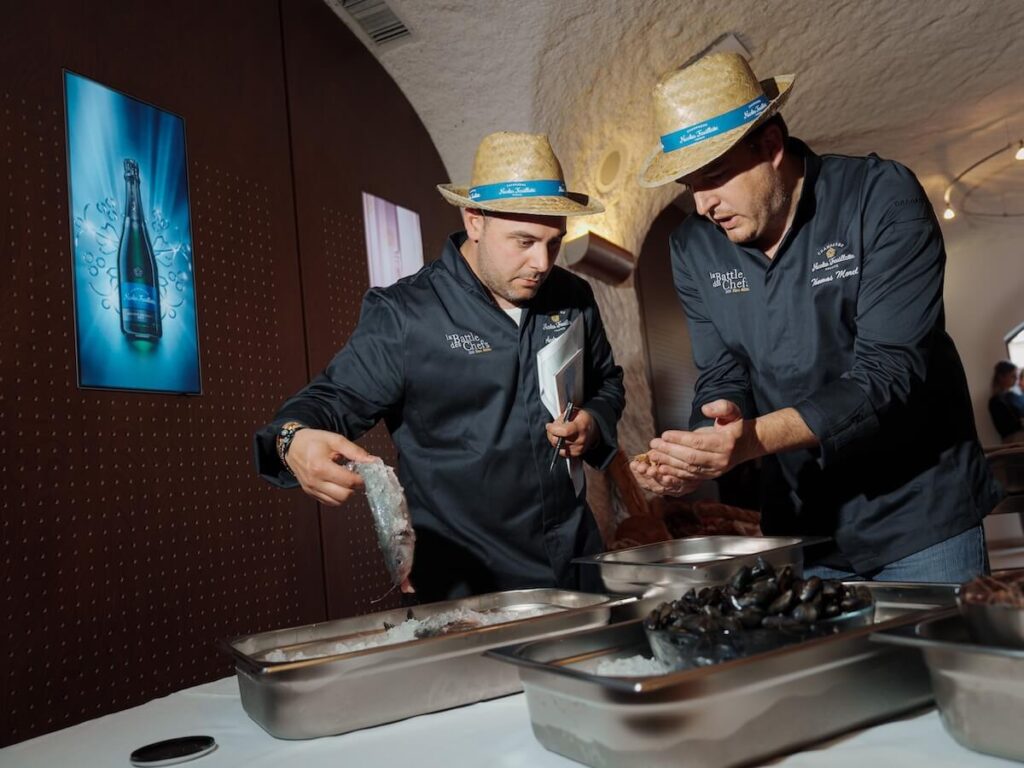
The spaces of the Maison’s Centre Viticole were transformed into a kind of gigantic global market of ingredients. Vegetables, spices, aromatic herbs, fish, meats and products from all over the world were available to the teams.
Three hours. One starter. One main course. And above all the need to find the perfect pairing with one of the Nicolas Feuillatte cuvées selected for the competition.
The tension rose immediately. Because behind the convivial atmosphere, the reality was clear: no one had come to Champagne to lose.
Ro‑Seu: When Rome Meets Seoul
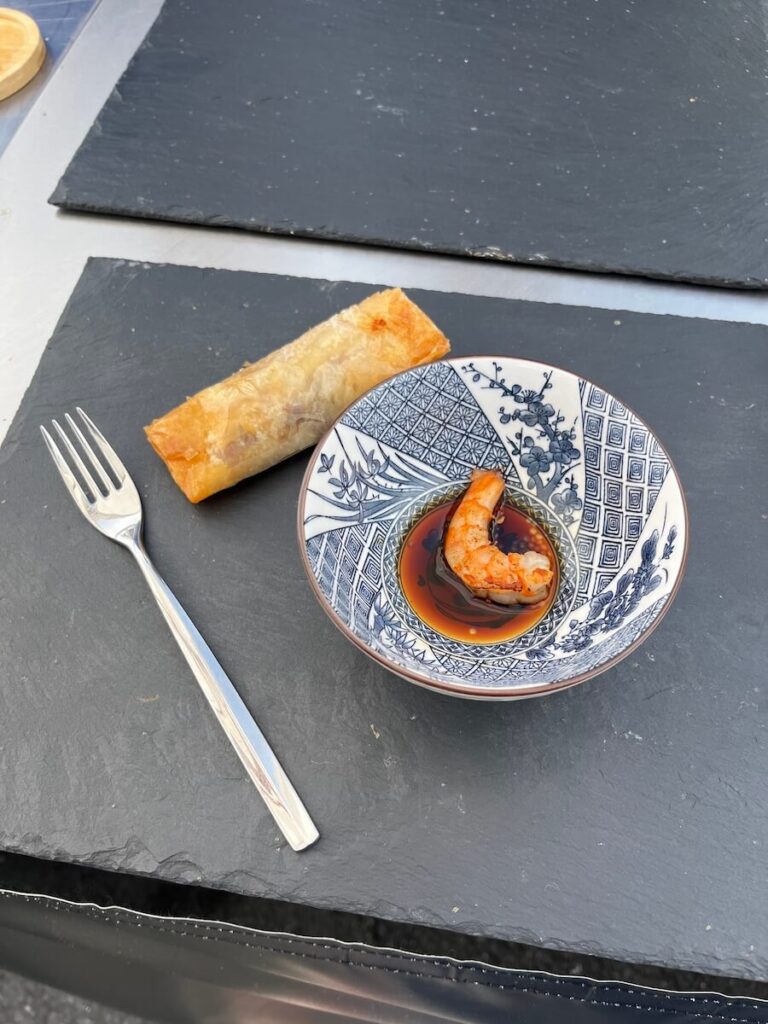
Claudio Sadler’s first idea, after listening to all the suggestions from the team members, was as simple as it was brilliant: to create a street food dish that perfectly summarised the assigned theme. Thus was born Ro‑Seu, a name that already told the concept of the dish: Rome and Seoul fused into a single word.
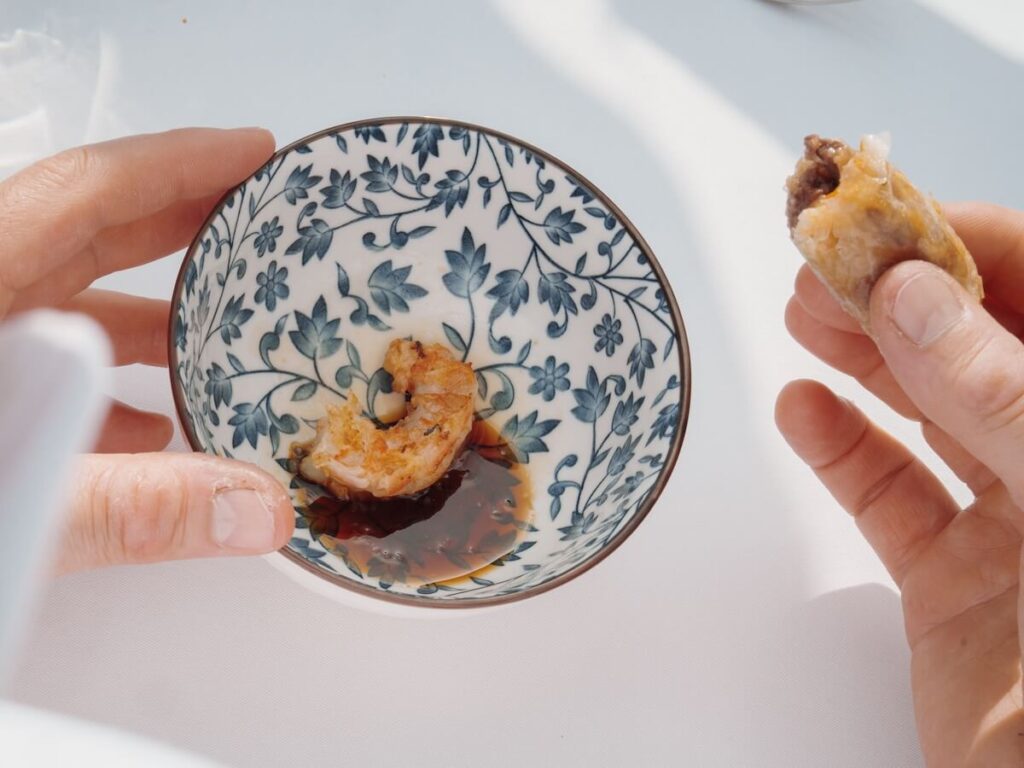
The roll was built around a crispy pastry that enclosed a surprising dialogue between different gastronomic cultures. Inside coexisted cherries, Korean gnocchi, barbecued duck, prawns and a slightly spicy tomato sauce, completed with a reduction of soy sauce.
A continuous play of textures between sweetness, savoriness, spice, crunchiness and umami.
A dish designed to be immediate and fun but capable of telling a gastronomic journey spanning thousands of kilometres.
The Raviolo That Unites West and East
For the main course, Claudio Sadler decided to draw from his own professional history.
Those familiar with the Milanese chef’s career know how important his experiences in Asia have been, particularly in Tokyo and Shanghai. From this came the idea of a seemingly Italian dish crossed by Eastern influences.
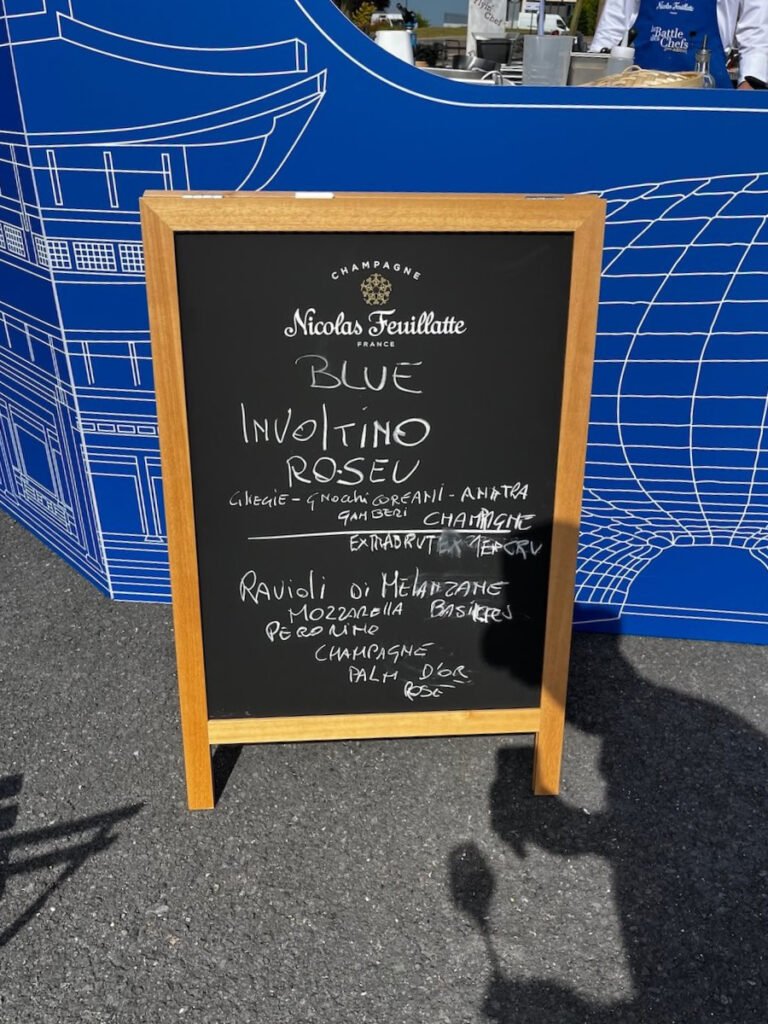
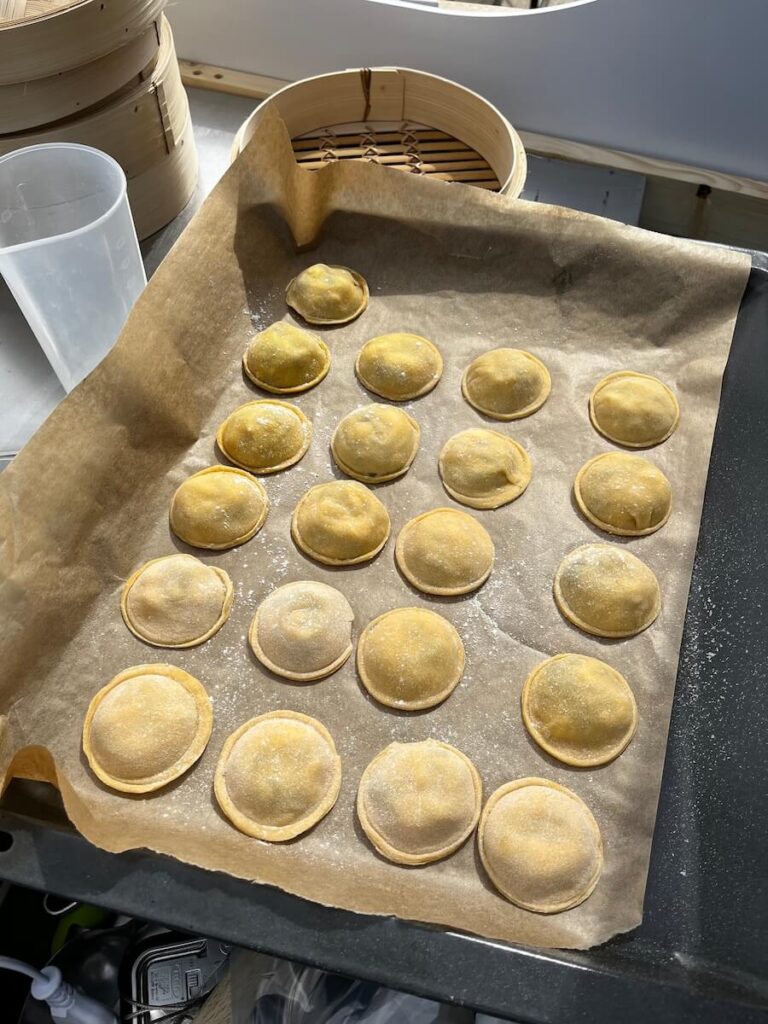
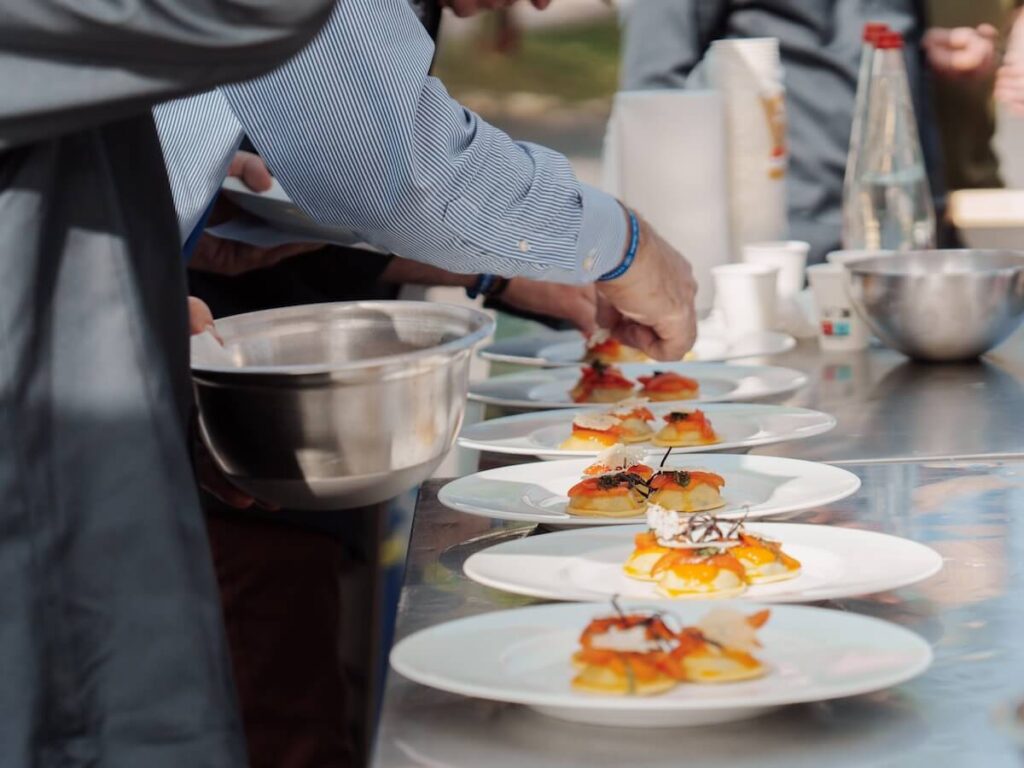
A hand‑rolled fresh pasta raviolo filled with eggplant, mozzarella, basil, a hint of Korean spicy sauce and a combination of Parmigiano Reggiano and Pecorino Romano.
A dish also built around a fundamental principle of contemporary cuisine: respect for the ingredient and the absence of waste. The tomato trimmings used for the sauce were in fact reused and enhanced in the preparation.
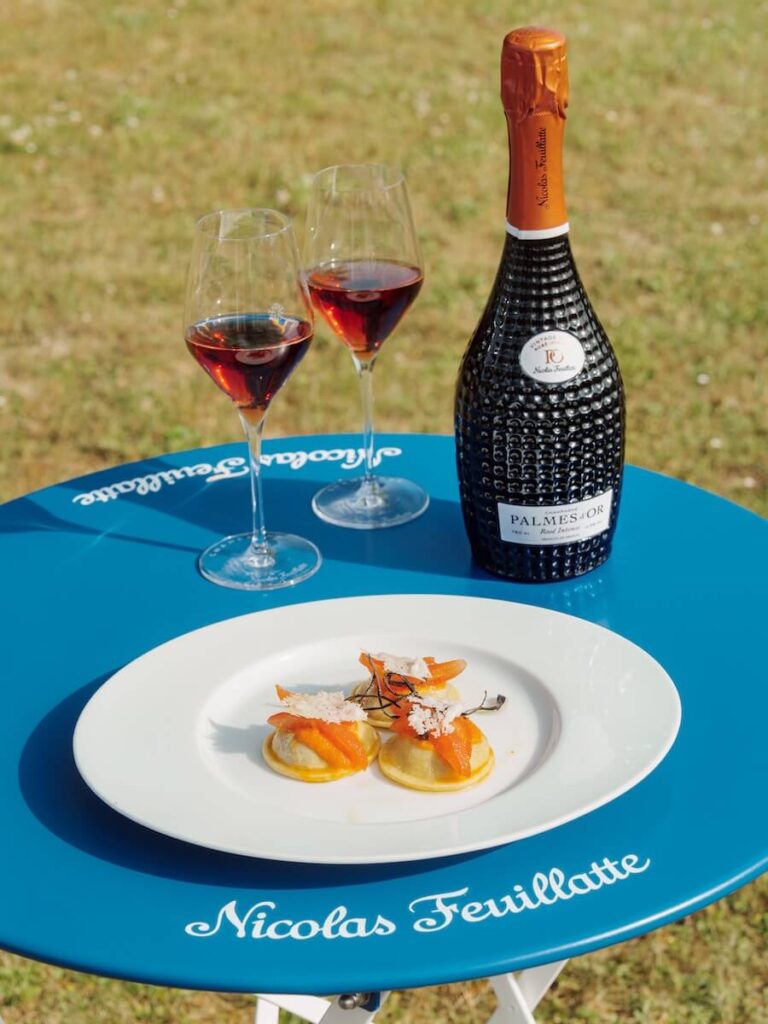
At plating, the raviolo was completed with a tomato reduction softened by a touch of sesame oil and finished with fresh tomato, a pecorino wafer, fried eggplant and crispy basil.
A surprising balance between Mediterranean depth and Asian sensibility.
Two Nicolas Feuillatte Champagnes for Two Culinary Narratives
In the Battle des Chefs, Champagne was not meant to be a simple accompaniment, but an integral part of the creative project.
For the Ro‑Seu, the pairing choice fell on the Réserve Exclusive Premier Cru Extra‑Brut. A Champagne born from an equal blend of Pinot Noir, Meunier and Chardonnay, coming from the five Premier Cru areas of the appellation, characterised by great mineral tension, aromatic precision and extraordinary gastronomic versatility.
Its ability to alternate energy, freshness, structure and a saline finish made it perfect to accompany a sophisticated street food dish, constantly moving between Eastern and Mediterranean flavours.
During trials and tastings it was interesting to observe how the Champagne acted as a bridge between the two gastronomic worlds.
For the raviolo, the choice was even more ambitious: the Palmes d’Or 2006 Rosé Intense. A Rosé de Saignée 100% Pinot Noir, aged for at least eight years in the cellar and characterised by remarkable aromatic intensity.
Its notes of strawberry, sweet spices, ripe red fruits, undergrowth and dried fruit perfectly interacted with the sweetness of the tomato, the savoriness of the pecorino and the depth of the filling. An exclusive bottle, powerful and sensual, that was able to enhance every nuance of the dish. A pairing that also demonstrated the full potential of great Rosé Champagnes at the table.
A Bocuse d’Or-Level Jury for the Battle des Chefs
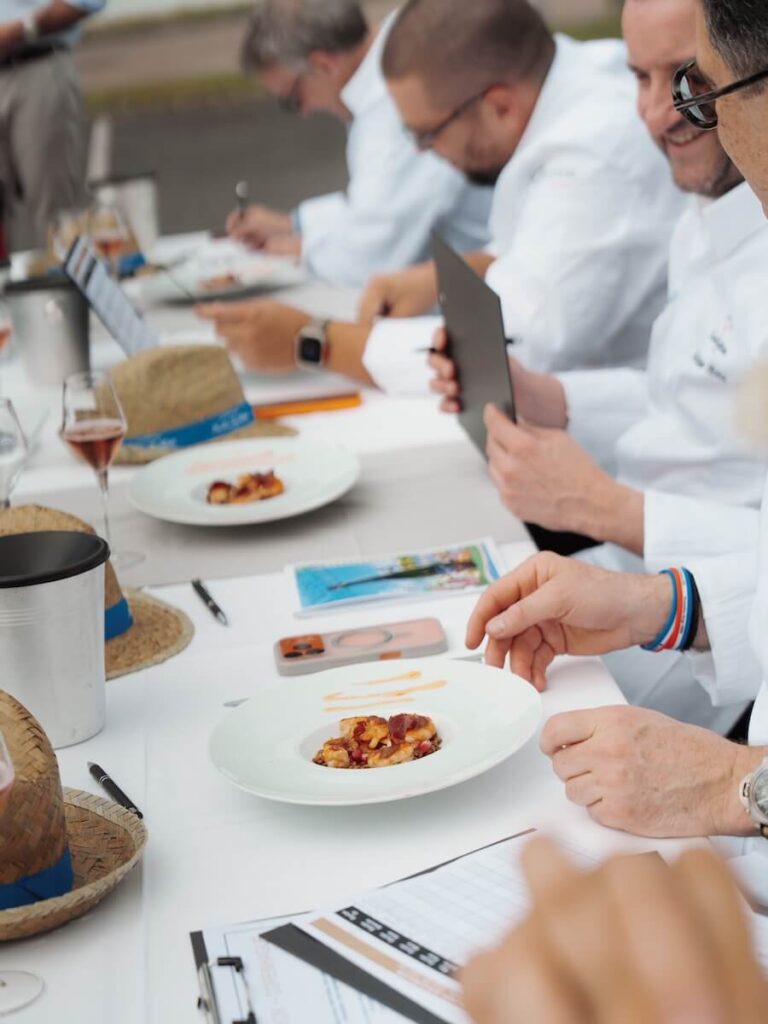
The work of the teams was evaluated by a panel of absolute prestige.
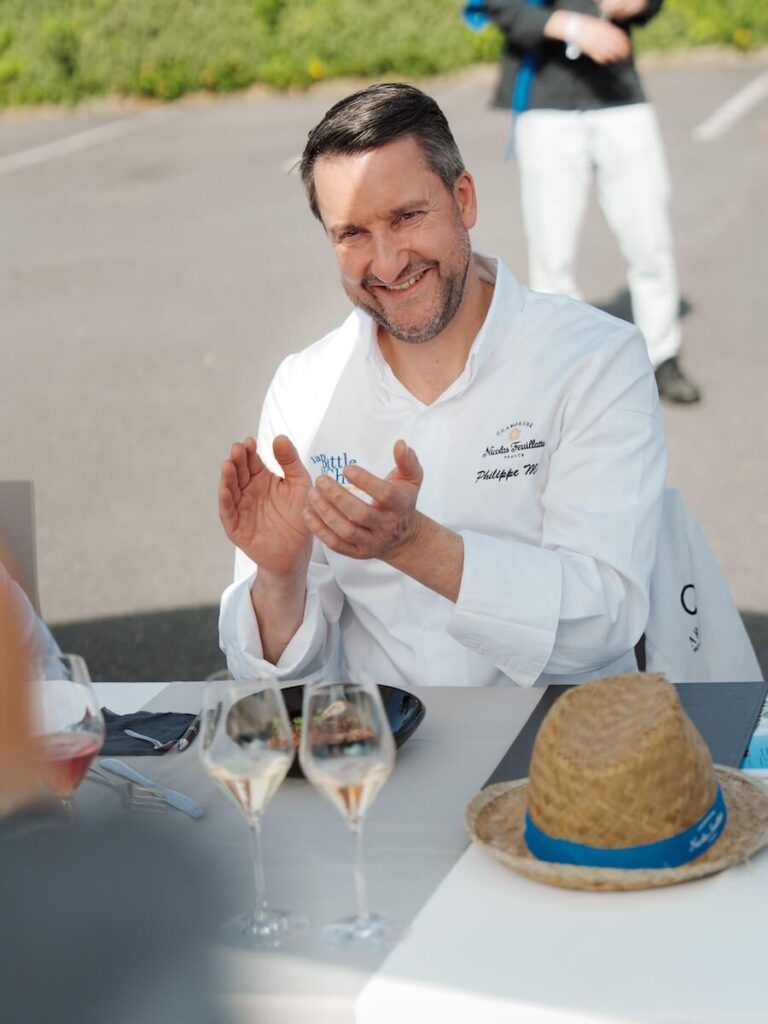
The jury was composed of Maxence Baruffaldi, candidate for Team France Bocuse d’Or 2026, Romuald Fassenet, president of Team France Bocuse d’Or, Pierre‑Franck Salamon, TFBO member, two‑Michelin‑star chef Philippe Mille, and gastronomic journalist and author Philippe Toinard.
A jury that did not limit itself to evaluating the taste of the dishes, but also analysed the ability to interpret the assigned theme, the pairing with Champagne, creativity and teamwork.
The Other Teams and the Themes of the Battle des Chefs
The Black Team was composed of Andrea Impero, Thomas Morel, Manuela Vitulli and Denis Beunkter. Their challenge: to build a gastronomic bridge between Reims and Barcelona, bringing into dialogue the minerality and elegance of Champagne with the energy of Catalan cuisine through ingredients such as citrus fruits, Reims ham, olive oil and crunchy textures.
The White Team, on the other hand, brought together Hermann Poll, Laurent Rigal, Andrea Heinzinger and Romain Crubellier, called to tackle the complex encounter between Abidjan and Bordeaux. A theme that combined the warmth and spiciness of Ivorian cuisine—made of fish, onion, garlic, chili and plantain—with the structure and depth typical of French gastronomic tradition.
The Pink Team featured Daniel Desavie, Jean‑Luc Petermann, Stephan Pegatzky and Benjamin Jochym on the Hamburg–Valletta theme, a comparison between the northern soul of smoking and Mediterranean savoriness. Smoked fish, pickles, butter, oil, citrus and capers formed the key ingredients of a challenge played on balances between intensity and freshness.
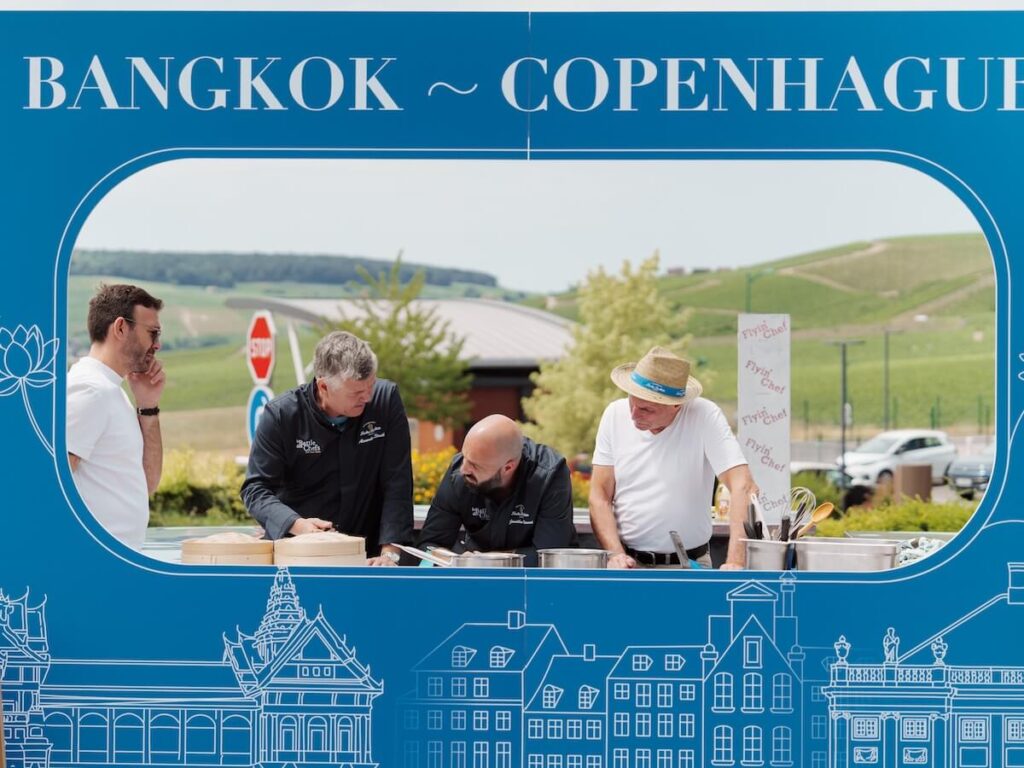
Finally, the Gold Team, composed of Jonathan Brincat, Alexander Struth, Juliette Henry and Wilfried Jeutter, worked on the meeting between Bangkok and Copenhagen. A particularly contemporary theme that set Thai spices and aromatic herbs against Nordic minimalism, through citrus fruits, aromatic broths and ingredients capable of combining precision and explosive flavors.
The Final Verdict: The Triumph of the Team of Chefs Jonathan Brincat and Alexander Struth
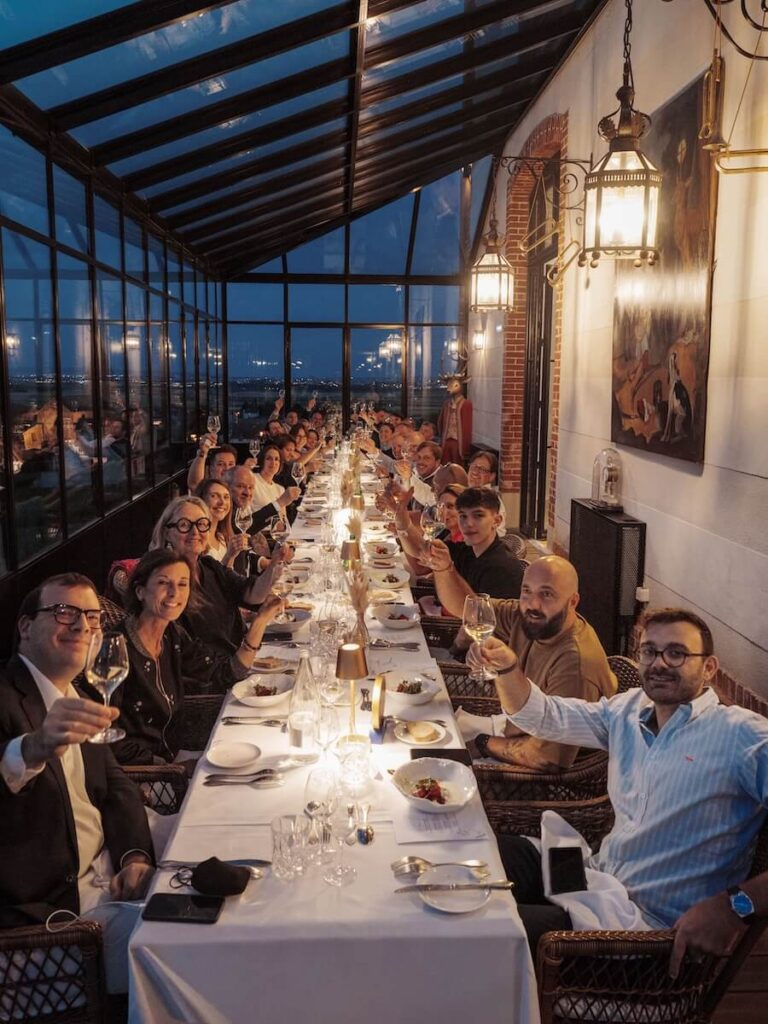
When the jury finished tasting, the anticipation for the final verdict was palpable, but for the awards ceremony it was necessary to wait until the gala dinner immersed among the vineyards of Champagne in the magnificent setting of the Château de Sacy.
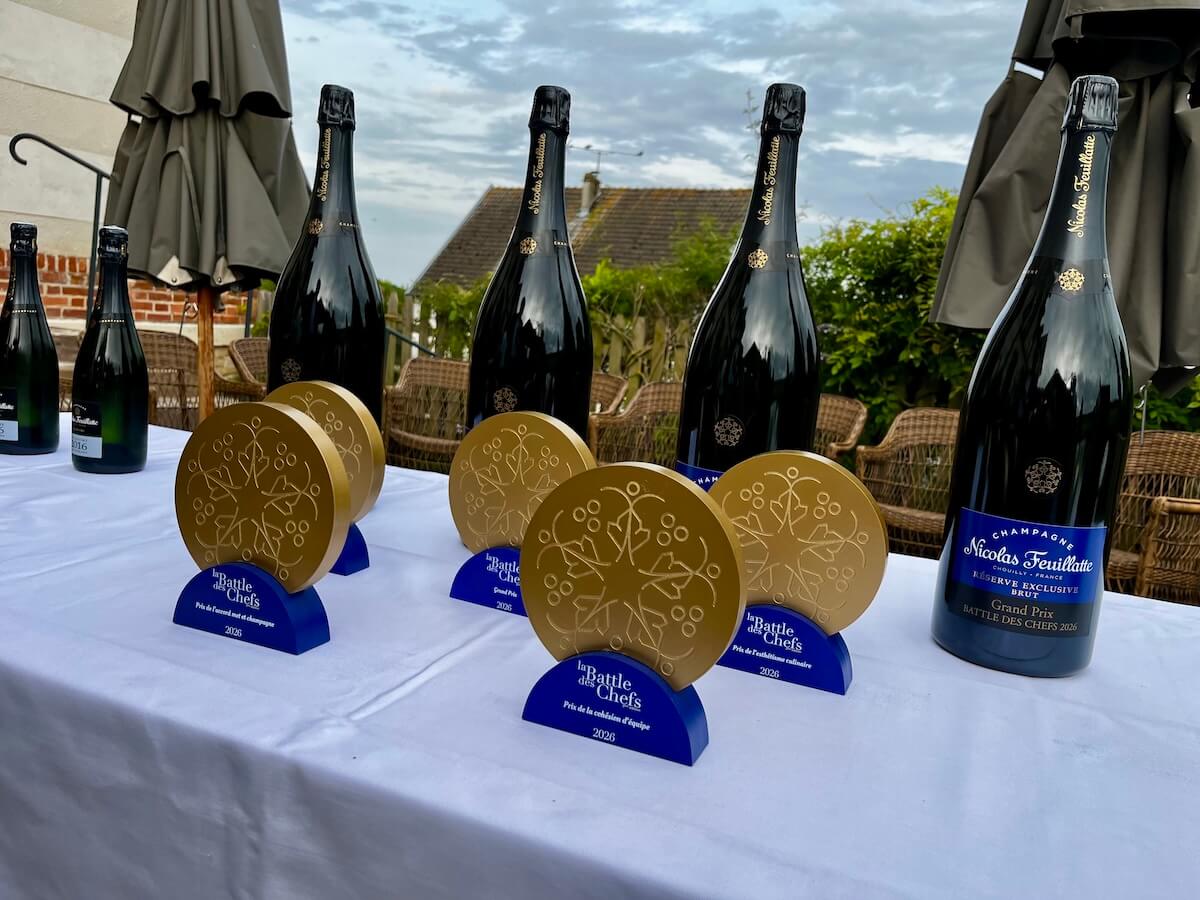
There, the Grand Prix of the Battle des Chefs 2026 went to the team led by chefs Jonathan Brincat and Alexander Struth, the winners of this edition.
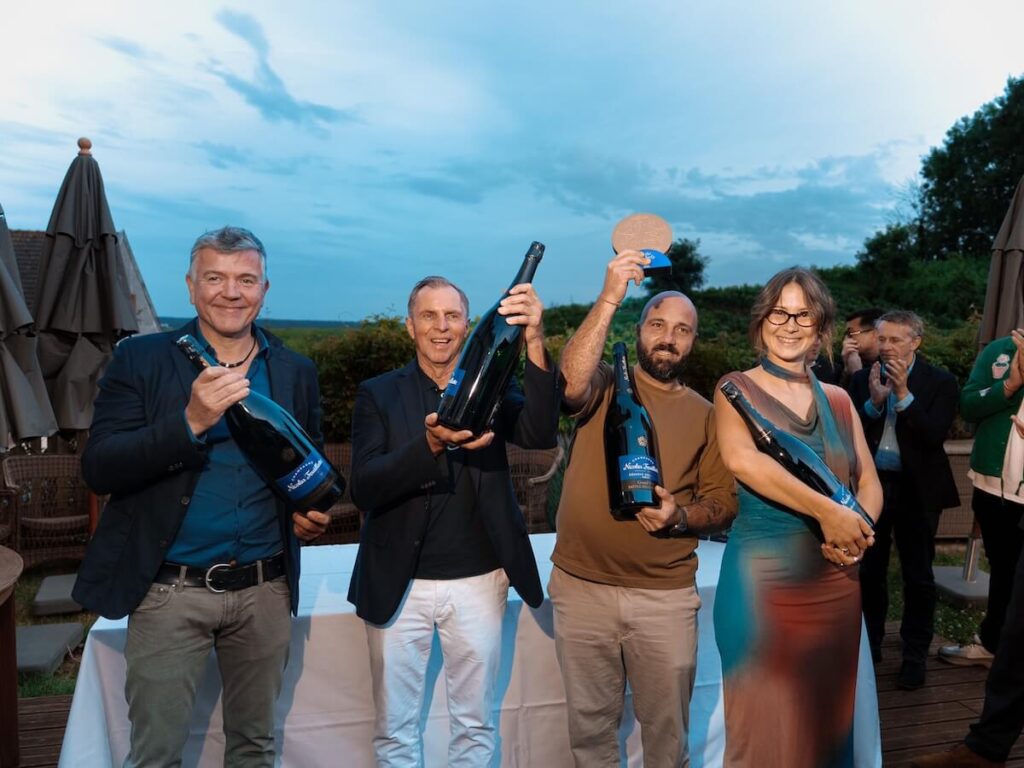
The Best Food and Champagne Pairing Award was then won by the team of Jean‑Luc Petermann and Daniel Desavie.
The Team Cohesion Award went to the team of Laurent Rigal and Hermann Poll.
The Plate Aesthetics Award was assigned to the team of Thomas Morel and Andrea Impero.
And our team?
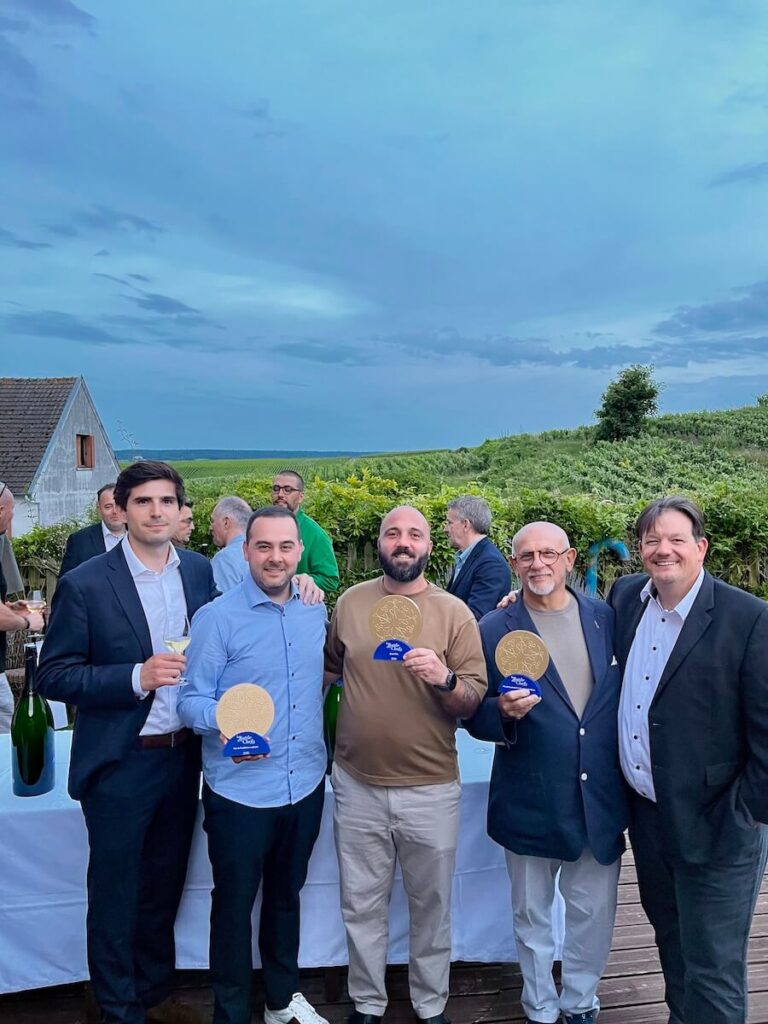
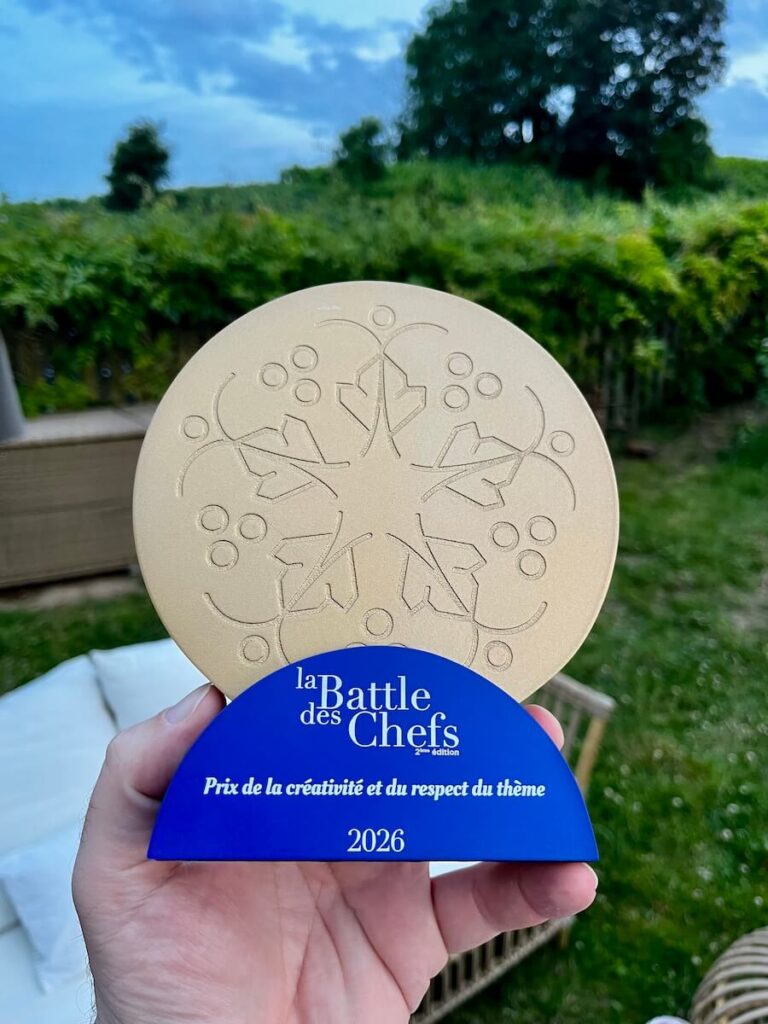
Claudio Sadler, François Gagnaire, Andrea Gianella and we at WineCouture secured second place with the Creativity and Respect for the Theme Award. A recognition that, considering the complexity of the Rome–Seoul challenge and the appreciation expressed by the jury for the dishes presented, had a particularly special flavor.
Battle des Chefs: A Toast to the Winners Among the Vineyards of Champagne
The day could only end in the most Nicolas Feuillatte way possible: among the vineyards surrounding the Château de Sacy, Chef de Caves Guillaume Roffiaen invited everyone to toast the winners with a glass of Palmes d’Or 2009 Brut.
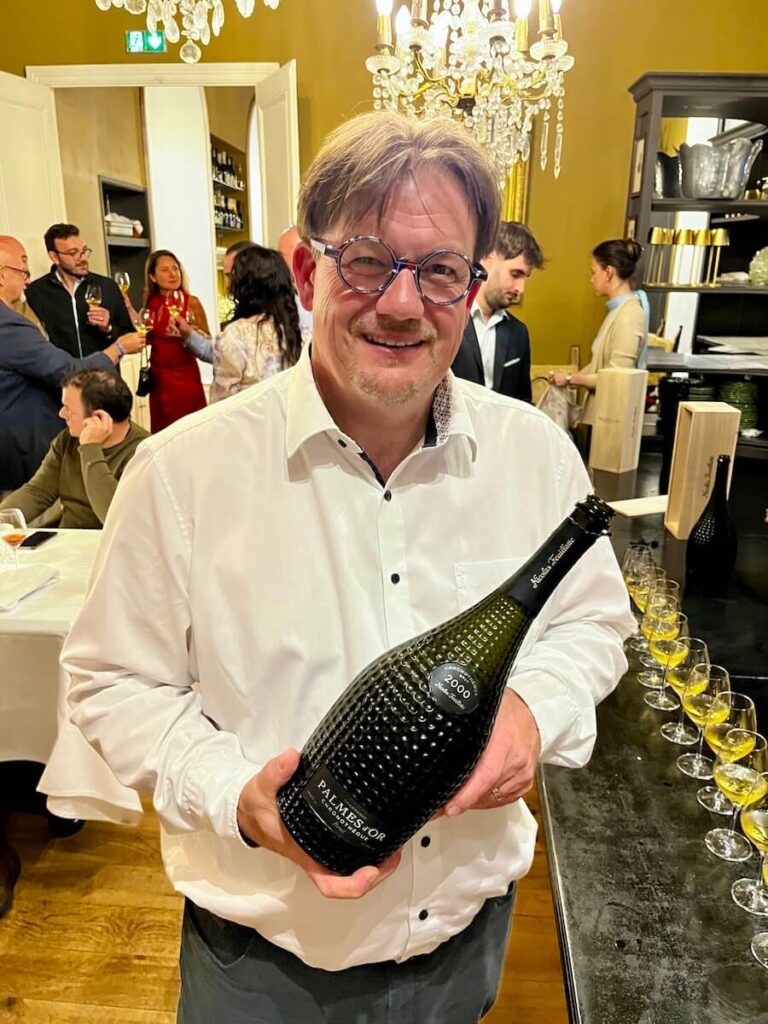
But the real surprise was still hidden. A few minutes later, a Magnum of Palmes d’Or 2000 Brut Chronothèque appeared. A dream bottle: one of those wines capable of immediately capturing the attention of everyone present and making clear the full potential of the most loved and well‑known sparkling wine in the world.
As the sun set over the vineyards, the meaning of the Battle des Chefs suddenly became even clearer: the competition was real, and so was the desire to win. But the true protagonist was not an individual chef or a particular team—it was Champagne itself.
The same Champagne that Nicolas Feuillatte has celebrated for fifty years with its contemporary and international vision. The one capable of bringing together distant gastronomic cultures, different languages and professionals from all over Europe around a shared table.
For one day, among the vineyards of Champagne, the Battle des Chefs demonstrated that wine can still do what it does best: create connections.
And perhaps this is the most authentic meaning of an important anniversary such as that of Nicolas Feuillatte.