


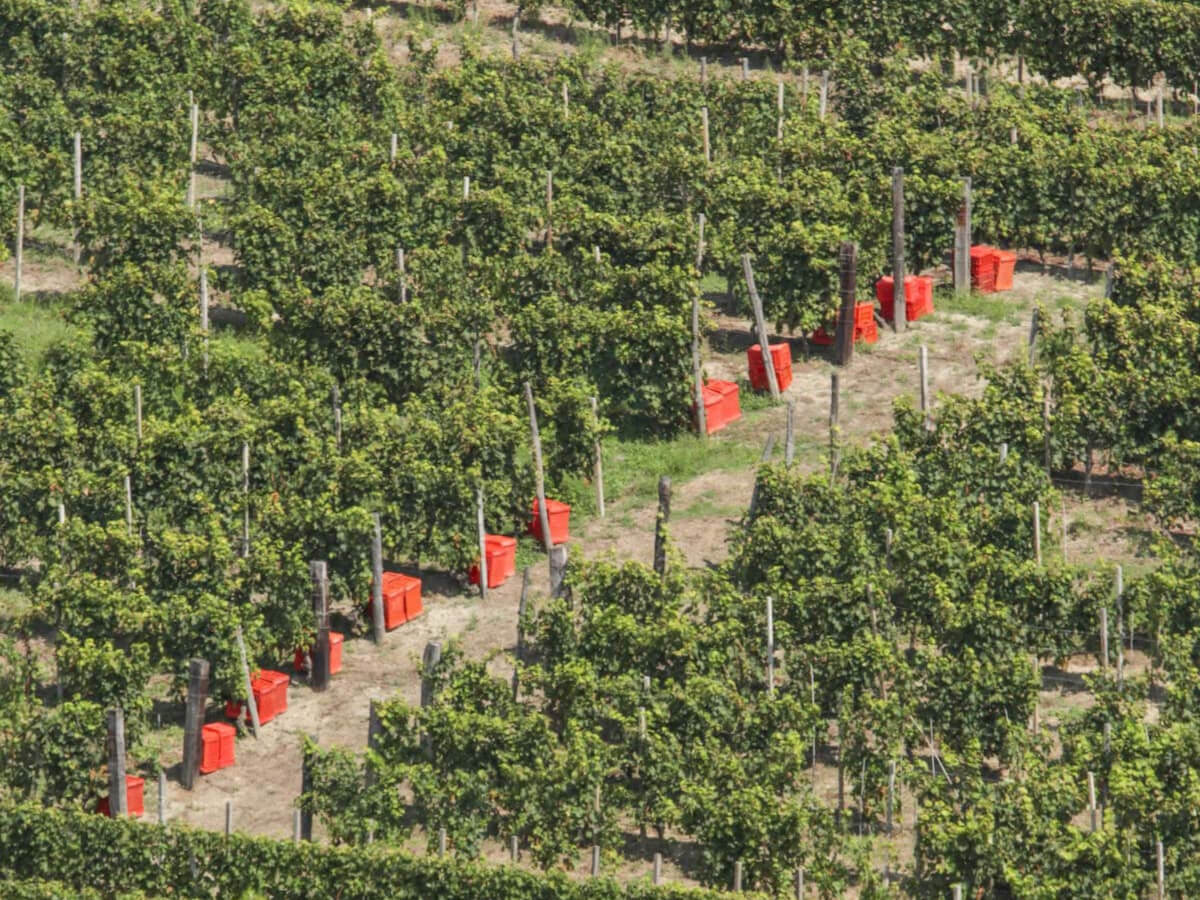
The Asti Docg Consortium opts for stability: for the 2026 harvest comes the proposal to set yields at 85 quintals per hectare, in continuity with last year, with flexibility margins linked to market trends. A decision aimed at managing the balance between supply and demand in a still‑uncertain phase, protecting the value of the denomination and the sustainability of the entire supply chain. The proposal, approved by the Board of Directors, will be submitted to the members’ assembly on 30 June.
Yields set at 85 q/ha: a strategy of balance for the Piedmontese denomination
The choice to confirm yields at 85 quintals per hectare, with an additional 15 quintals of surplus, fits into a planned management of supply.
The goal is to maintain production aligned with commercial dynamics, avoiding imbalances that could affect the product’s value.
The framework is outlined by the president of the Asti Docg Consortium, Stefano Ricagno:
“The solution identified by the Board stems from a shared discussion among the different components of the supply chain and is part of a strategy of responsible supply management. The goal is to ensure stability, planning and value, while maintaining the ability to adapt production choices based on market developments. In this context, the commitment expressed by the sparkling wine houses to continue supporting the denomination in the remuneration of raw materials takes on particular importance, confirming a line of responsibility and attention towards the entire production sector.”
Asti Docg: the market as a decisive variable
Alongside the planning for the 2026 harvest, the Asti Docg Consortium introduces a key element: flexibility.
In the first months of 2027, a new assessment will be carried out based on market data updated to 31 December 2026. If sales remain stable, currently around 85 million bottles per year, the yield can be confirmed.
If instead a contraction in demand emerges, the Consortium foresees a downward revision to a minimum of 80 quintals per hectare, with the aim of protecting the denomination’s value in the medium to long term.
An approach that highlights dynamic and responsive management, built on market analysis and adaptability.

Signals from 2026: consumption under observation
Early data for the year indicate a still‑complex context. In the first five months of 2026, State seals for bottled product reached 31.5 million units, marking a 4% decrease compared to the 32.8 million recorded in the same period of 2025.
A signal that confirms the need to keep a close eye on production balance and continue monitoring demand trends carefully.
Between planning and long‑term vision
The proposal from the Asti Docg Consortium reflects a model increasingly oriented toward strategic management of the denomination, where production volume becomes a controlled variable rather than an automatic one.
In a market environment marked by volatility and shifting consumption patterns, the ability to modulate supply is one of the main tools for preserving product value and ensuring economic sustainability for the supply chain.
The 2026 harvest thus fits into a trajectory of continuity and control, with the goal of consolidating Asti Docg’s competitive positioning in both domestic and international markets.


