


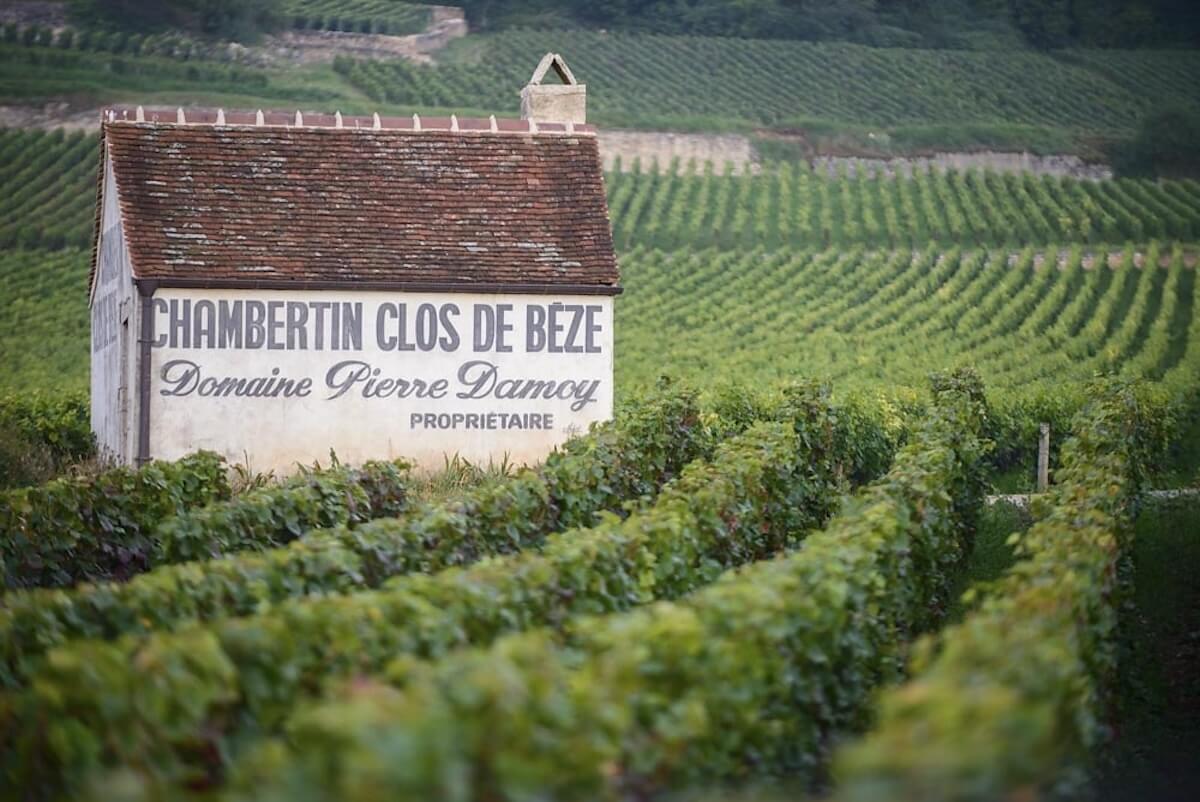
In its 250th anniversary year, Louis Roederer has completed one of the most significant transactions of recent years in the global wine landscape. The historic Champagne House is entering Burgundy for the first time through the acquisition of Domaine Pierre Damoy, a legendary name in Gevrey-Chambertin and the custodian of some of the most prestigious Grand Cru vineyards in the Côte de Nuits.
The deal marks a turning point in the history of the Roederer Collection, adding one of Burgundy’s most iconic vineyard estates to the group’s holdings. According to sources close to the transaction, the acquisition is valued at approximately €300 million, a figure likely to reignite debate around the continued appreciation of vineyard land values in Burgundy.
Yet the significance of the agreement extends well beyond its financial dimension. The transaction brings together two entities that share the same long-term vision, built on the protection of terroir, the transmission of knowledge and the responsibility of preserving a viticultural heritage that is unique in the world.
Louis Roederer’s First Burgundy Acquisition Coincides with Its 250th Anniversary
For Louis Roederer, the acquisition carries considerable symbolic significance. In the year the House celebrates the 250th anniversary of its foundation, Burgundy officially enters the Roederer Collection through one of the region’s most prestigious names.
Domaine Pierre Damoy includes nearly eight hectares of Grand Cru vineyards spread across the appellations of Chambertin, Chambertin-Clos de Bèze and Chapelle-Chambertin, alongside Clos Tamisot, the historic monopole located in Gevrey-Chambertin.
This vineyard heritage is made even more valuable by the presence of numerous old vines and a particularly rich genetic patrimony, factors that make the estate one of the most important properties in the entire Côte de Nuits.
For the Roederer Collection, this acquisition represents the natural continuation of a philosophy built over years around the preservation and enhancement of wine estates deeply rooted in their respective territories. From Champagne to Bordeaux, from the Rhône Valley to Provence, and extending to the Douro and California, the group has developed a network of estates united by the same concept of excellence: preserving the identity of each property without altering its history.
Frédéric Rouzaud (CEO Louis Roederer): “We Will Accompany this Estate with Humility and Exacting Standards”
The strategic significance of the transaction emerges clearly in the words of Frédéric Rouzaud, CEO of Louis Roederer:
“In the year Louis Roederer celebrates its 250th anniversary, establishing a presence in Burgundy, one of the world’s most prestigious wine regions, and becoming the steward of one of its great estates carries a special meaning for us. It resonates deeply with who we are: a family-owned and independent House, committed to the long term, to the land, to patient craftsmanship and to transmission. Domaine Pierre Damoy led us to take this step because it embodies everything we value most: exceptional terroirs, a remarkable vine heritage, a strong identity and a history that ranks among Burgundy’s most iconic. Our mission now is to accompany this estate with humility and exacting standards, building on the remarkable work carried out by the Damoy family and preserving everything that makes it truly unique”.
These words summarise the strategy pursued by the historic Champagne House over recent decades: growth through the integration of estates united by a shared vision of viticulture and time.
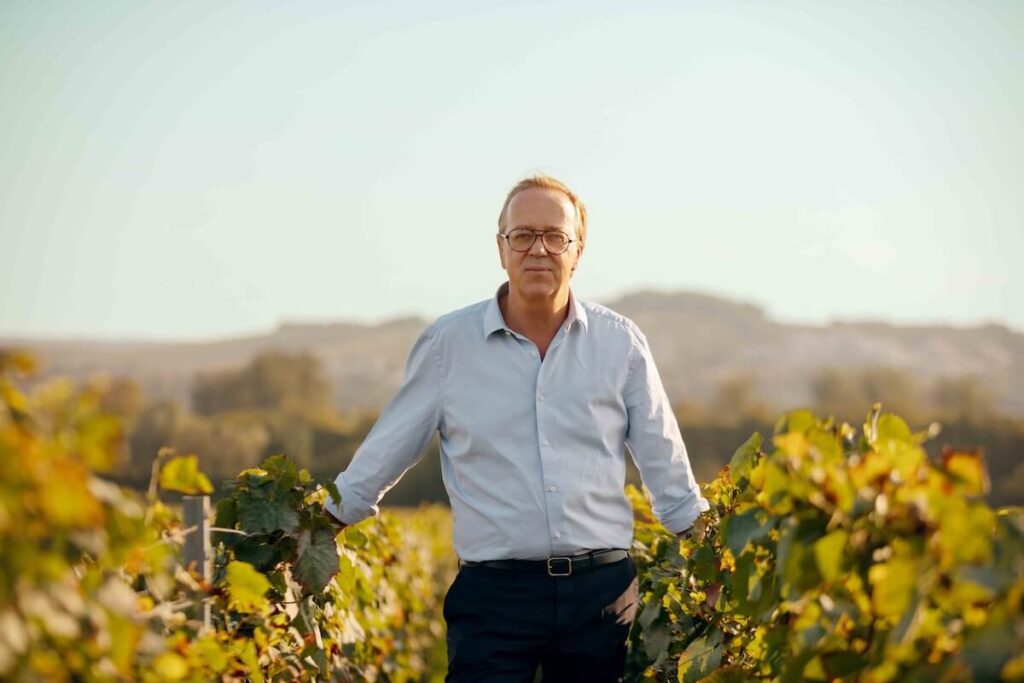
Pierre Damoy’s Legacy Passes to Louis Roederer
For Pierre Damoy, the transaction brings to a close a personal story spanning more than thirty years.
Since 1992, when he took over the family estate, the producer dedicated his work to enhancing the Grand Crus of Gevrey-Chambertin, building an international reputation based on respect for the vineyard and the most authentic expression of terroir.
In a statement released on the occasion of the sale, Damoy announced with great emotion the transfer of ownership to Louis Roederer, describing it as the natural continuation of the work carried out over more than three decades.
The new ownership will now be entrusted with preserving this vineyard heritage while maintaining continuity with the approach established by the Damoy family and continuing the path of excellence that has made the Domaine one of Burgundy’s benchmark estates.
A €300 Million Deal Reopens the Debate on Vineyard Values
Although the financial value of the transaction has not been officially disclosed, the French press quickly advanced an estimate of around €300 million.
According to reports by France 3 Régions and sources close to the transaction cited by AFP, the figure would be below the theoretical value of the vineyards if calculated according to recent market valuations for Burgundy Grand Crus, which today can reach between €2 million and €3 million per ouvrée (an old Burgundian unit of agricultural surface still widely used in the wine sector, equal to exactly 428 square metres).
By some calculations, this would place the value of Domaine Pierre Damoy at between €350 million and more than €500 million at current market prices.
The transaction therefore places the issue of soaring vineyard land values in Burgundy back at the centre of attention, a topic that had already emerged in 2017 when Louis Roederer came close to acquiring Clos de Tart, which ultimately passed to François Pinault for approximately €280 million.
Now, with Domaine Pierre Damoy joining the Roederer Collection, the House of Reims has finally achieved a goal it had pursued for years, officially entering one of the most exclusive territories in global wine.
Burgundy Completes the Geography of the Roederer Collection
With this acquisition, the Roederer Collection reaches a new dimension.
The group now brings together 12 wine estates, more than 1,100 hectares of vineyards, three international distribution companies, a wine merchant house, a foundation dedicated to art and culture, and a luxury hospitality offering that includes the Christiania in Val d’Isère.
Yet the true common thread remains the one that has guided every acquisition made over recent decades: identifying estates that share the same idea of wine as an expression of territory, a clear vision of artisanal precision and the relationship between people and nature.
The addition of Domaine Pierre Damoy probably represents the most complete expression of this philosophy.
For Louis Roederer, at a time when Burgundy continues to see the economic value of its vineyards rise, the challenge will be to demonstrate that the true investment lies not simply in the capital required to acquire them, but in the ability to preserve their identity.
And it is precisely on this terrain that the historic House of Reims appears determined to build its future, making continuity the most valuable asset in its expansion strategy.


