


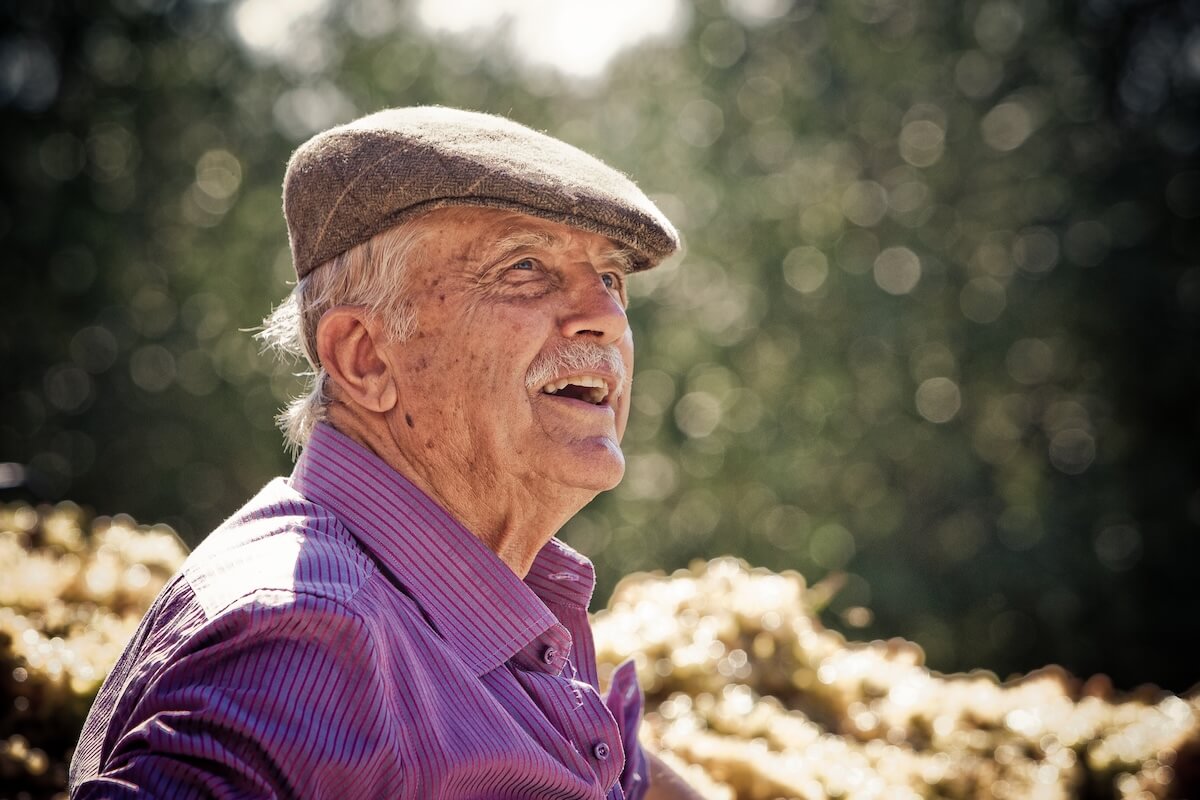
With the passing of Emidio Pepe, who died at the age of 94, on Monday, July 27th, after more than sixty harvests, Italian wine loses one of its most influential and revolutionary figures. A winegrower, interpreter of terroir and pioneer of a viticulture founded on respect for the land, Pepe had the merit of recognising, long before many others, the extraordinary potential of Abruzzo’s wine industry. A vision that led him to transform Montepulciano d’Abruzzo and Trebbiano d’Abruzzo into quality benchmarks recognised far beyond regional borders, helping to redefine Abruzzo’s role within the Italian wine landscape.
From Bulk Wine to Bottling: The Turning Point of 1964
Born in 1932 into a farming family in the province of Teramo, Emidio Pepe grew up immersed in agricultural and wine culture.
Wine production was already part of the family history. His grandfather had been making wine since 1899, and his father had continued the activity. However, it was with Emidio that the decisive turning point arrived.
In 1964, he made a decision that would shape the future of both the estate and, in part, the entire region: to stop limiting production to bulk wine sales and begin bottling his wines.
The choice was driven by his belief that Abruzzo’s viticultural heritage possessed a level of quality and identity worthy of independent and recognisable valorisation.
A Pioneer of Sustainability Before the Term Even Existed
A forerunner of the Triple A philosophy, long before sustainability, natural farming and biodynamics became central topics in the wine world, Emidio Pepe had already embarked on that path.
His production philosophy was based on simple yet radical principles: respect for the land, minimal intervention in both vineyard and cellar, the use of natural products and biodynamic preparations, the absence of selected yeasts and the exclusive promotion of indigenous grape varieties.
For Pepe, wine had to represent the most authentic expression of its territory.
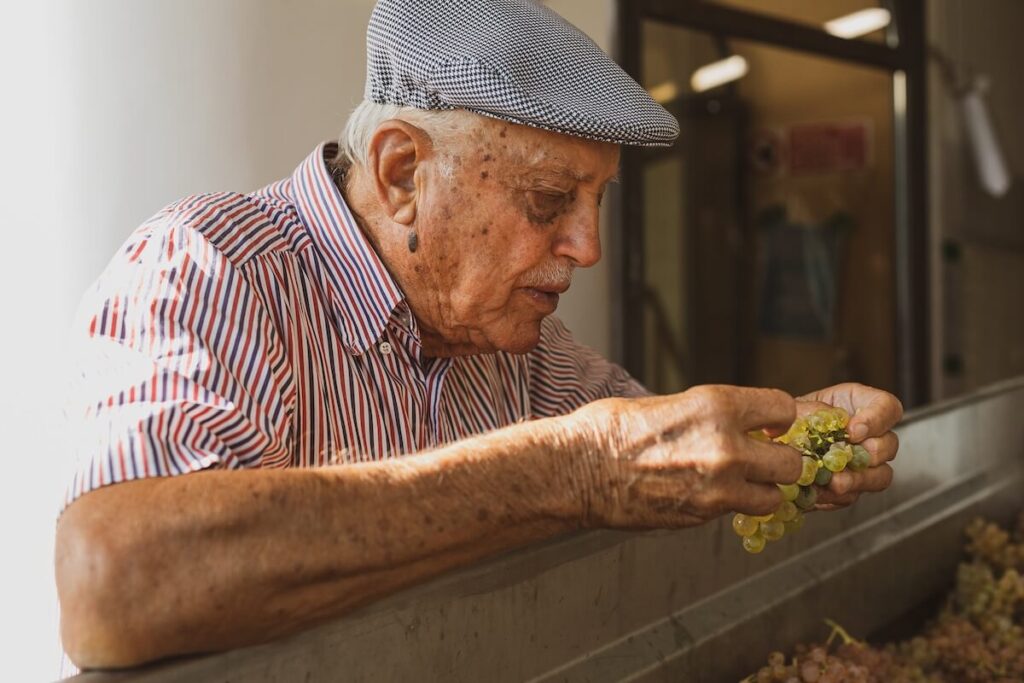
This conviction led him to preserve manual practices that had already been replaced by mechanisation for many producers. Harvesting was carried out exclusively by hand, as was grape selection. Even the pressing of white grapes followed traditional methods designed to avoid breaking the stems and to obtain musts naturally suited to spontaneous fermentation.
Emidio Pepe and Concrete as a Signature of Style
Among the most distinctive elements of Emidio Pepe’s philosophy was his relationship with concrete.
From as early as 1964, the Abruzzese producer chose to mature his wines in glass-lined concrete tanks, which he considered ideal for guiding wine evolution without altering its character.
A countercurrent choice that, over the years, became an integral part of his identity as a producer.
For Pepe, concrete represented a neutral vessel capable of granting full expressive freedom to the wine while respecting its natural pace of development.
Emidio Pepe: “I Simply Make Wine”
The essence of his thinking was encapsulated in a phrase that became famous:
“I simply make wine.”
Words that may have sounded simple, yet summarised a precise vision of agricultural work and winemaking: the winegrower as an interpreter of nature rather than an architect of forced transformations.
Behind that statement lay a philosophy that placed the vineyard, the territory and time at the centre, allowing the wine itself to tell the story of its origin.
The Man Who Believed in the Ageing Potential of Montepulciano d’Abruzzo
Among Emidio Pepe’s most important insights was his ability to envision the future of Montepulciano d’Abruzzo when few truly understood its potential.
He was among the first producers in Abruzzo to build a cellar specifically dedicated to ageing bottles, firmly convinced that both Montepulciano and Trebbiano were capable of evolving over time and reaching extraordinary levels of quality.
Over the years, this conviction became one of the defining characteristics of the estate.
The family philosophy has always been that wines should only be released when the family believes the vintage has reached its finest expression.
A Library of Time Preserved in the Cellar
As the decades passed, the cellar at Casa Pepe became much more than a storage space.
It evolved into a true library of wine, composed of more than 350,000 bottles.
A living archive that tells the story of the evolution of the territory, the vintages, the vineyards and even climatic changes through successive harvests.
Today, this collection is considered one of the most important historical testimonies of contemporary Italian wine.
Emidio Pepe and the Legacy Entrusted to the Next Generations
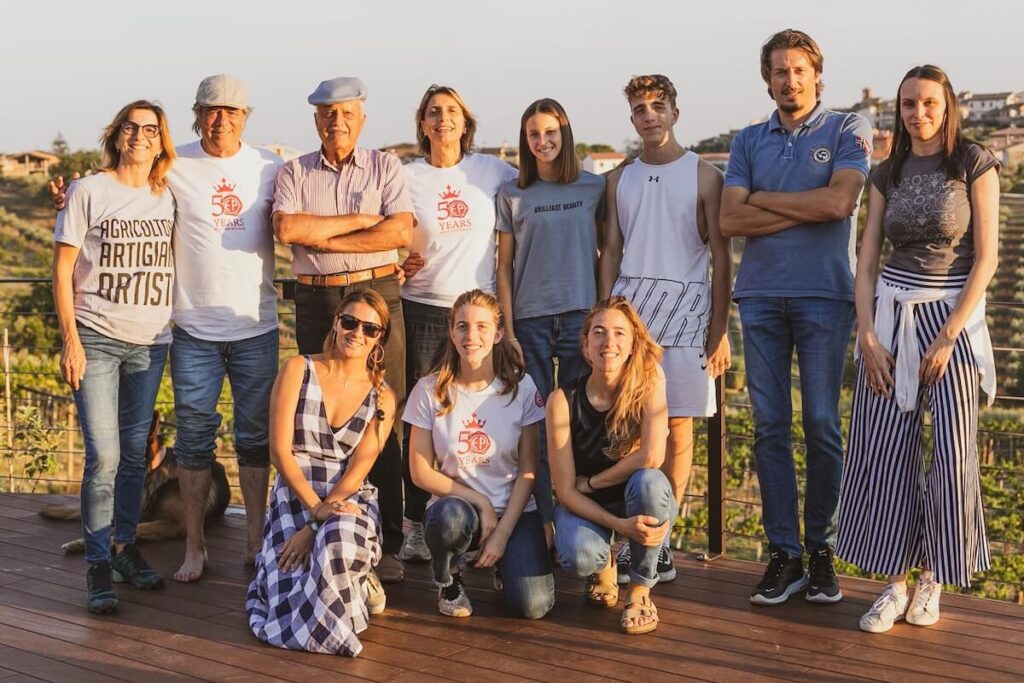
For approximately twenty years, the leadership of the estate has been in the hands of his daughters Sofia and Daniela, who have carried forward their father’s work while preserving his production principles intact.
Alongside them today work their daughters, Chiara, an oenologist, and Elisa, who oversees hospitality at the agriturismo.
This generational transition guarantees continuity for a vision built over more than sixty years and one that continues to represent a benchmark for Italian wine.
A Protagonist Who Changed the Face of Wine in Abruzzo
Reducing Emidio Pepe to the role of a great producer would be limiting.
His true importance lies above all in his ability to imagine a different path for Abruzzo wine when few were ready to pursue it. He demonstrated that Montepulciano and Trebbiano could compete with Italy’s finest wines, anticipated the themes of sustainability and restored central importance to the concept of territory at a time when the market was looking elsewhere.
By looking to the future through the eyes of the past, Emidio Pepe built a model that continues to influence generations of winegrowers.
His legacy is measured not only in the bottles he produced, but in the cultural revolution he helped create—a quiet transformation that changed the destiny of Abruzzo wine forever.


