


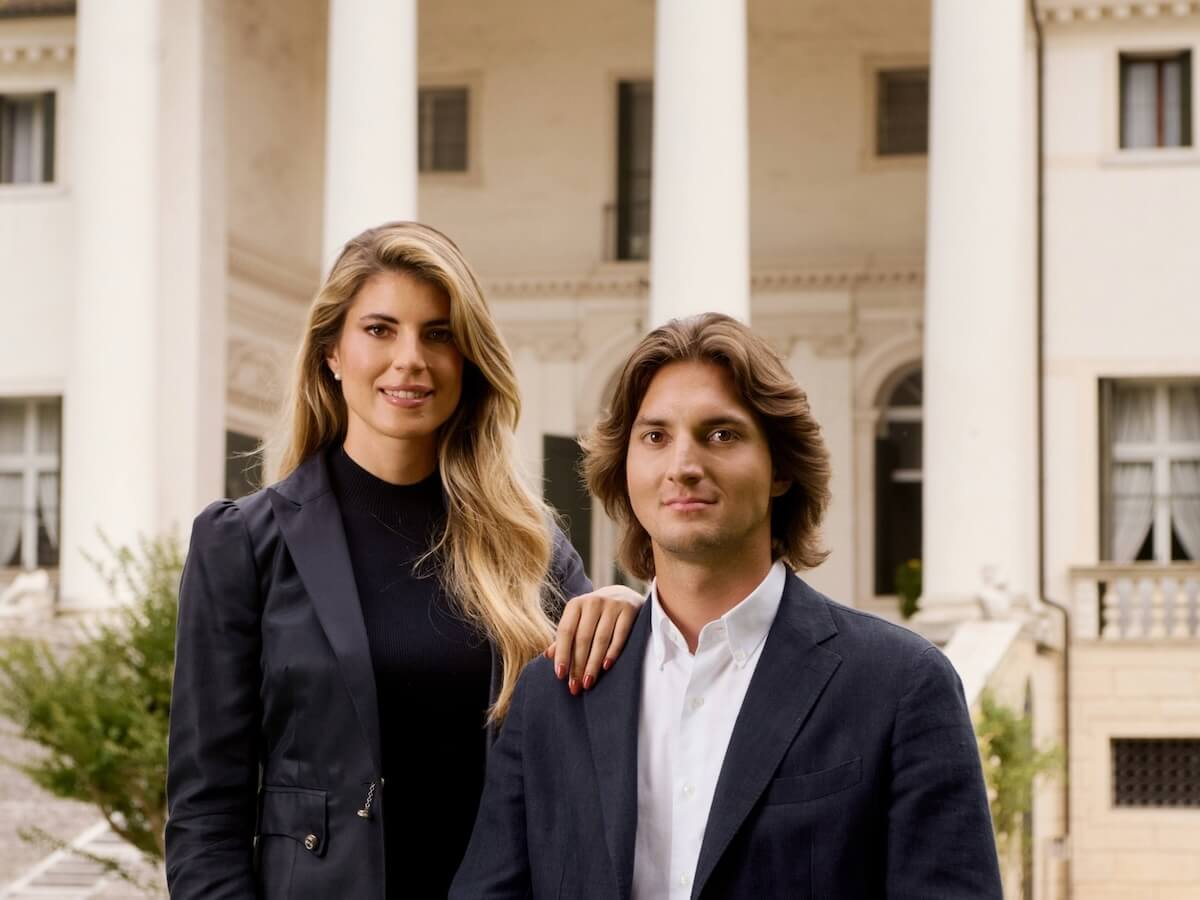
Family-owned companies often narrate their continuity through generational transitions. This is exactly what is happening today at Villa Sandi, where the appointment of Diva and Leonardo Moretti Polegato as vice presidents and board members formalizes a role that was already central within the group and introduces a new perspective on the challenges awaiting Italian wine. A vision that does not question the legacy built by the family, but expands its boundaries. Because sustainability, innovation, and efficiency are no longer parallel themes — they are the very core of future competitiveness.

Sustainability: Leonardo Moretti Polegato shifts the conversation toward tomorrow’s competitiveness
For Leonardo Moretti Polegato, the first change concerns the very meaning of sustainability:
“Until a few years ago, sustainability was discussed in a very romantic way, but with few data and few measurable sources of change. Today, you can no longer talk about sustainability only in a romantic sense — it must be measured through concrete data.”
It’s a vision that moves the debate from declarations to scientific evidence, with direct application in the company’s operations. Villa Sandi is investing in a series of projects that use technology and data collection to improve agronomic management.
“Today it is increasingly clear how necessary it is to make decisions based on scientific data rather than simple intuition: in the company we are working on several projects focused on analyzing soil variability and assessing the vegetative state of the vineyards,” Leonardo Moretti Polegato explains.
Sustainability also involves energy: “Today it’s no longer enough to say you’ve installed photovoltaic panels. It’s necessary to quantify the real contribution these technologies provide.”
Villa Sandi now achieves partial energy self-sufficiency thanks to a combination of photovoltaic systems and a hydroelectric plant that has recently undergone major modernization. And this share is growing: “New investments are coming that will allow us to take another significant step forward.”
Another key concept emerges in the vice president’s reasoning — one that is often less discussed: efficiency. A word destined to become increasingly central to the wine of the future. “The topic of efficiency at every stage of the supply chain is often not emphasized enough,” he notes.
This concept goes far beyond economic savings and concerns the ability to reduce energy consumption, water waste, and emissions without compromising quality. A challenge that becomes even more relevant in a context marked by increasingly hot summers and constantly evolving energy costs: “From next-generation autoclaves to must refrigeration systems, every investment is evaluated not only for its qualitative impact but also for its ability to optimize resources and reduce the company’s carbon footprint.”
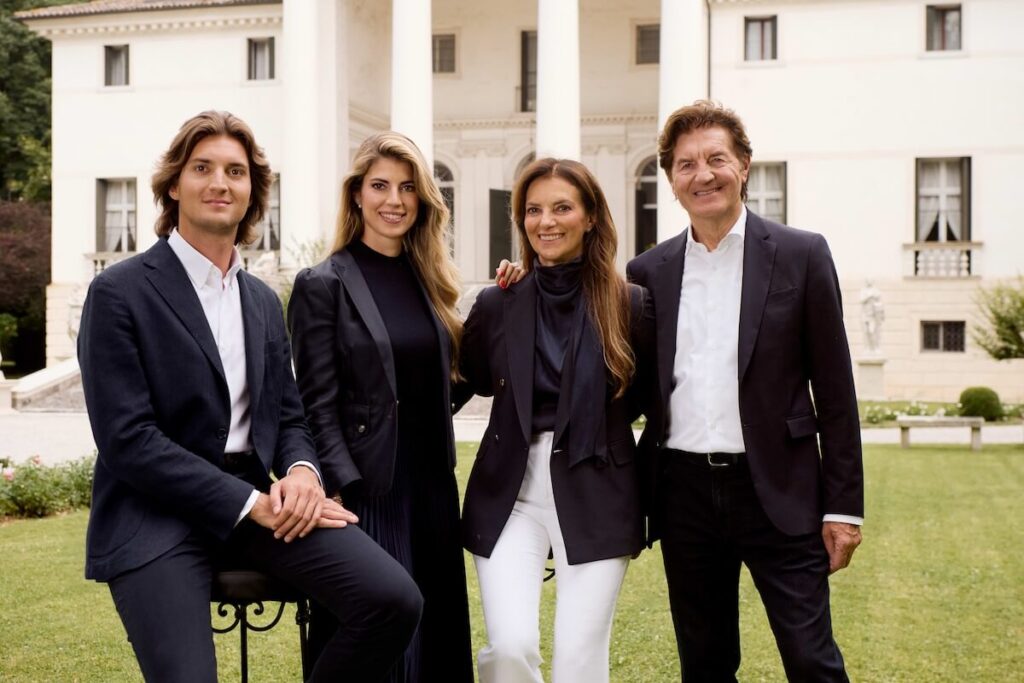
Sustainability as concrete responsibility: Diva Moretti Polegato’s vision
If Leonardo observes change through the lens of processes, Diva Moretti Polegato interprets it from the market’s perspective:
“Sustainability is now a central element in the choices of both industry professionals and consumers. It is no longer considered an added value but a concrete responsibility that companies must demonstrate through transparent and measurable actions.”
It is no longer enough to declare a commitment — it must be made visible. This is where the vice president identifies one of the decisive factors for the future competitiveness of wine:
“Credibility comes from the coherence between what we communicate and what we do every day: from biodiversity to renewable energy, to social projects and initiatives developed in the local area for the community, such as opening the vineyard gym and supporting young talents through scholarships.”
Her reflection inevitably expands to the relationship with younger generations — a topic often addressed through oversimplifications that risk being misleading: “It’s not true that young people don’t drink wine. They simply do it differently.”
This is why innovation and sustainability can become fundamental tools for building a more effective dialogue with new consumers who seek authenticity, transparency, and recognizable values.
But a different language is also needed: “I believe wine must continue to tell its story, roots, and culture, but with a more inclusive language capable of engaging even those who currently feel distant from this world.”
Diva’s reflection also touches on the evolving geography of wine. In a fragmented international scenario, she invites the sector to look further ahead: “Both in consolidated markets and emerging ones, there is still significant room for growth. Recently, we have opened markets in Eastern Europe, South America, and the Middle East. We have also seen growing interest from countries increasingly opening up to wine tourism and wine culture.”
Asia represents one of the most interesting observatories for understanding how the world of Prosecco can engage with profoundly different gastronomic cultures:
“In Europe, people often speak generically of Asian cuisine, but in reality it is an extremely diverse universe. There are deep differences between Cantonese, Beijing, Taiwanese, Indonesian, or Japanese cuisine, and each requires specific considerations for pairings.”
This complexity opens new perspectives for enhancing Italian wine: “I believe there is still so much to explore in this field, which is why I think growth opportunities are much broader than often imagined.”
Villa Sandi and the evolution of wine
Within this evolving scenario, the topic of dealcoholized wines finds its place — a subject destined to play an increasingly important role in international debate in the near future.
Leonardo Moretti Polegato approaches the phenomenon pragmatically and without prejudice:
“I believe it is essential to broaden our perspective and carefully observe what is happening outside the traditional boundaries of wine. We must understand and analyze these phenomena with an open mind. Information and the ability to read change will be increasingly decisive for the future of wine.”
Rather than a clash between models, the two vice presidents interpret the phenomenon as an extension of the occasions in which wine can be present in people’s lives. A perspective that encourages the sector to observe cultural transformations more attentively, without abandoning its identity.
“Tradition and innovation are not in opposition,” Diva Moretti Polegato concludes. “They represent an essential balance for building a solid and credible future.” It is within this balance that Villa Sandi is writing its next chapter, with a new generation called to transform sustainability and innovation into vision.


