


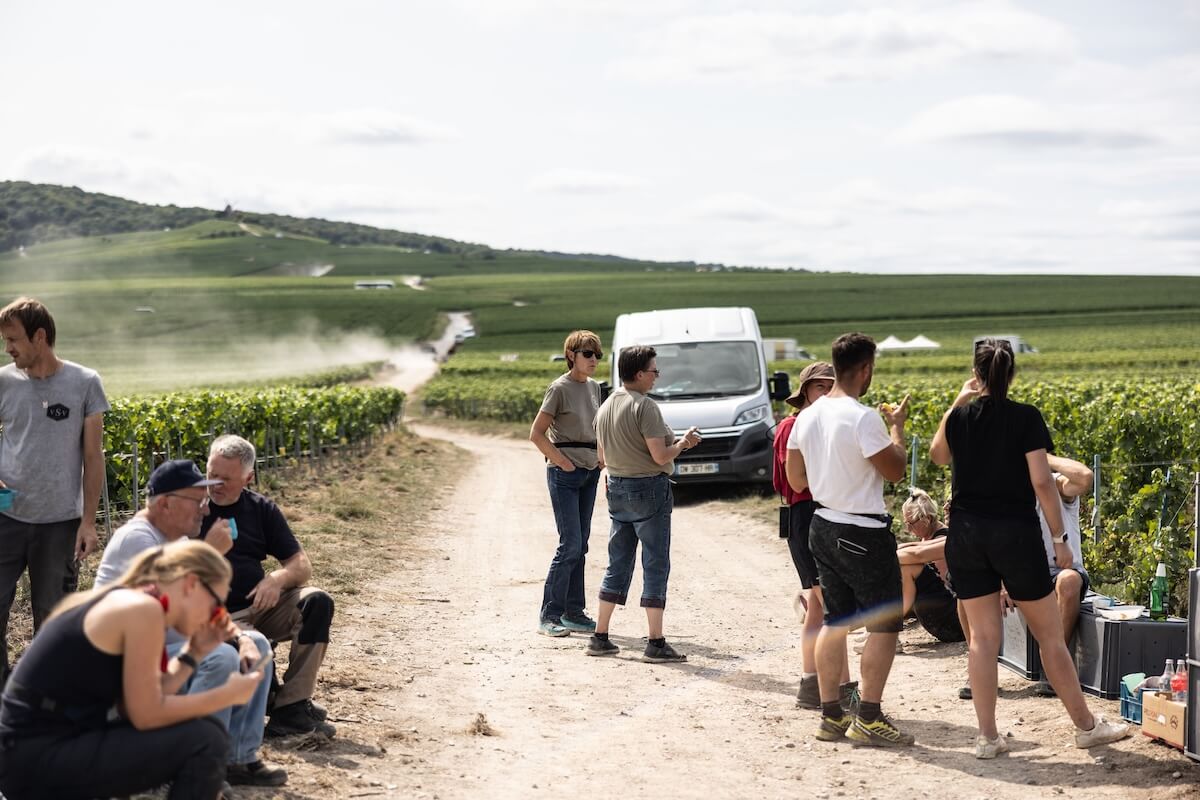
The 2026 Champagne harvest is moving into full swing with an earliness that, as we have already reported through first-hand accounts from growers already working in their vineyards, leaves little room for doubt: it will be one of the earliest harvests in the recent history of the denomination. Montgueux was authorised to begin harvesting as early as 8 August, Ambonnay on 10 August, Cumières on 13 August, while 14 August marks the start for some of the most iconic names of the Côte des Blancs, including Avize, Chouilly, Cramant and Le Mesnil-sur-Oger.
The official calendar, as reported by Sophie Clays’ blog, confirms what grape maturity had been indicating for weeks: by 10 August, the average potential alcohol level had already reached 10.1% vol., increasing during the previous week at the remarkable pace of 0.27% vol. per day.
With healthy grapes and a sugar-acidity balance considered highly promising, the priority is no longer waiting but choosing the precise harvest moment for each individual parcel.
In the background remains the vintage’s main weak point: small clusters and potentially limited yields, just as a new heatwave accompanies the first cuts of the pruning shears.
Champagne Harvest 2026: A Vintage Ripening at Extraordinary Speed
The figures clearly illustrate the precocity of the vintage.
As of 10 August, the MATU network recorded an average potential alcohol level across the entire appellation of 10.1% vol.:
- Chardonnay: 10.4% vol.
- Pinot Noir: 10.2% vol.
- Meunier: 9.8% vol.
Some areas are already significantly ahead.
The Sézannais has reached 11.1% vol., while the Vitryat stands at 11.0% vol.
Yet it is the speed of maturation that is truly striking. Over the previous week, potential alcohol increased by an average of 0.27% vol. per day.
The Comité Champagne considers it plausible that, assuming an average harvest date around 17 August, grapes could approach 12% potential alcohol.
This progression requires almost daily vineyard monitoring and turns harvest route planning into one of the defining decisions of the 2026 vintage.
This is not simply an early harvest. It is a harvest in which the speed of ripening forces growers to assess vineyards parcel by parcel, searching for the point of equilibrium before the accelerated cycle alters the relationship between ripeness, acidity and freshness.
Healthy Grapes and Promising Early Tastings, but Everything Depends on Harvest Timing
If speed is the season’s great variable, the sanitary condition of the fruit is decidedly positive.
The grape clusters are healthy, and the first berry tastings already reveal expressive fruit aromas and a promising balance between sugars and acidity.
These are encouraging signs for the qualitative profile of the vintage, but they also make it even more important not to miss the ideal harvest window.
In a harvest like this, even a few days can make a substantial difference.
The challenge will therefore be to organise harvesting teams and vineyard routes according to the actual maturity of individual parcels rather than following a uniform calendar.
To complicate matters further, heat has returned.
The start of the harvest coincides with a new wave of high temperatures, with forecasts indicating 35-40°C between 13 and 14 August. This creates additional pressure on a harvest that is already naturally compressed in timing.
The Weak Point of the 2026 Champagne Vintage: Clusters Below 100 Grams
The positive quality outlook coexists with a less favourable element: yield.
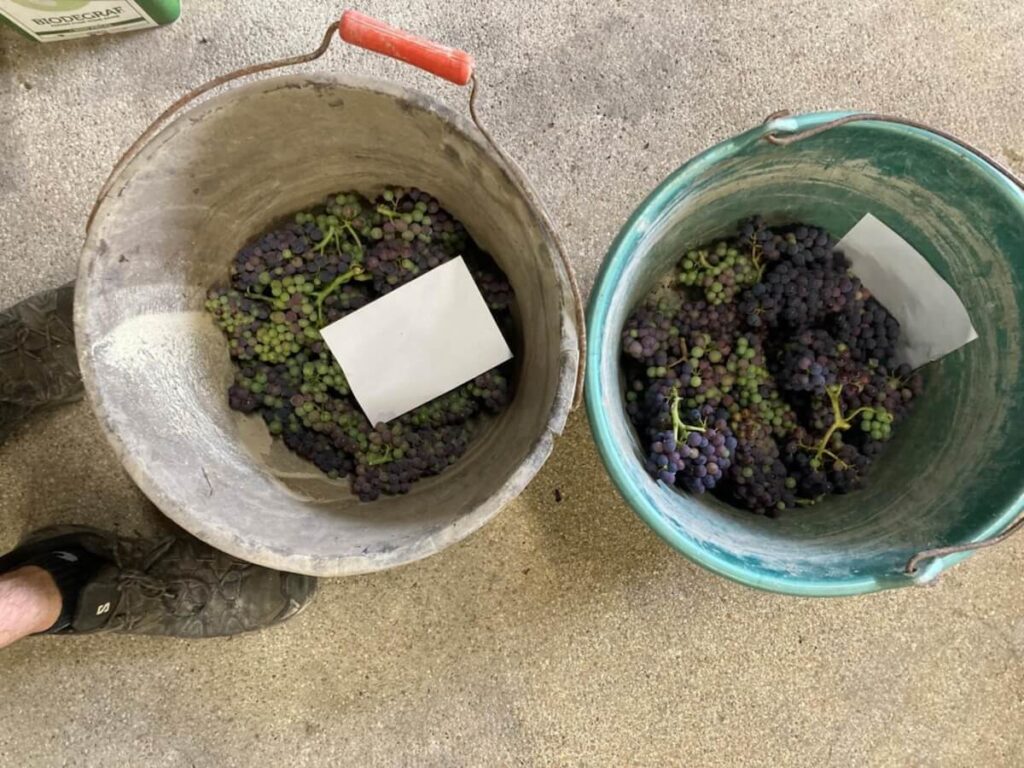
The average cluster weight remains below 100 grams.
In the Vallée de la Marne, the situation is even more pronounced, with many sectors reporting average cluster weights below 90 grams.
This is probably the main quantitative question mark of the 2026 harvest.
If grape maturity and health appear highly encouraging, the reduced size of the clusters could significantly impact final production volumes.
Champagne is therefore preparing for a harvest where the key question will not only be how much fruit is picked, but above all when it is picked.
Champagne Harvest 2026: Montgueux Opened on 8 August as the Côte des Bar Accelerates
The official calendar vividly illustrates the extraordinary earliness of 2026.
In the Aube, Montgueux leads the way, with Chardonnay, Pinot Noir and Meunier authorised for harvest from 8 August.
On 10 August, harvesting began in Landreville, Merrey-sur-Arce, Neuville-sur-Seine, Buxeuil, Celles-sur-Ource, Polisy and Viviers-sur-Artaut.
Gye-sur-Seine opened on 12 August, as did Avirey-Lingey, Balnot-sur-Laignes, Bar-sur-Seine, Bligny, Courteron, Loches-sur-Ource, Lignol-le-Château, Polisot, Rouvres-les-Vignes and Ville-sur-Arce.
Les Riceys, one of the Aube’s best-known names, is authorised from 13 August.
This sequence says more than any formal description could: in many sectors of the Côte des Bar, harvesting is no longer imminent before Ferragosto, it is already underway.
Ambonnay Started on 10 August: The Montagne de Reims Entered Harvest Extremely Early
Among the dates attracting the most attention is undoubtedly Ambonnay, where Chardonnay, Pinot Noir and Meunier could all be harvested starting 10 August.
For such an emblematic cru of the Montagne de Reims, the calendar clearly demonstrates how far ahead of traditional timings the 2026 vintage has progressed.
Bouzy opens on 13 August for all three principal varieties.
Verzenay begins on 13 August for Chardonnay and 14 August for Pinot Noir and Meunier.
Verzy is scheduled for 15 August, while Mailly-Champagne opens on 13 August for Chardonnay and 15 August for both black varieties.
At Rilly-la-Montagne, Chardonnay may be harvested from 12 August, while Pinot Noir and Meunier begin on 14 August.
Chigny-les-Roses and Ludes are authorised from 14 August for all three varieties.
Avize, Chouilly, Cramant and Le Mesnil-sur-Oger: Côte des Blancs Opens on 14 August
The Côte des Blancs also confirms an exceptionally early harvest schedule.
Avize is authorised from 14 August for Chardonnay, Pinot Noir and Meunier.
The same date applies to Chouilly and Cramant, while Le Mesnil-sur-Oger opens on 14 August for Chardonnay and Pinot Noir.
Oger is likewise authorised from 14 August.
Vertus follows a differentiated schedule:
- Chardonnay: 15 August
- Pinot Noir and Meunier: 17 August
Meanwhile, Bergères-lès-Vertus is scheduled for 15 August across all three varieties.
The significance is especially evident for Chardonnay, which, with an average potential alcohol level of 10.4% vol. by 10 August, is currently the most advanced of Champagne’s three principal grape varieties.
Cumières Opens on 13 August, Aÿ on 14 August and Hautvillers on 15 August
In the Vallée de la Marne and central sectors of the appellation, the pace remains equally compressed.
Cumières opens on 13 August for Chardonnay, Pinot Noir and Meunier.
Aÿ follows on 14 August, with reference to local zoning in certain sectors.
Hautvillers is authorised from 15 August.
Mareuil-sur-Aÿ opens on 14 August for all three varieties.
Damery begins on 14 August, again subject to communal zoning provisions, while Dizy and Épernay open on 17 August.
Pierry will also begin on 17 August.
The date of 17 August emerges as something of a central reference point for the 2026 harvest. It is the average harvest date suggested by the Comité Champagne and appears repeatedly across a large number of communes throughout the appellation.
Reims Opens on 15 August, Épernay on 17 August
Even two of Champagne’s most symbolic names illustrate the remarkable earliness of the vintage.
In Reims, harvest begins on 15 August for Chardonnay, Pinot Noir and Meunier.
In Épernay, the opening date is 17 August for all three varieties.
Sézanne, consistent with the Sézannais zone’s average maturity already reaching 11.1% potential alcohol, is authorised from 12 August for all varieties.
Some western sectors remain later:
- Coulommes-la-Montagne: 20 August (Chardonnay), 22 August (Pinot Noir), 19 August (Meunier)
- Vrigny: identical schedule
- Ormes: 20 August, 22 August and 19 August respectively
The calendar therefore reveals not only an early vintage but also Champagne’s extraordinary internal diversity, with differences exceeding ten days between the earliest and latest authorised harvest sectors.
In the Aisne, 17 August Dominates, Though Some Communes Move Earlier
In the Aisne department, the picture is generally later than in the Aube and certain crus of the Marne.
17 August is the most common date for Chardonnay, Pinot Noir and Meunier in communes such as Azy-sur-Marne, Charly-sur-Marne, Chézy-sur-Marne, Connigis, Crouttes-sur-Marne, Essômes-sur-Marne, Fossoy, Jaulgonne, Mont-Saint-Père and Villiers-Saint-Denis.
There are, however, notable exceptions.
Barzy-sur-Marne, Nogentel, and Trélou-sur-Marne can all begin on 14 August.
Passy-sur-Marne opens on 15 August for Chardonnay and 14 August for Pinot Noir and Meunier.
Château-Thierry begins on 15 August for Chardonnay and 17 August for the two black varieties.
In Haute-Marne, Argentolles, Colombey-les-Deux-Églises and Rizaucourt-Buchey are all authorised from 13 August.
What Changes with the 2026 Harvest: In Champagne, Looking at the Calendar Is No Longer Enough
More than a simple list of dates, the official 2026 harvest schedule provides a snapshot of a vintage progressing at exceptional speed.
From Montgueux on 8 August to the Pinot Noir harvest authorised on 22 August in communes such as Coulommes-la-Montagne, Ormes and Vrigny, the timeline once again demonstrates how misleading it can be to think of Champagne as a single, homogeneous vineyard.
In 2026, that diversity becomes even more important.
With ripening progressing by more than a quarter of a degree of potential alcohol per day, grapes already showing strong aromatic expression and temperatures once again approaching 40°C, the administrative opening date represents only the starting point.
The real challenge will take place in each individual vineyard.
It lies in deciding whether to harvest today or wait until tomorrow, searching for that brief moment when fruit ripeness, acidity and freshness meet without any one element overwhelming the others.
Whether 2026 ultimately proves to be a truly great Champagne vintage will only be revealed by the wines many years from now.
But one thing is already certain: Champagne has not experienced a harvest that places the month of August at the centre of its calendar this early in a very long time.


